





This post contains affiliate links. If you buy through them, I may earn a small commission at no extra cost to you. I only recommend gear I actually use and love. See my full disclosure here.
Here is something I have come to believe about traveling in Europe: people book the famous city first, and then the day trip turns out to be the part they can’t stop talking about. The marquee capital gets the itinerary and the postcard. The place an hour outside it, quieter, older, stranger, often gets the memory.
As The Design Tourist, that is usually where I want to go anyway, because the side trip is where you find the thing the big city doesn’t have: a garden that invented a painting, a valley terraced by hand for a thousand years, a mountain monastery that looks like it grew out of the rock. So here are the day trips I would build a European itinerary around, chosen with a design eye, several of them from cities I’m covering for the show.
Learn more in Season 1 of The Design Tourist, in production to air on public television stations nationwide, at www.TheDesignTourist.tv.
From Paris: Giverny, Where A Garden Became A Painting
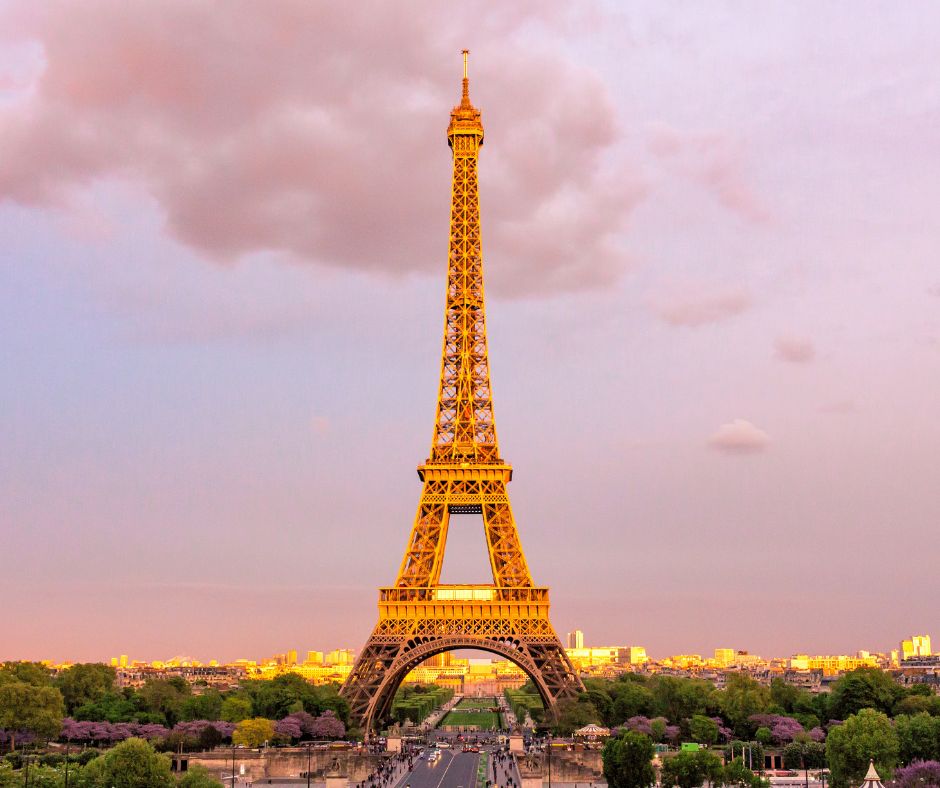
Skip the third photo of the Eiffel Tower and take the train toward Giverny instead. This is Monet’s own garden, and it comes in two halves: the Clos Normand, a densely planted riot of flowers in front of his pink, green-shuttered house, and, across the road, the Water Garden with its willows, its bamboo, and the green Japanese footbridge over the lily pond. Standing in it, you realize the famous canvases were not landscapes he found but a landscape he designed, then spent the last decades of his life painting. It is roughly 45 minutes by train from Paris Saint-Lazare to Vernon, then a short shuttle or bike ride to the village, and the gardens are open spring through fall, when there is actually something in bloom. If you’d rather stay grand, Versailles is the other great option, and the trick there is to give the gardens, the Grand Canal, and Marie-Antoinette’s rustic hamlet the full day that the rushed tour groups never do.

From Lisbon: Sintra’s Fairytale On A Hill

Forty minutes by train from Lisbon’s Rossio station, Sintra is where Portuguese design lets its imagination off the leash, and the whole misty, palace-dotted landscape is UNESCO-listed. The candy-colored Pena Palace is the headliner, piling red and yellow towers, tilework, and clashing revivalist styles onto a peak above the town like a nineteenth-century daydream. But give time to the Quinta da Regaleira, whose gardens hide an “initiation well,” a spiral staircase that plunges underground like an inverted tower, threaded with tunnels and Masonic symbolism, and to the ruined Moorish Castle strung along the ridge. Then drop down to the coast at Cascais, an easy beach-and-seafood afternoon that balances all that fantasy with sea air.
Related Posts



From Vienna: The Wachau Valley By River And Vine

Trade the palaces for the Danube. About an hour from Vienna, the Wachau Valley unspools between Melk and Krems in a run of terraced vineyards, apricot orchards, and hilltop abbeys, a UNESCO cultural landscape best seen slowly. Anchor the day at Melk Abbey, a honey-and-gold Baroque monastery riding a bluff over the river, then take a boat downstream past Dürnstein, whose blue-and-white church tower is one of the most photographed sights on the Danube and whose castle ruins once held Richard the Lionheart for ransom. This is white-wine country, Grüner Veltliner and Riesling grown on those hand-built terraces, so end with a glass at a village winery. If you’d rather go long, Salzburg, Mozart’s Baroque hometown ringed by mountains, is the other classic Vienna day trip.
From Munich: Neuschwanstein The Castle That Inspired A Castle
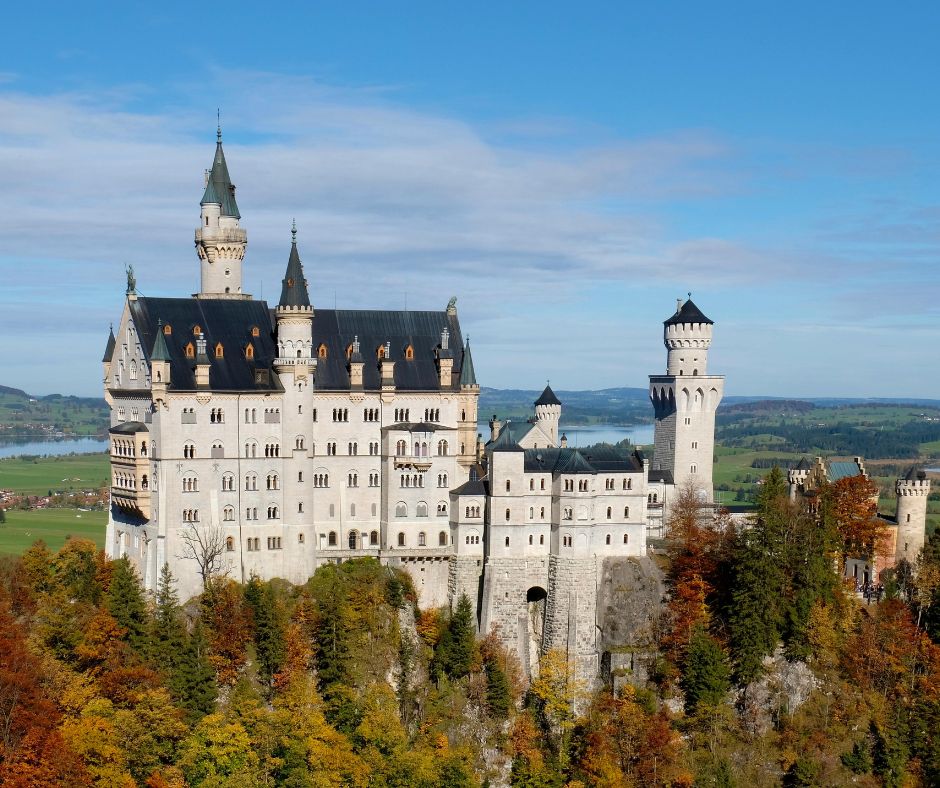
King Ludwig II’s mountainside fantasy is the one said to have inspired Disney’s castle, and in person it is even more theatrical than the photographs. Built from 1869 as a Romantic vision of a medieval knight’s castle, all soaring turrets and painted halls, it was the private obsession of a king who died mysteriously before it was finished, leaving most of the rooms bare, which somehow adds to the effect. It sits about two hours from Munich near Füssen, paired with the yellow Hohenschwangau castle where Ludwig grew up, and the classic view, the one on every poster, is from the Marienbrücke, a footbridge slung across the gorge behind it. Buy timed-entry tickets well ahead; they sell out, and you cannot go inside without one. It is the definition of worth-the-drive.
From Rome: Tivoli’s Water Gardens And Ancient Echoes
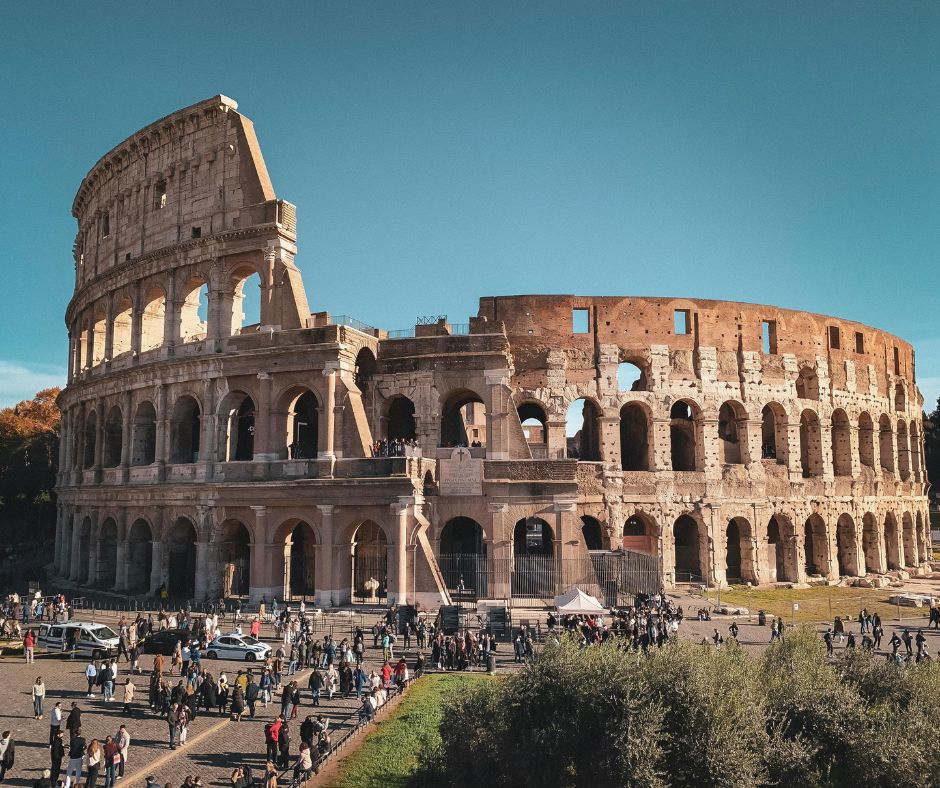
The Colosseum has the crowds; Tivoli, a short drive east, has the fountains. The Villa d’Este is a sixteenth-century Renaissance garden built as a hydraulic showpiece, hundreds of fountains, water organs, and cascades fed entirely by gravity, all still running five centuries later, and it is UNESCO-listed for good reason. In the same town sits Hadrian’s Villa, the sprawling country estate the emperor built for himself, also UNESCO, where you can wander the ruins of pools and pavilions that once dazzled the Roman world. For a quieter dose of antiquity closer in, Ostia Antica gives you the remarkably intact ruins of Rome’s old port city, cobbled streets, mosaics, an amphitheater, with almost none of the tour buses that clog the center.
From Florence: Chianti And The Hill Towns

Florence is Tuscany’s art capital, but the countryside around it is the other half of the trip, and a day in Chianti proves it. The road south winds through cypress-lined hills, stone farmhouses, and family wineries where lunch means olive oil, pecorino, and a Sangiovese poured by the person who made it. Build the day around a hilltop town or two: Siena, whose shell-shaped Piazza del Campo is one of the great designed public squares in Europe and whose bareback Palio horse race still tears around it twice each summer, or San Gimignano, the “medieval Manhattan” bristling with stone towers that rival families raced to build ever higher. It is the day that reminds you the Tuscan landscape itself, hand-shaped over centuries, is as much the attraction as the city you started from.
From Barcelona: Montserrat’s Mountain Monastery
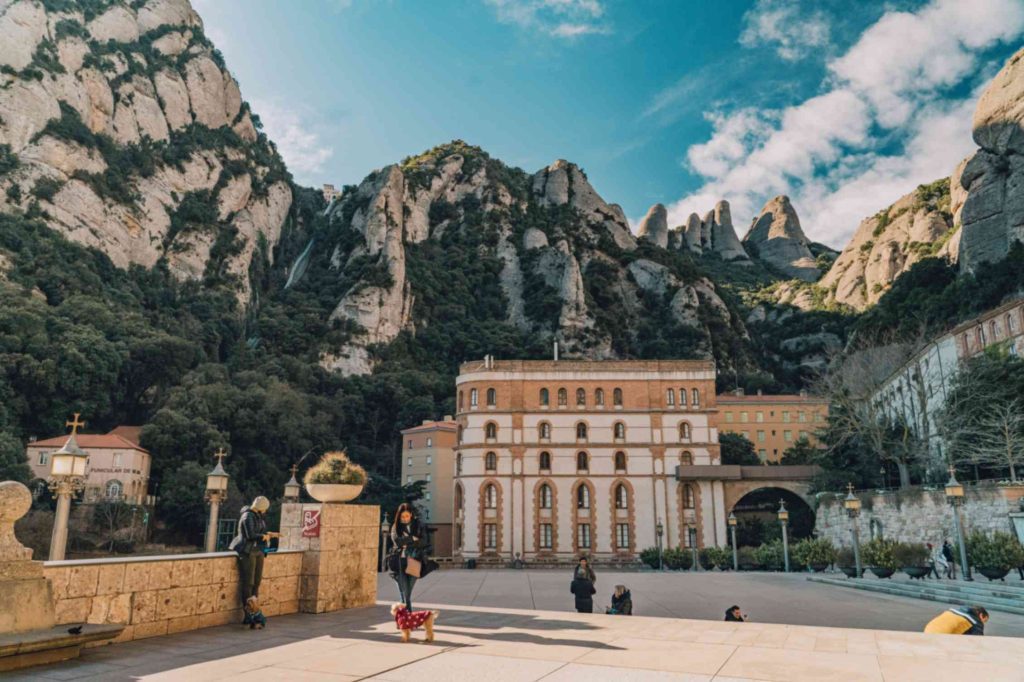
Barcelona has Gaudí; Montserrat has something the city cannot match, a Benedictine monastery set high on a mountain of strange, rounded rock pinnacles that look sculpted by a giant’s hand. Pilgrims come for La Moreneta, the Black Madonna, and for the Escolania, one of the oldest boys’ choirs in Europe, which sings in the basilica most days; you reach the whole thing by a dramatic rack railway or cable car up the cliff face. It is a genuinely different register from the city below, spiritual, vertical, and a little otherworldly. Girona is the other favorite for travelers who have already “done” Barcelona: an hour north, its stacked medieval old town, color-washed houses along the Onyar River, colossal Gothic cathedral, and intact Jewish Quarter have quietly become a highlight (and a filming location fans of a certain dragon series will recognize).
From Amsterdam: The Postcard Netherlands The City Can’t Give You

The city gives you canals and gabled houses; the countryside fills in the rest of the picture. Twenty minutes out, Zaanse Schans lines a river with working windmills and green timber houses, an open-air stretch of preserved Dutch craft where you can watch a sawmill or a paint mill turn in the wind exactly as they did in the 1600s. In spring, roughly late March to mid-May, the tulip fields at Keukenhof near Lisse deliver the wall-to-wall color the city alone never can, seven million bulbs planted in ribbons and blocks that are, essentially, land art.
From Prague: Český Krumlov And The Bone Church

Two very different escapes leave from Prague. Kutná Hora is the easy one, about an hour by train, and it hides one of Europe’s most unsettling sights: the Sedlec Ossuary, a small chapel decorated with the artfully arranged bones of tens of thousands of people, including a chandelier said to use every bone in the human body. The town’s Gothic St. Barbara’s Church, built by medieval silver-mining wealth, is the sublime counterpoint to that strangeness. Farther out, Český Krumlov is Prague in miniature, a medieval old town wrapped inside a hairpin bend of the Vltava beneath a huge castle complex with a rare Baroque theater still intact. It sits about two and a half to three hours away, so it works best as a long day or, better, an overnight, which is how it deserves to be seen anyway.
From Nice: The Riviera’s Hilltop Villages

The coast gets the glamour, but the hills above it hold the character. Èze is the one to build a day around, a stone village stacked so steeply up a peak that its lanes become staircases, crowned by an exotic garden with a heart-stopping view straight down to the Mediterranean, and home to a Fragonard perfumery where you can trace how the region’s flowers become scent. From there it is a short hop to Monaco for the other flavor of the Riviera entirely, the Belle Époque casino at Monte Carlo, the superyachts, the cliff-top Prince’s Palace. The two fold neatly into a single day that swings from medieval quiet to full glitz and back.
From Valletta: Gozo Older Than Stonehenge

A short ferry from Malta, the island of Gozo trades the capital’s bustle for slow countryside, terraced fields, and staggeringly deep history. Its Ġgantija temples are older than Stonehenge and the Egyptian pyramids, dating to around 3600 BC, among the oldest freestanding structures anywhere on earth, and standing before their massive stones rearranges your sense of how far back human design really goes. The island’s hilltop capital, Victoria, is topped by the walled Cittadella, and the dramatic Dwejra coast, where the famous Azure Window stood until it collapsed into the sea in 2017, is still worth the trip for the cliffs, the Inland Sea, and the swimming. It is the rare day trip that is genuinely quieter and older than the place you came from.
From Dubrovnik: Islands And A Cross-Border Bay

Dubrovnik’s walled Old Town is magnificent and, in high season, mobbed, which is the argument for spending a day on the water. The Elaphiti Islands, a little archipelago just offshore, make for an easy boat day of pine-shaded coves, car-free villages, and long lunches, the antidote to the crowds on the ramparts. For something bigger, cross the border south into Montenegro and the Bay of Kotor, a serpentine, fjord-like inlet ringed by mountains, where the medieval walled town of Kotor climbs the slope behind its harbor. It is close enough to fold into a single full-day adventure, and it feels like discovering a second country you didn’t plan on.
How To Make The Day Trip The Best Part
A few of these run on trains you can book yourself: Giverny, Sintra, Kutná Hora, Ostia Antica. Others, a Chianti vineyard circuit, a Wachau river-and-wine day, an Èze-and-Monaco loop, a cross-border run into Montenegro, are far better with a local who knows the roads, the timing, and the tables worth booking. That is exactly what a destination management company is for, and a network of local DMCs, reachable through TruMarketing, can build these add-ons around a trip you have already planned.
European Day Trips FAQ
What’s The Best Day Trip From Paris?
Giverny, Monet’s garden and the setting of the water-lily paintings, is the standout for art and design lovers, about 45 minutes by train plus a short shuttle. Versailles is the other essential, if you give the gardens a full day.
What’s The Best Day Trip From Lisbon?
Sintra, forty minutes away, for its UNESCO-listed palaces including the candy-colored Pena Palace and the Quinta da Regaleira’s initiation well, ideally paired with the coastal town of Cascais.
Which European Day Trips Are Worth A Guide Rather Than Doing Solo?
Wine regions and multi-stop countryside days (Chianti from Florence, the Wachau from Vienna) and cross-border trips (Montenegro from Dubrovnik) reward a local DMC or driver. Single sites reachable by train, Giverny, Sintra, Kutná Hora, are easy on your own.
When Is The Best Time For These Trips?
Spring and fall for most, warm and less crowded. A few are seasonal: the Keukenhof tulip fields near Amsterdam bloom only from roughly late March to mid-May, and Giverny’s gardens close in winter.

The Takeaway
The lesson I keep relearning about Europe is that the unforgettable part is often the detour. Book the great city, absolutely, but leave a day for the garden, the vineyard, the mountain monastery, or the town that feels like a secret. If you’d rather have those add-ons arranged by people who know the ground, a network of local DMCs through TruMarketing can put them together.
Also Read:
Österlen: Sweden’s Provence, Only Cooler and More Nordic
48 Hours in Big Sky, Montana: The Perfect Weekend Itinerary
How to Tour Yellowstone’s Lower Loop from West Yellowstone, Montana