




This post contains affiliate links. If you buy through them, I may earn a small commission at no extra cost to you. I only recommend gear I actually use and love. See my full disclosure here.
As the host of The Design Tourist and a design and travel editor, I spend most of my year on assignment, and that work has taken me into two of California’s wine regions from opposite directions. In Sonoma County I was reporting on an ambitious effort to have every vineyard in the county certified sustainable. In Mendocino County I went looking for an alternative to Napa and Sonoma and drove three and a half hours north from San Francisco on Highway 128 to find it.
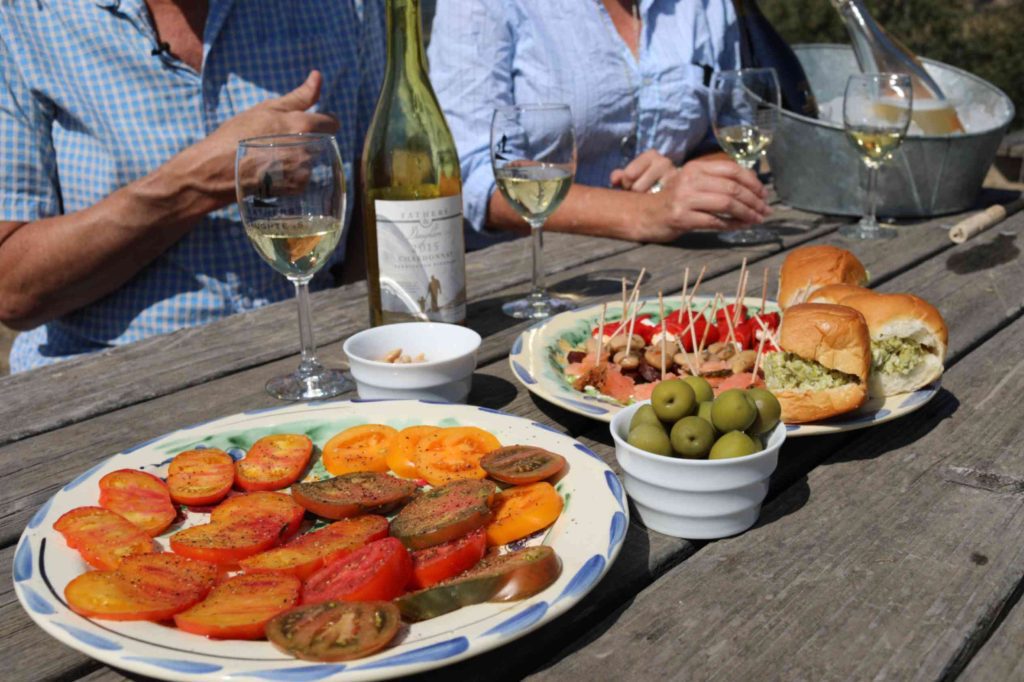
Both trips gave me the kind of access most visitors never get. A general manager walked me through fifteen acres of Pinot Noir days before it was picked. A husband and wife drove me up a hillside on an ATV to the bluff where they had been married and opened a 2015 Chardonnay to show me how their whites age. A cured meat maker explained why his salami ferments at the same patient pace as good wine.
I expected to come home with tasting notes. What I actually came home with was a handful of things winemakers told me while standing in their own vineyards, and the first of them was that I had been judging wine wrong for years.
Those lessons are what follows, along with the questions that unlock them.

Table of Contents
5 Things Winemakers Taught Me in My California Wine Tasting
1. A Pale Wine is Not a Weak Wine
Dan Reed, the former tasting room manager at Lula Cellars in Anderson Valley, poured me a Pinot Noir the color of salmon rather than garnet. I looked at it the way most of us do, which is to assume a pale glass means a thin wine. He told me that assumption is a flaw, and then explained why.
Every wine runs off the crush essentially white. Cabernet, Chardonnay, all of it. Color arrives afterward, when the juice goes back over the skins, stems, and berries. A light color tells you about skin contact, not about quality.
That pale Pinot had bright acidity and was one of the most food-friendly wines I tasted on the trip.
2. Terroir is Not a Marketing Word, it is a Soil Depth
Lula pours two single-vineyard Pinot Noirs, Costa and Peterson, both around fifty dollars, from vineyards less than a mile apart. They taste like they come from different places entirely.
The difference is underground. Costa’s roots reach down roughly 88 feet into old organic matter, buried trees, branches, leaves, and mushrooms. Peterson, a 28 year old vineyard, goes about 80 feet and hits white rock and granite. Costa tastes earthy. Peterson is mineral and edgy.
Same valley, same grape, same vintage, same price. That is terroir, made literal.
Jordan Vineyard and Winery in Alexander Valley extends the same idea past the glass, building its lunches around ingredients grown and foraged on the estate.
3. Dryness is a Decision, Not a Variety
I had assumed a wine was dry or sweet mostly by grape. It is a choice.
Lula treats having the least residual sugar of any Gewürztraminer in the valley as its hallmark, year after year, because it makes the wine work with food. Dan also settled something I had been slightly embarrassed to ask about: you can just say Gewürz. Everyone knows what you mean. Gewürz means spicy, traminer means wine.
Anderson Valley only converted to grapes in the 1970s, from apple orchards, timber, and sheep farming, and the Alsatian whites it produces now are among the driest you will find in California.
4. Oak is a Decision You Can Taste For
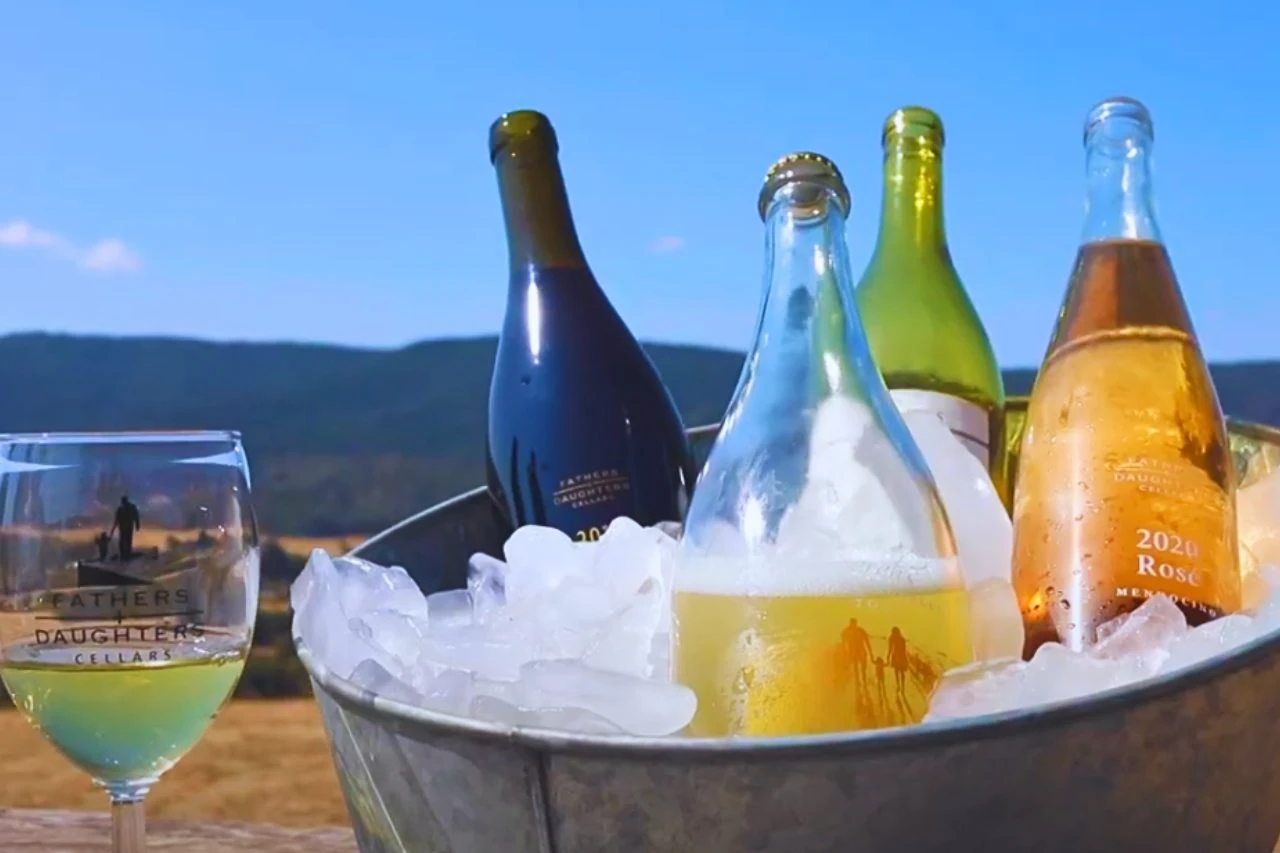
If you have ever disliked a buttery Chardonnay, you were reacting to oak, not to the grape. Guy and Sarah at Fathers + Daughters Cellars ferment all their whites in stainless steel and neutral oak, which is exactly why their Chardonnay carries none of that weight.
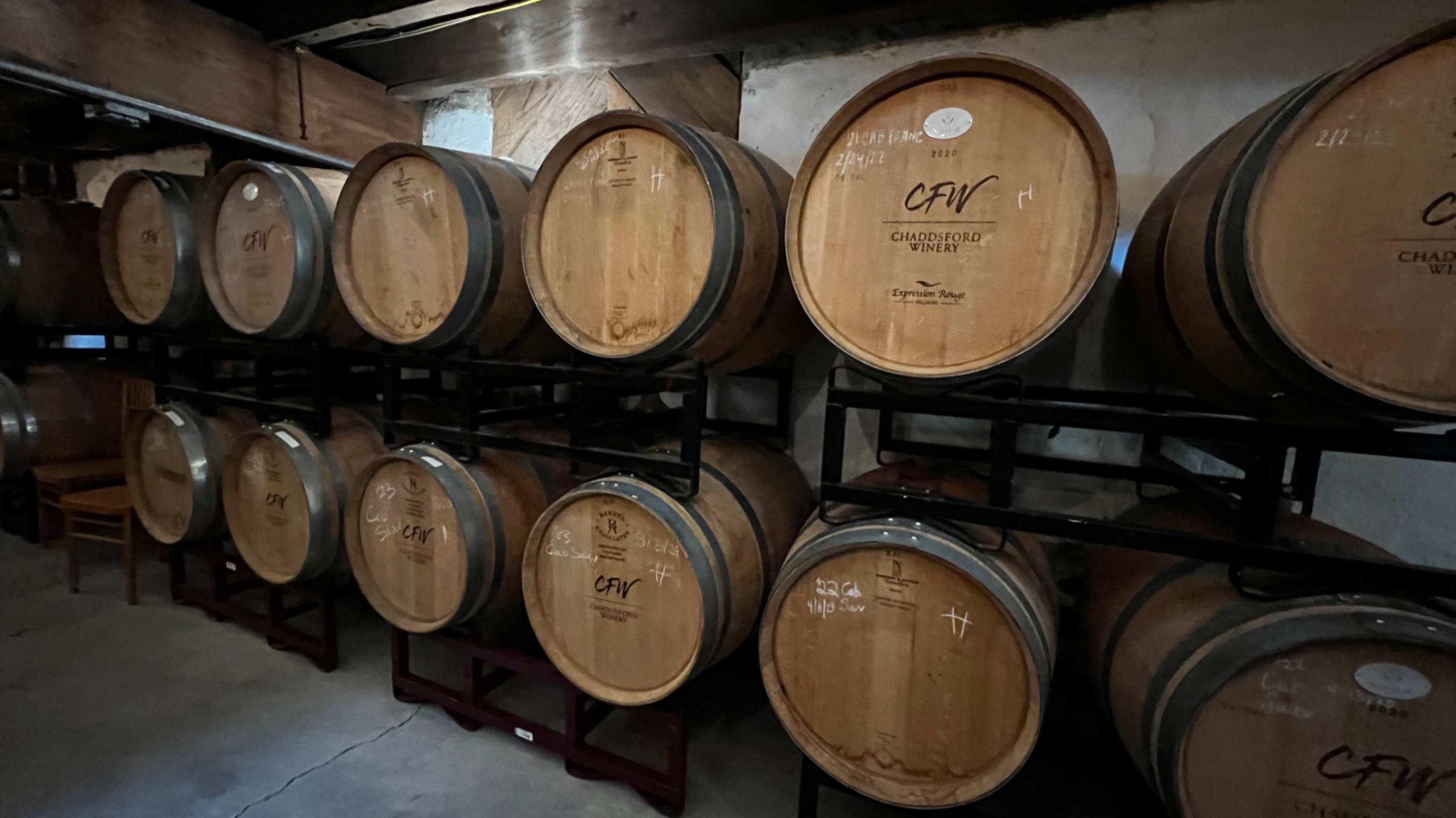
At the other extreme, Silver Oak in Alexander Valley is the only winery in Northern California using American oak exclusively. The Duncan family bought their cooperage outright when the original partners retired, because the barrels are still made by hand, about twenty a day, and toasted by hand to whatever level the winemaking team specifies. Losing the cooperage would have meant losing the house style.
Ask what a wine was aged in and for how long. It tells you more about what is in your glass than almost anything else.
5. Most Whites are Not Built to Age, But Some Are
Nearly all white wine is made to drink young. Guy makes his to lay down, which is unusual, and he opened a 2015 Chardonnay on the bluff so I could taste what several years does to one. He had meant to bring the 2020.
He and Sarah started the label about a decade ago when their youngest daughter Ella was born, and deliberately sought out a winemaker known for Pinots you could cellar, Phil Baxter, so that Ella could one day drink the first vintage. Their signature Pinot is bottled as Ella’s Reserve.
Reds vary more than you would expect too. Most California Cabernet spends around 18 months in barrel and a year in bottle, releasing at three years old. Silver Oak’s founders thought that was too young, so their Alexander Valley Cabernet gets two years in barrel and another eighteen months in bottle, releasing at four to four and a half.
Questions Worth Asking in the Tasting Room
You do not need to sound knowledgeable. You need to sound curious. Each of these got me a real answer.
- How many cases do you make a year? It tells you what kind of experience you are walking into. Lula makes 4,500 to 5,000 and is considered boutique. Fathers + Daughters makes about 750.
- How much of this is estate fruit? Lula grows roughly half its own grapes and buys the rest from around Anderson Valley and Mendocino County. That is completely normal, and the answer is interesting.
- What was this aged in, and for how long?
- What is the story of this block? Lula’s Rescue Block comes from a thousand original vines found still viable in fallow soil in 2012, and produces around 150 cases sold only to wine club members. Quivira in Dry Creek Valley works with old vine zinfandel planted in 1900, and takes its name from a place that appeared on 16th century maps of the California coast, because its founders, Holly and Henry Wendt, were serious map collectors.
- Is this vineyard certified sustainable? Worth knowing what sits behind the word. At Silver Oak it means cover crops of alfalfa, fava beans, and mustard planted in the fall and tilled back in for nitrogen instead of chemical fertilizer, a soap solution instead of herbicide on weeds, and a solar powered membrane bioreactor that lets them reuse water up to sixteen times, cutting new water use by about thirty percent. Mendocino County holds the highest concentration of organic and biodynamic vineyards in the United States.
- When do you pick? At Lula the crews pick entirely by hand, starting around nine or ten at night under lights mounted on the tractors, because they want the fruit cool. It goes out at 5:30 in the morning to a custom crush facility in Santa Rosa.
- What do you eat with this? The most underrated question in wine.
What a Real Tasting Day Actually Looks Like
Two things surprised me about how tastings work at smaller wineries.
The Best Ones are Not Advertised
Guy and Sarah do not publicize their tastings at all. You reach out, you give them at least a week’s notice, and they take you up the hill on an ATV to a bluff on the Mendocino Ridge, the spot where they were married, with Spanish tapas catered from Disco Ranch in nearby Boonville. They do not do mass tastings, deliberately, because at their size they can still get to know the people who come. Guy’s reasoning is that the tastings that stay with you are the ones held out in the vineyard, where you can see where the wine came from.
A Proper Tasting is Not Quick
At Lula, the visit began with the general manager, Chris Lanier, walking me through fifteen acres of vines, fourteen of them Pinot Noir and one of Gewürztraminer, and only then moved to an al fresco tasting with Dan. That is a couple of hours, not twenty minutes.
Plan accordingly. I spent three days tasting my way through Sonoma County, and that pace only worked because the days had other things in them.
Do Not Spend the Entire Trip in Tasting Rooms

In Mendocino County I rode a rail bike through the redwoods on tracks first laid in 1885, then hiked a mile under trees that grow past 320 feet and live more than two thousand years. That trip turned into a genuine reset for me, and I have written about why it mattered beyond the wine.
In Healdsburg I spent an afternoon with Pete Seghesio at Journeyman Meat Company, who apprenticed in Italy and runs the only USDA cured meat facility in the county, with fermentation and aging rooms brought over from Italy. He ferments slowly in the low seventies, which takes about twice as long as the industry standard, because fast hot fermentation makes salami acidic and acidity fights wine. His family vineyard has vines going back to 1896, bought by his great-grandfather with ten gold coins he earned cooking in the California gold mines.
Down the street, Jason and Krystle Jorgensen run Alley 6 Distillery, making single malt and rye whiskey, apple brandy, gin, a spiced peach liqueur from peaches grown down the road, and bitters made with mushrooms. Jason bartended for fourteen years, found a still at a flea market, and taught himself the rest. His explanation for opening a distillery in the middle of wine country was simply that he wanted a change of pace.
There is more to do in Northern California than swirl and sip.

Where to Start
For the famous names, Napa earned its reputation, and Opus One is worth seeing as much for the architecture as for the Cabernet.
For walkable wine country, Healdsburg is my pick. A town of just under 12,000 sitting where Alexander Valley, Dry Creek Valley, and Russian River Valley meet, with more than a hundred wineries and tasting rooms a short drive out. If you like zinfandel, Mazzocco in Dry Creek makes more than two dozen of them, bottled separately by vineyard rather than blended together.
For the winemaker’s full attention, go to Anderson Valley in Mendocino County. About a hundred wineries with roughly forty open to the public, cool Pacific air suited to Pinot Noir and Alsatian whites, and twelve American Viticultural Areas across the county. It is a three and a half hour drive north from San Francisco on Highway 128, through pastures, vineyards, and orchards.
Watch the full Episodes of California Wine Tasting here:
Common Questions For California Wine Tasting
Do I need to know anything about wine before I go?
No. Every host I met explained things without being asked, and answered the questions I was embarrassed to ask.
When is harvest?
It varies by vineyard, even within one valley. In Anderson Valley the fruit ripens from the warm southeast end toward the deep northwest end, and Ferrington Vineyard is usually first, which makes it the bellwether for when harvest starts across the whole valley. Lula finishes picking by mid-September, replants in November, and has wine bottled and ready to drink the following July.
Is a smaller region really better than Napa?
It depends what you want. Napa gives you prestige and polish. Anderson Valley gave me an ATV ride through the vines with the couple who planted them.
What is the angels’ share?
The amount of wine that evaporates from the barrel as it ages. It is a lovely phrase, and in Sonoma County it sits alongside a broader belief that nothing should go to waste.
Read Next:
California’s Top Cities for Water Lovers Who Want More Than Just a Beach Day
California’s Best Lakes for Peaceful Weekend Fishing Trips
Calming and Cathartic Travel in Mendocino, California