







This post contains affiliate links. If you buy through them, I may earn a small commission at no extra cost to you. I only recommend gear I actually use and love. See my full disclosure here.
Ask most travelers about Ecuador and they’ll talk about the Galápagos. The capital barely comes up, and when it does, it’s usually as a one-night stop before the flight to the islands. That’s a mistake. I spent a few days exploring Quito, and I came away convinced it’s the most underrated city in South America. Here’s what most people miss.
Quito sits at 9,350 feet, cradled by the Andes, perched right on the line that gives the country its name: the equator, latitude zero degrees. Locals call it the Middle of the World. The sun shines at its brightest here, there are no real seasons, and you get a steady 12 hours of daylight and darkness all year round. That alone is more interesting than a layover suggests, and it’s only the beginning.
Table of Contents

Why Quito Gets Overlooked (and Why That’s a Mistake)
A few things keep travelers from giving Quito a real chance.
The first is the Galápagos. Ecuador’s reputation abroad is built almost entirely on the islands, so the capital gets booked as a one-night stopover, a place to sleep before the morning flight. Plenty of people never really leave their hotel.
The second is safety. Ecuador has had unsettling headlines in recent years, and that’s enough to make some travelers skip the mainland altogether. I’ll get to what I actually experienced later, but the short version is that I walked the historic center for days and never once felt unsafe.
The third is the simplest: nobody tells you what’s here. Quito doesn’t market itself the way some other Latin American cities do, so its history, its art, and its food stay a kind of open secret. Spend more than a day and the city quietly stacks up one surprise after another. The rest of this post is those surprises.
First Impressions of Quito: A Capital Built Into the Andes
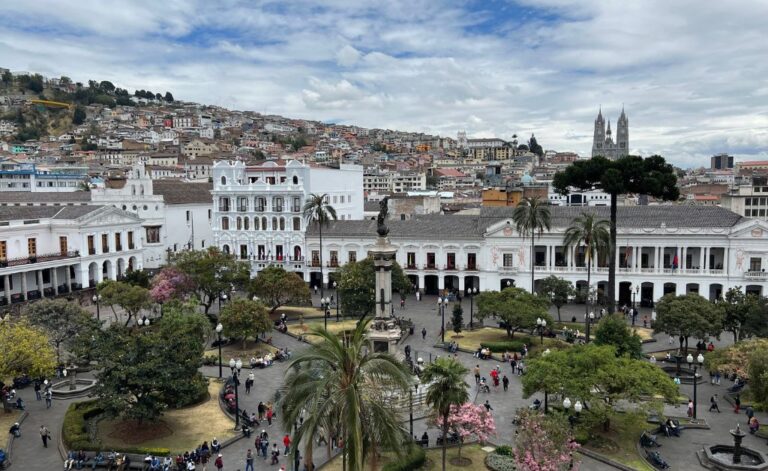
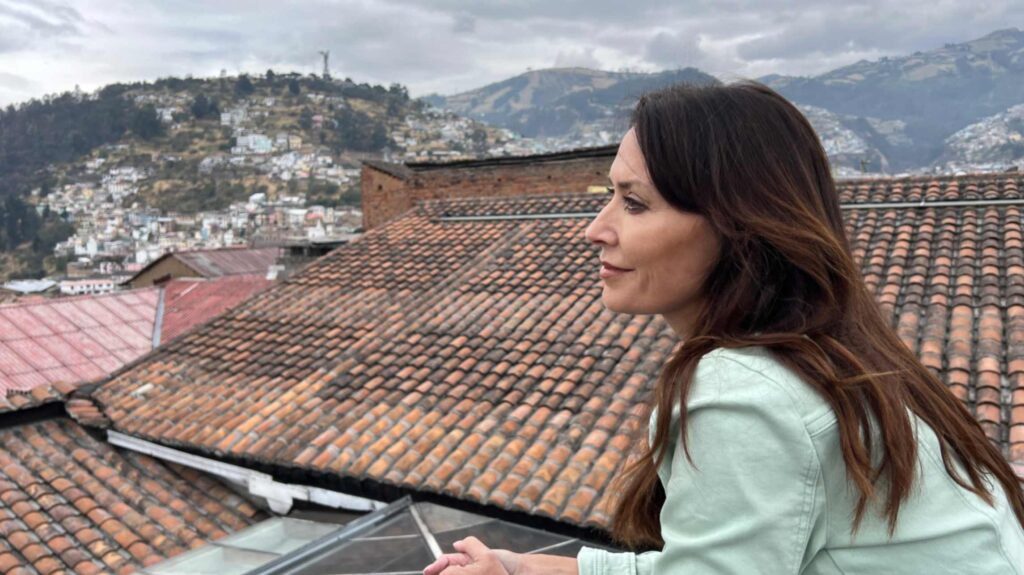
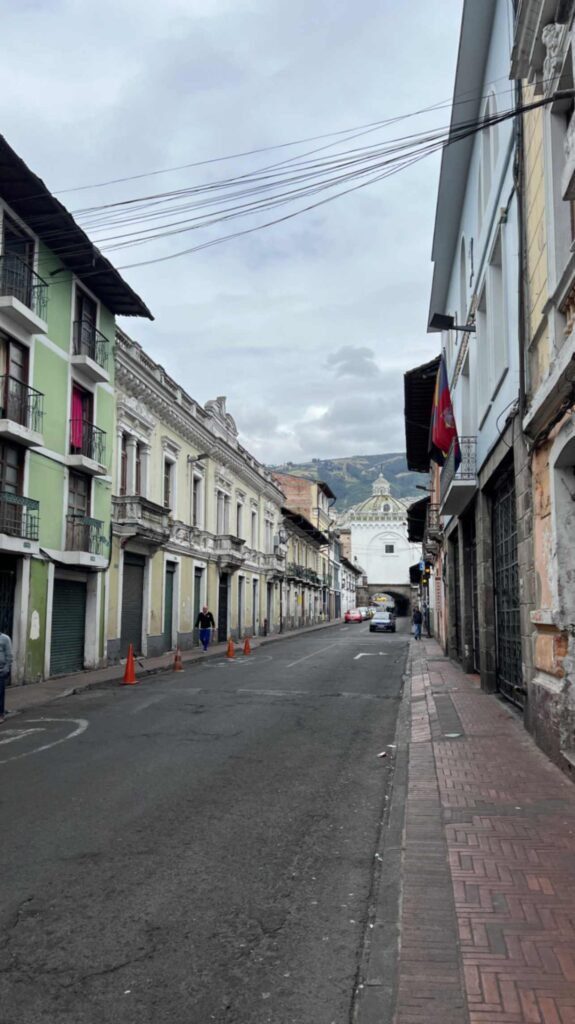
The first thing you notice is that Quito is literally built into the mountains. From almost any high point you get a panoramic sweep of the city spilling across the Andean slopes.
The landmark that anchors everything is the Panecillo, a hill named for its resemblance to a little bun of bread. On top stands the Virgin of Quito, watching over the city. She is hard to miss from anywhere in town, and Ecuadorians even have a saying about her: “Don’t go north, or the Virgin can’t watch over you.”
When I finally went up to see her close, I learned she is made of more than 4,000 aluminum pieces, took six years to assemble, and was designed by Spanish sculptor Agustín de la Herrán Matorras. She sits on the former site of an Inca sun temple, and a straight line runs from her hill to a second hill that once held the Inca temple of the moon.
That single detail is the whole city in miniature. Nothing here is just one thing. The Catholic landmark sits on the Indigenous sacred site, and both are still visible at once. It’s the kind of layered depth you’d never expect from a place people treat as an airport stop.
How I Explored Quito: A “Hero’s Journey” Through the Old Town
I didn’t plan my days in Quito. I handed that over.
I traveled with a concept called the Hero’s Journey, run by a local company, Art Experiences Travel. The idea is simple and a little unnerving: they don’t tell you what you’re doing next. Instead, each stop ends with a riddle and a small object you’ll use at the following experience. My guide, Monica Paez Espinosa, led me from clue to clue like a treasure hunt with no map.
I’ll be honest, giving up control was uncomfortable at first. But not knowing what was coming forced me to stay present, open, and free of expectations. Sebastian Vergara, the CEO of Art Hotels Ecuador, described the goal as “transformational travel,” and by the end I understood what he meant.
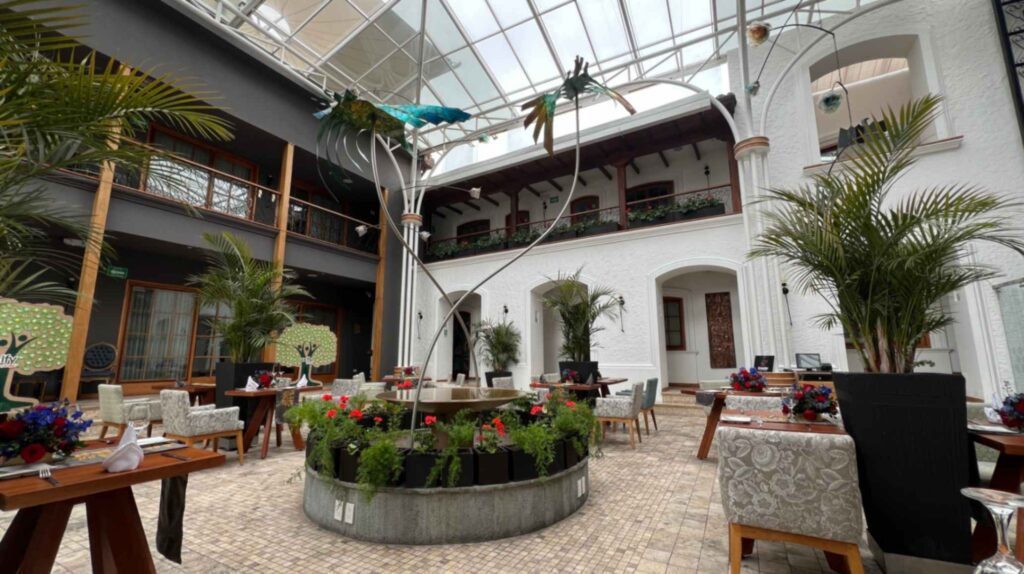
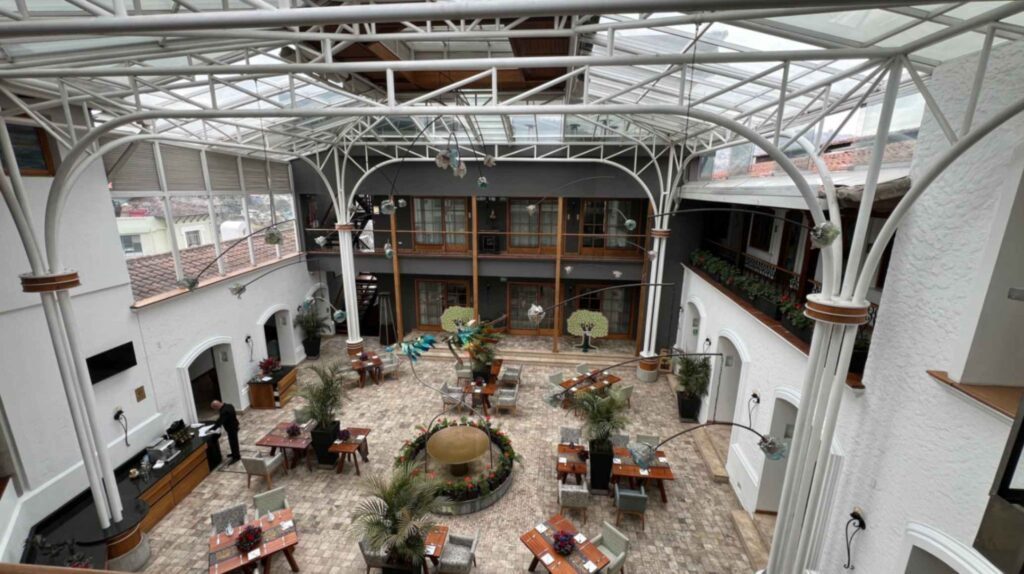
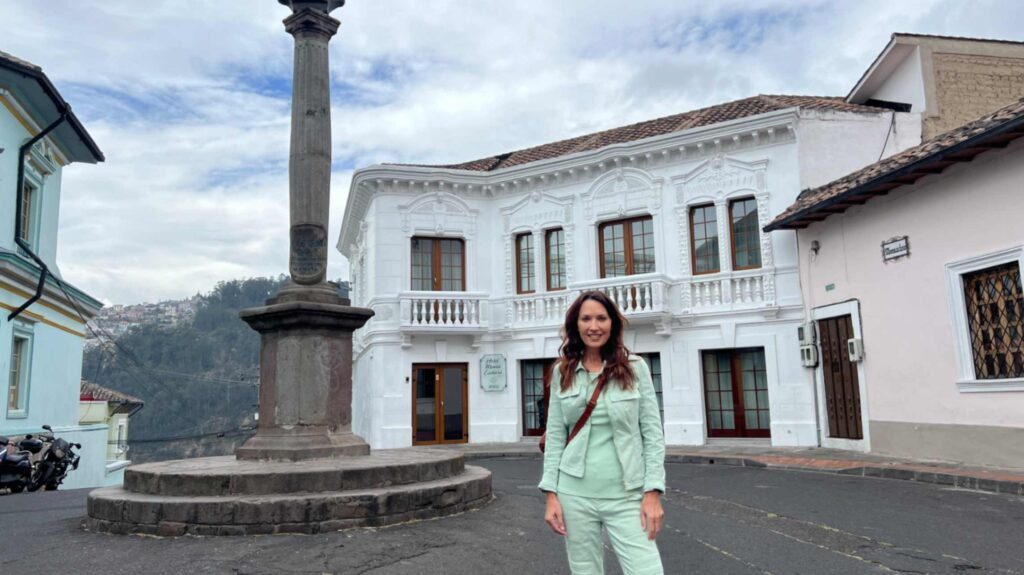
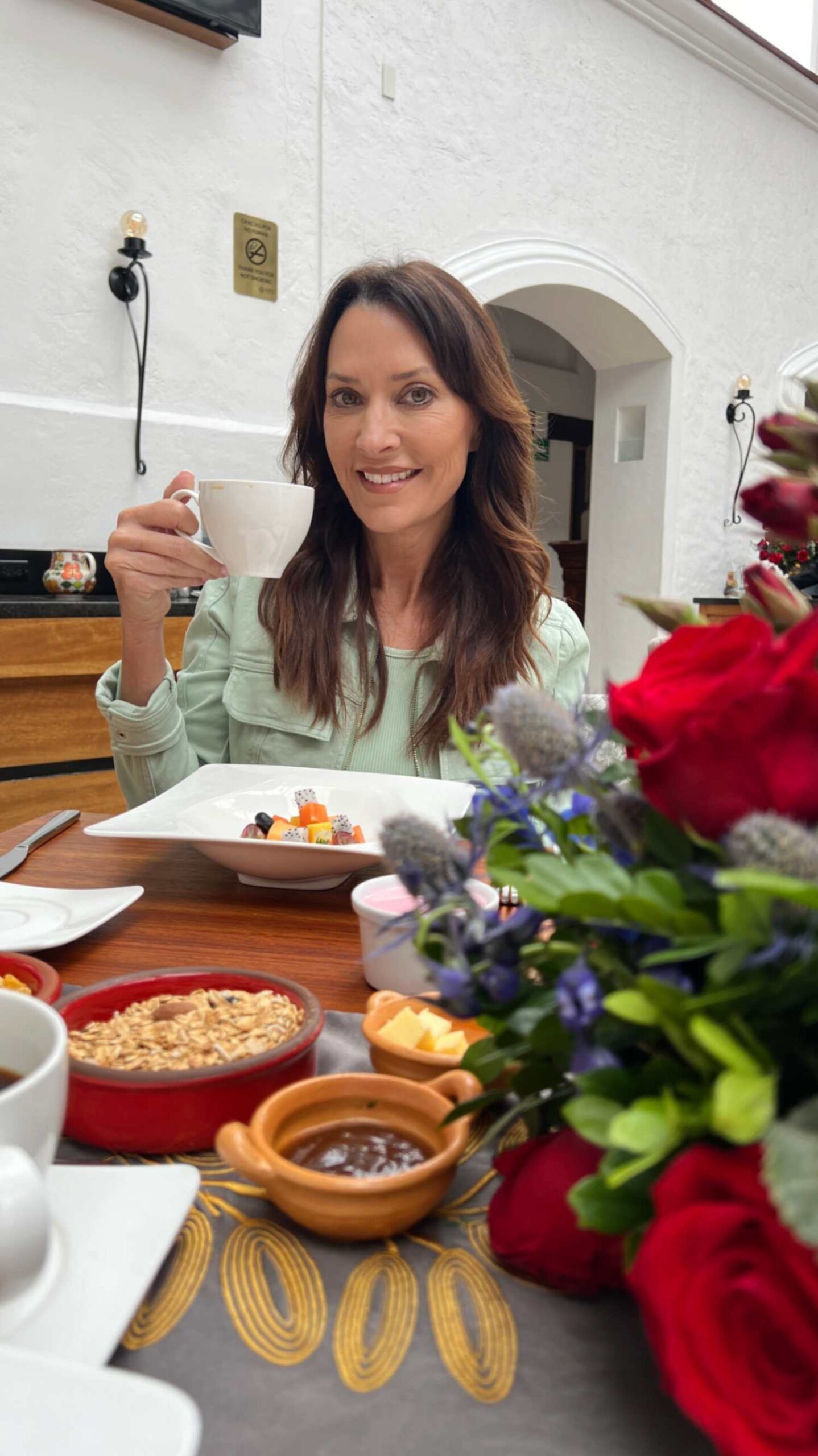
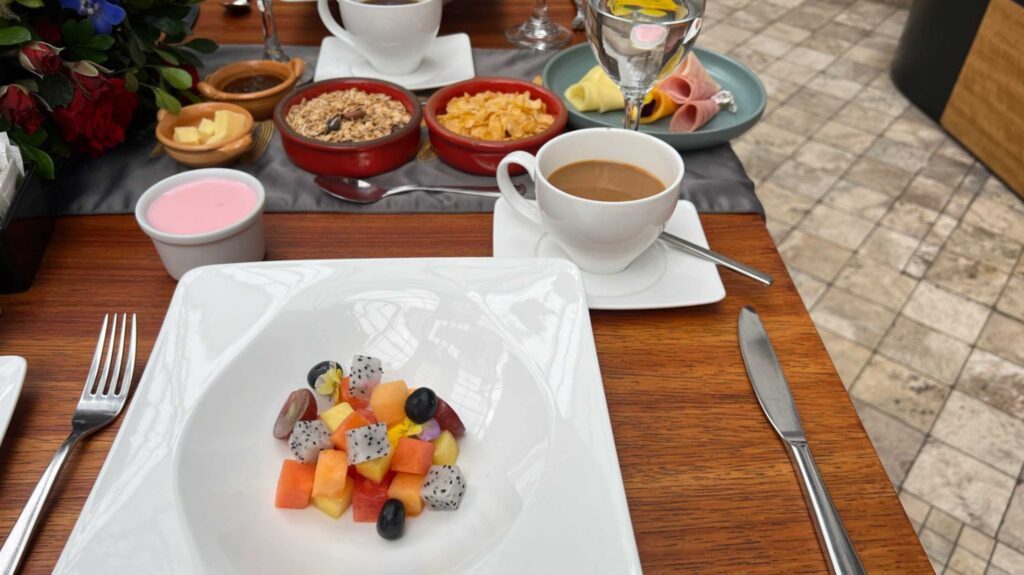
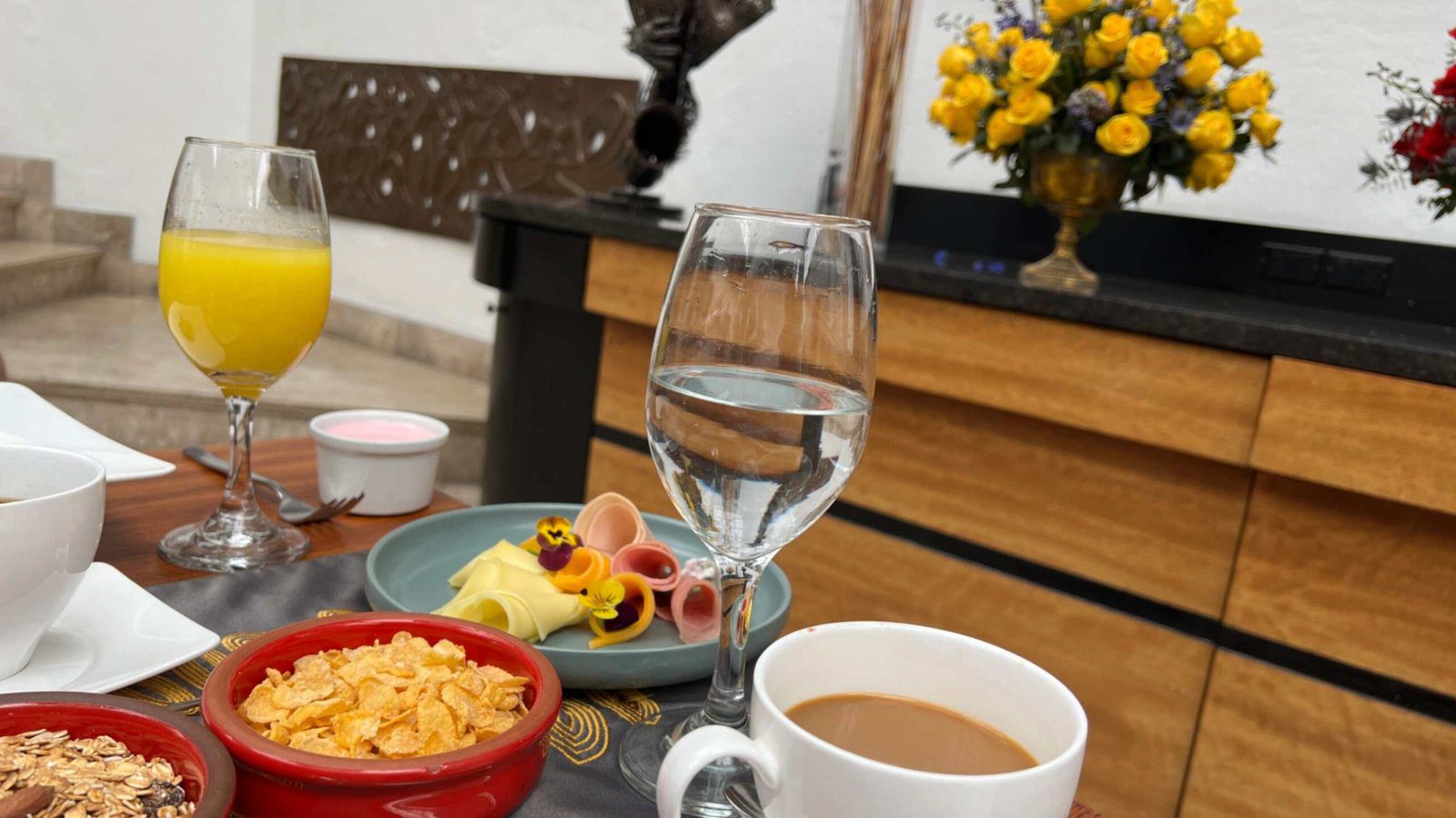
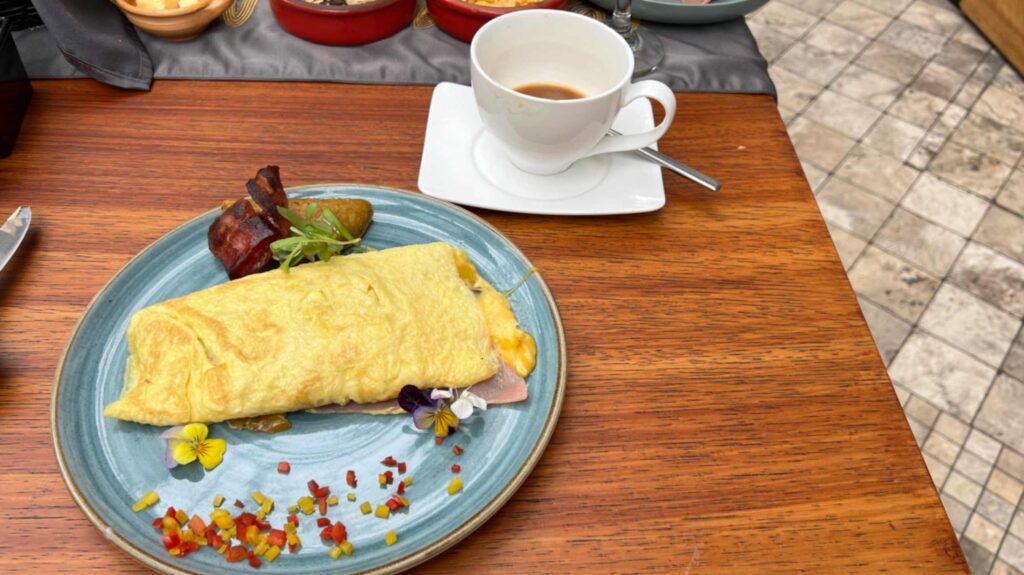
My home base was Hotel Mama Cuchara, a boutique art hotel set in a former Spanish colonial home in the heart of Quito’s Historic Center, which is a UNESCO World Heritage Site. The hotel is run by Art Hotels Ecuador, and the whole place is built around local culture: Ecuadorian art on the walls, locally made soaps and snacks, and food based on ancestral recipes.
Making Ecuadorian Chocolate in Quito, From Bean to Bar
My first clue led just a few steps from the hotel to Choco Lodge, a chocolatier inside La Cuchara Ecuadorian Gallery. This was not a polite tasting. I made chocolate from the bean up with the cacao master, Pedro Armendáriz.
A few numbers stuck with me: each cacao pod yields 40 to 60 beans, and it takes around 400 beans to make a single pound of pure chocolate. The Aztecs and Maya once turned these beans into what they called the drink of the gods, and cacao was a symbol of both status and spirituality.
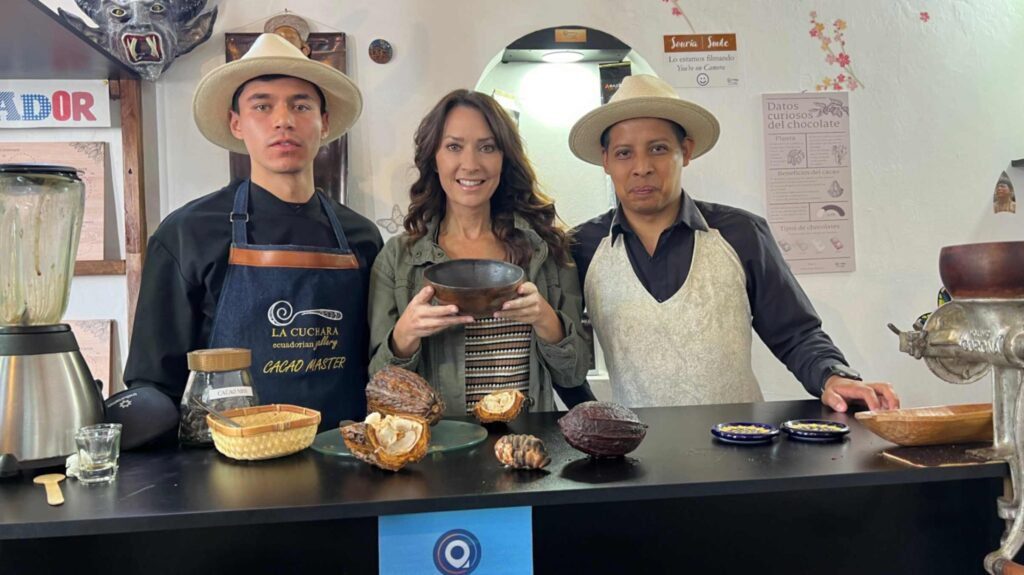
Pedro taught me to grind the beans into a fine powder and mix it with water. The recipe for the drink is short: cacao, water, milk, and what’s called grandma’s secret, a pinch of salt to bring out the sweetness. I tasted the fermented cacao, the chocolate, and even a beer version. This is exactly what people miss when they treat Quito as a layover. World-class chocolate, made by hand, a few steps from where I slept, and it’s on almost nobody’s itinerary.
A Mask-Making Workshop in Quito’s Historic Center
My next clue sent me to Alberto Ávila at El Caretero, a workshop where he crafts handmade paper and cardboard masks rooted in Ecuadorian popular culture. Masks here aren’t decoration. They carry spiritual weight in Indigenous cultures and serve as political, social, and cultural expression.
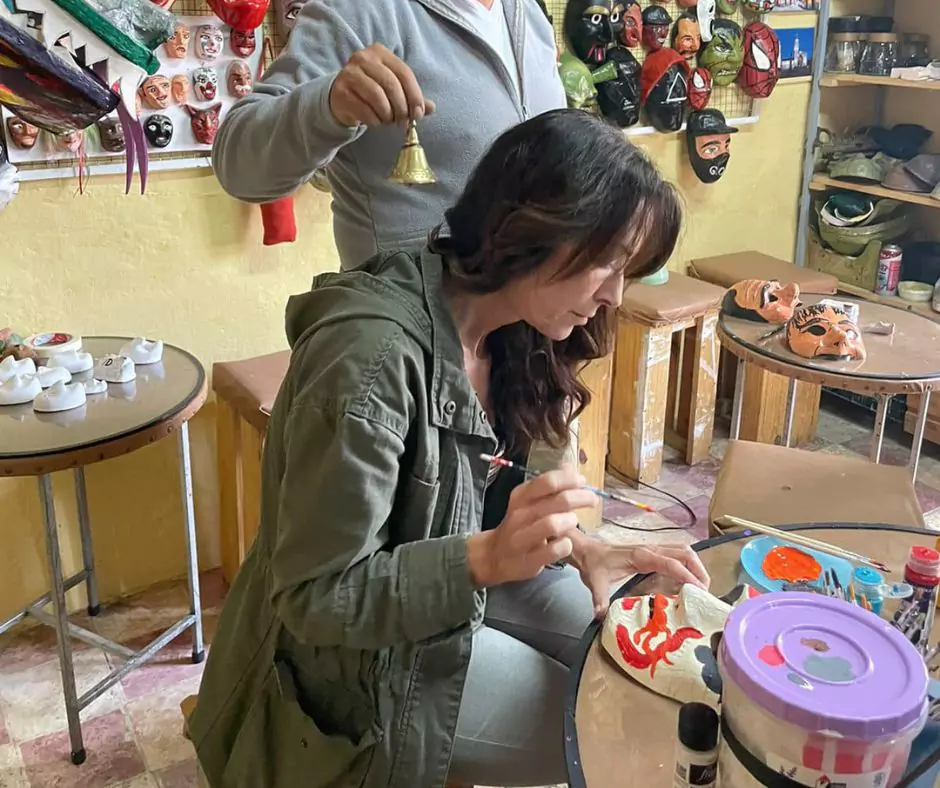
What I didn’t expect was that the visit would turn into a kind of therapy. Alberto handed me an unpainted cardboard face and started asking probing questions. With each one, I painted my answer, and a design slowly emerged from my own emotions. It felt vulnerable, even uncomfortable, but also strangely freeing, like it pulled loose thoughts I had buried.
The most striking part came at the end. Alberto told me to stomp on the mask I had just made, then he set it on fire. Watching my own creation turn to ash was the whole point: a release of ego and a reminder that material things don’t last. I walked in expecting a craft demo and walked out having had something closer to a spiritual experience.
A small detail that says a lot about Ecuador at the time: Alberto’s workshop had no electricity. The country runs largely on hydropower, and a record drought had pushed the government into rationing power.
The Quito School of Art: Where Religious Art in South America Began
Here is the fact that should make Quito famous and somehow doesn’t: this city is the birthplace of an entire art movement.
To understand it, you have to understand the history, and it’s heavier than most visitors realize. This region was part of the Inca Empire before the Spanish arrived. Spanish conquistadors led by Francisco Pizarro reached the area in 1531, and by 1534 they had founded Quito. The Indigenous groups here resisted both conquest and cultural erasure, holding tight to their own rituals and beliefs even as religious orders arrived to spread Christianity.
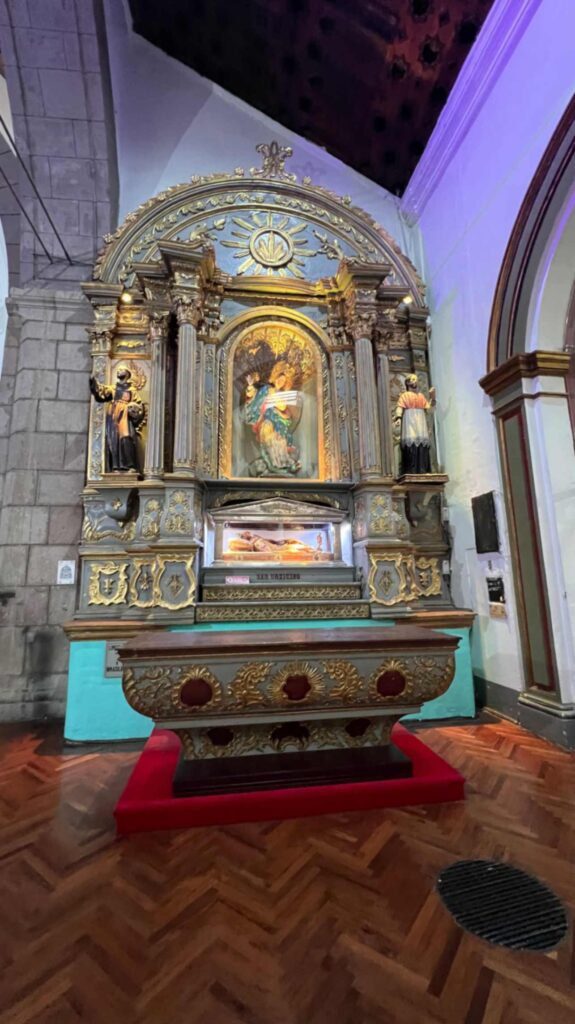
Out of that collision came something remarkable. The Spanish brought a love of Baroque art, the Indigenous artisans brought their own symbols and motifs, and the fusion became known as the Quito School of Art. Quito is considered the birthplace of European religious art with Indigenous influence, and you can see it everywhere.
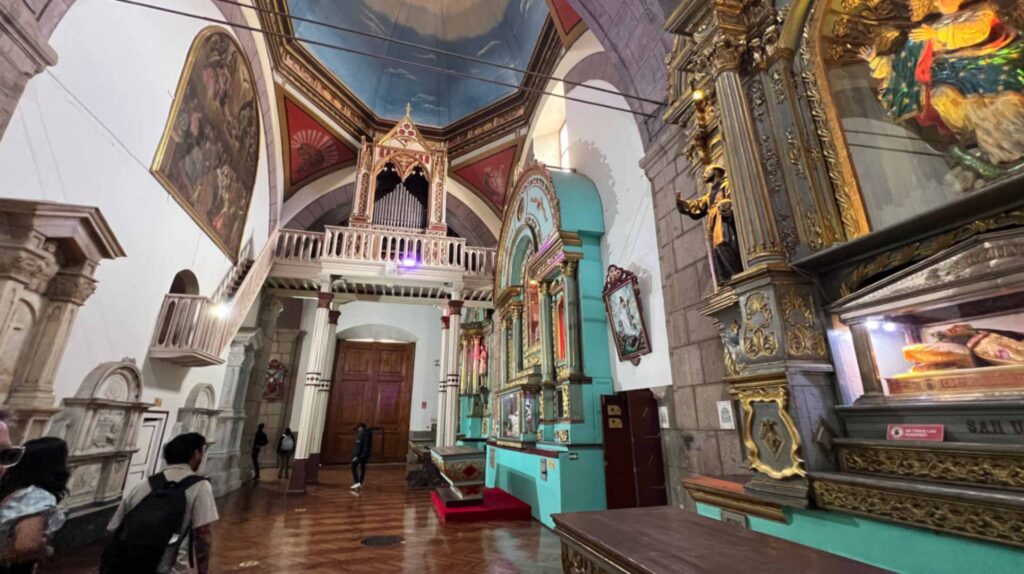
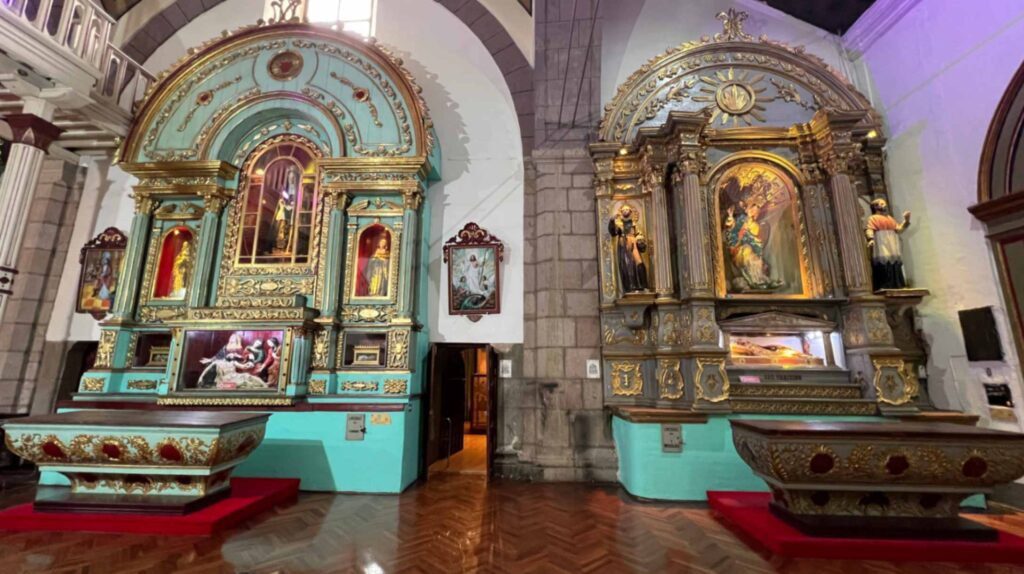
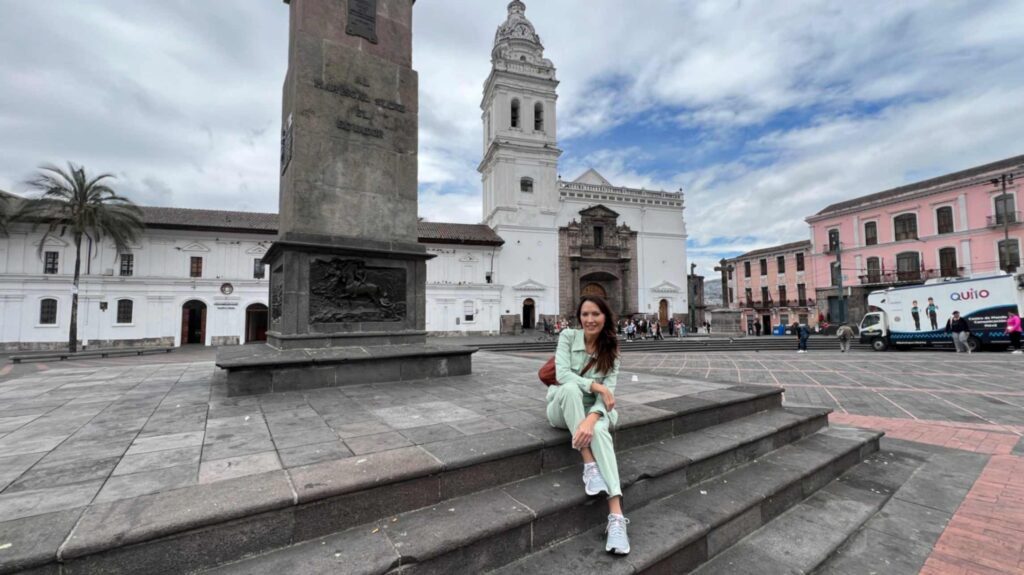
I got the clearest look at the Santo Domingo Convent, where my guide Vincente Ramos Cáceres walked me through its artistic legacy. It is still a working monastery, with Dominican priests and around 13 students living there. The church is covered in gold leafing, elaborate altarpieces, and paintings by Quito School artists. The Chapel of the Virgin of the Rosary is one of the city’s finest examples of the Baroque Indigenous style.
The part that floored me was the library. The Dominican monastery was once an intellectual powerhouse, with a two-story library holding more than 30,000 ancient books on philosophy, theology, medicine, architecture, and more. At its center sits a polyglot Bible from 1645 written in seven languages, most of them now extinct, alongside a large songbook dating to 1671. This was a center of learning in colonial Latin America, and standing there you feel it.
Quito’s Historic Center: Rooftops, Cathedrals, and the Street of Seven Crosses
Quito’s Historic Center rewards anyone willing to climb.
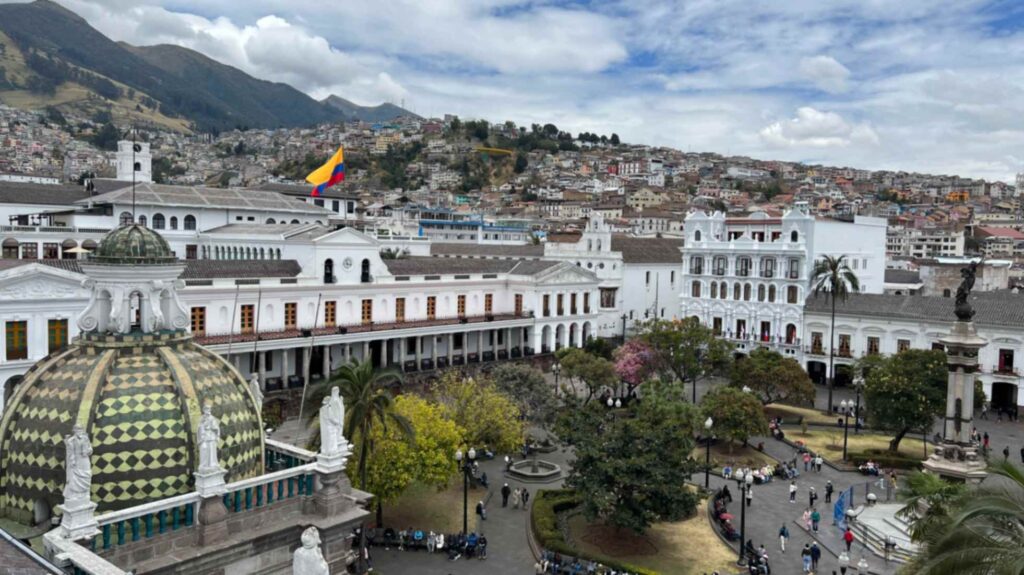
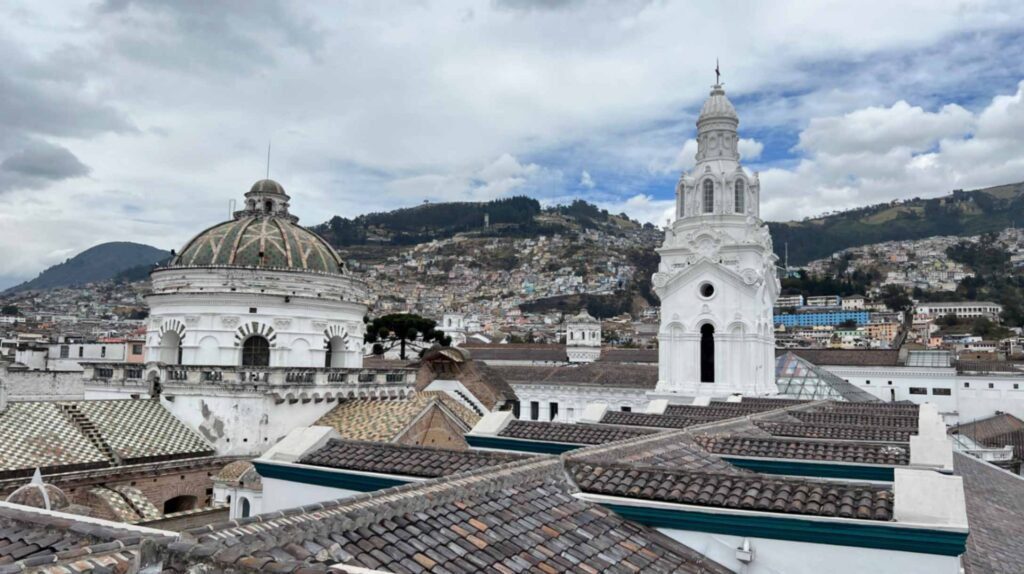
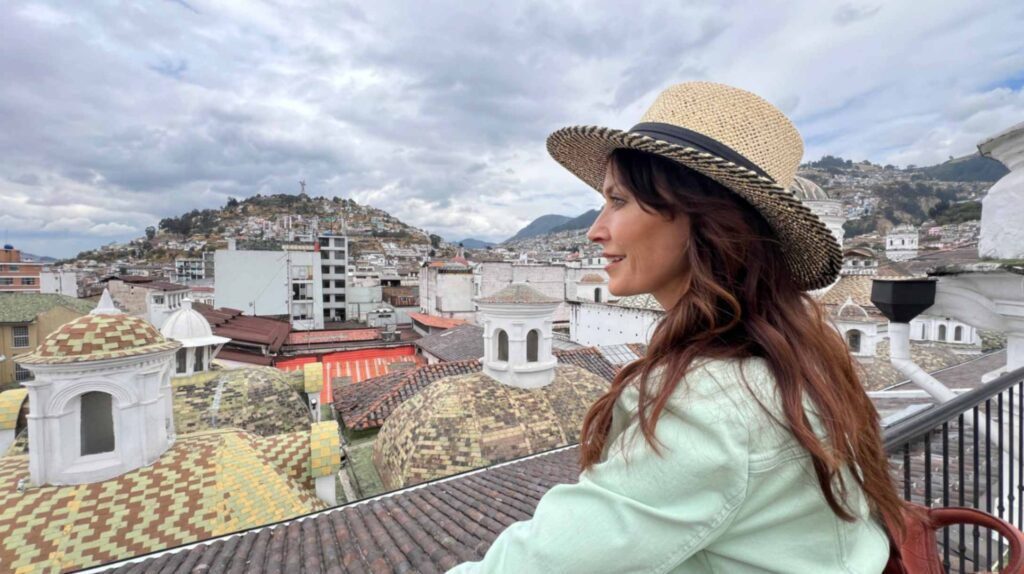
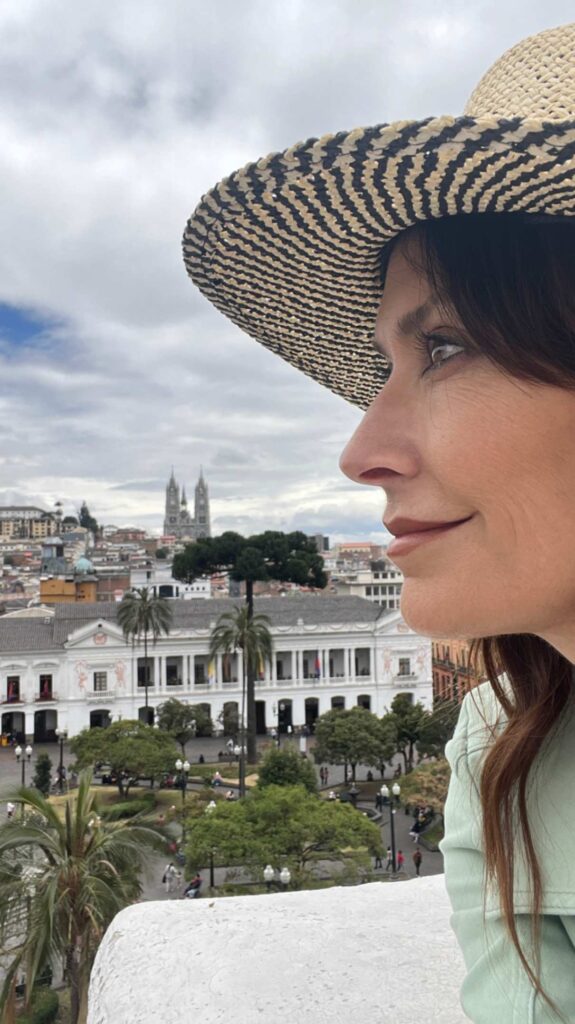
At Plaza Grande, I visited the Cathedral Primada de Quito, the first cathedral built on the continent of South America and the oldest and best preserved. The Spanish established it in 1535. I bought a ticket and climbed 54 stairs up a winding, narrow staircase, much of it in the dark, to reach the cupola. If you are claustrophobic, brace yourself. The reward is a bird’s-eye view over the entire city.
From up there you can trace the grid the Spanish laid out over old rivers and filled-in ravines. One route, the Street of Seven Crosses, follows a sacred Inca path that once connected the temples of the sun and the moon. By the end of the 16th century, churches had planted stone crosses along it as public altars.
One of those crosses stands at La Compañía de Jesús, often called Quito’s version of the Sistine Chapel. Jesuit priests began building it in 1605, and construction stretched across roughly 100 years. There’s a sharp piece of history attached to it: when the Jesuits decided to translate the Bible into Kichwa so Indigenous people could understand it, the Church in Spain expelled them from the territory for it.
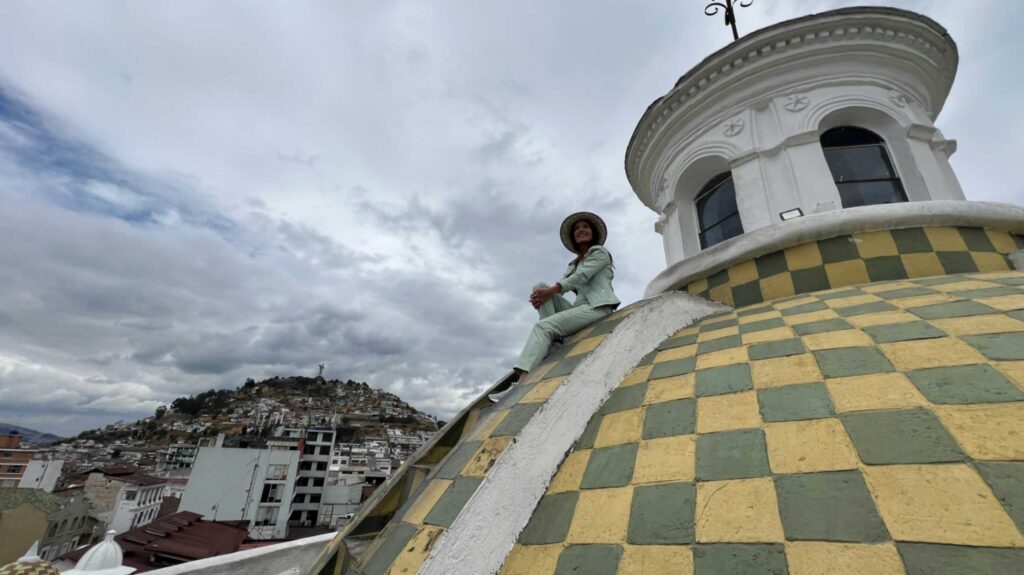
A guide named Payeska, dressed as an Inca woman from the early 1800s, walked me through this layered past. She reminded me that the Inca tracked the city by the movements of the sun and stars, and that they resisted the Spanish here for three months before the city fell. Ecuador finally gained independence from Spain on May 24, 1822, and Quito became the capital of the new Republic of Ecuador in 1830.
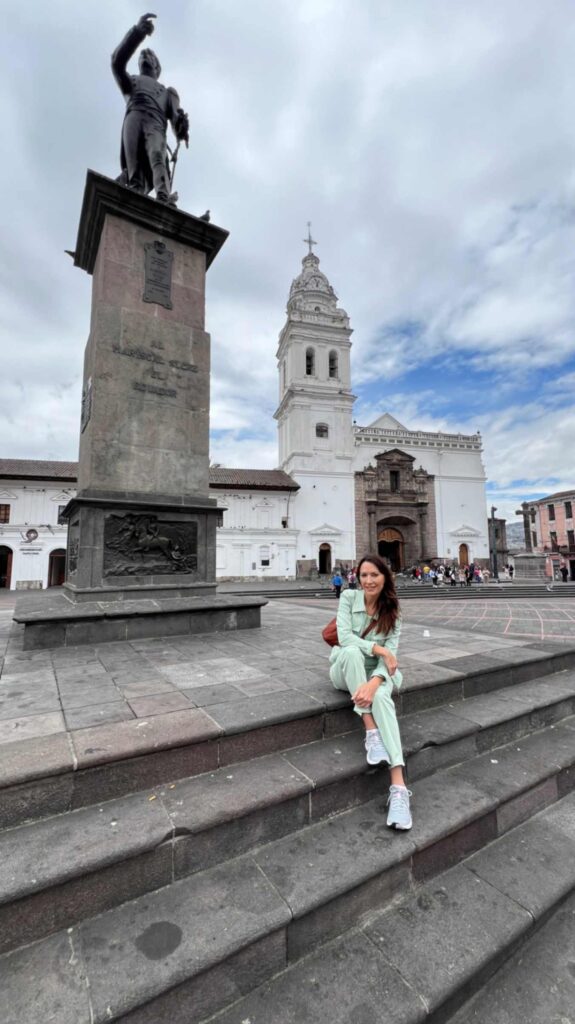
I ended the walk at Plaza San Francisco, named for the Franciscan church that overlooks it. The plaza has been a market for more than 12,000 years. Sit with that number. It predates almost everything you can think of, and I have never seen it on a single Ecuador bucket list.
Eating Ceviche in a Quito Convent (With a Surprise Dance Performance)
I was told we were having lunch at the San Diego Convent, which seemed like an odd choice until I remembered the whole point was to trust the process.
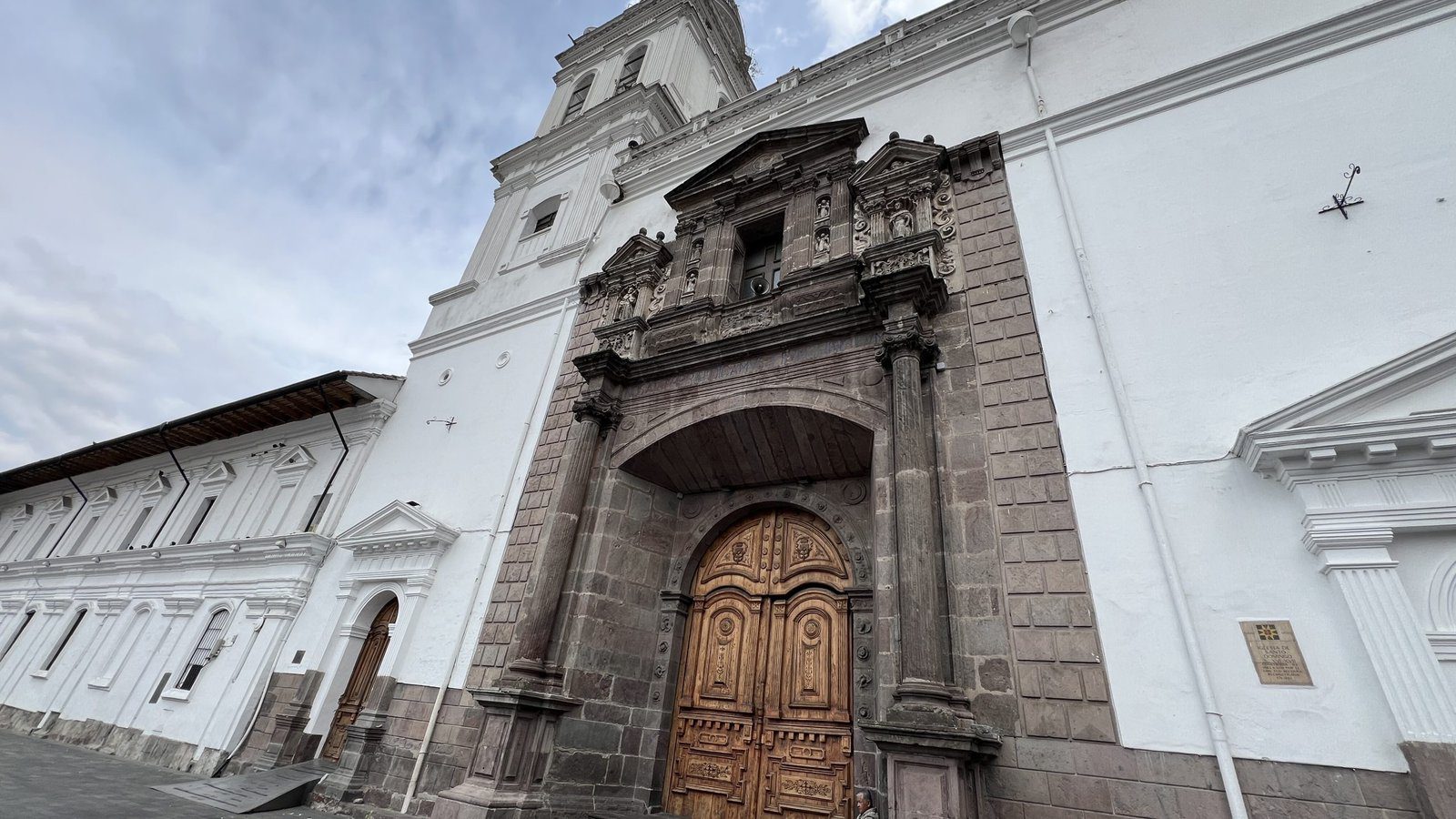
I was welcomed with mistela, a traditional Ecuadorian drink offered as a gesture of hospitality. Then two statues I had assumed were decorative, oddly dressed figures in cone hats studded with mirrors, floral and lace frocks, and dangling coins, suddenly started to move.
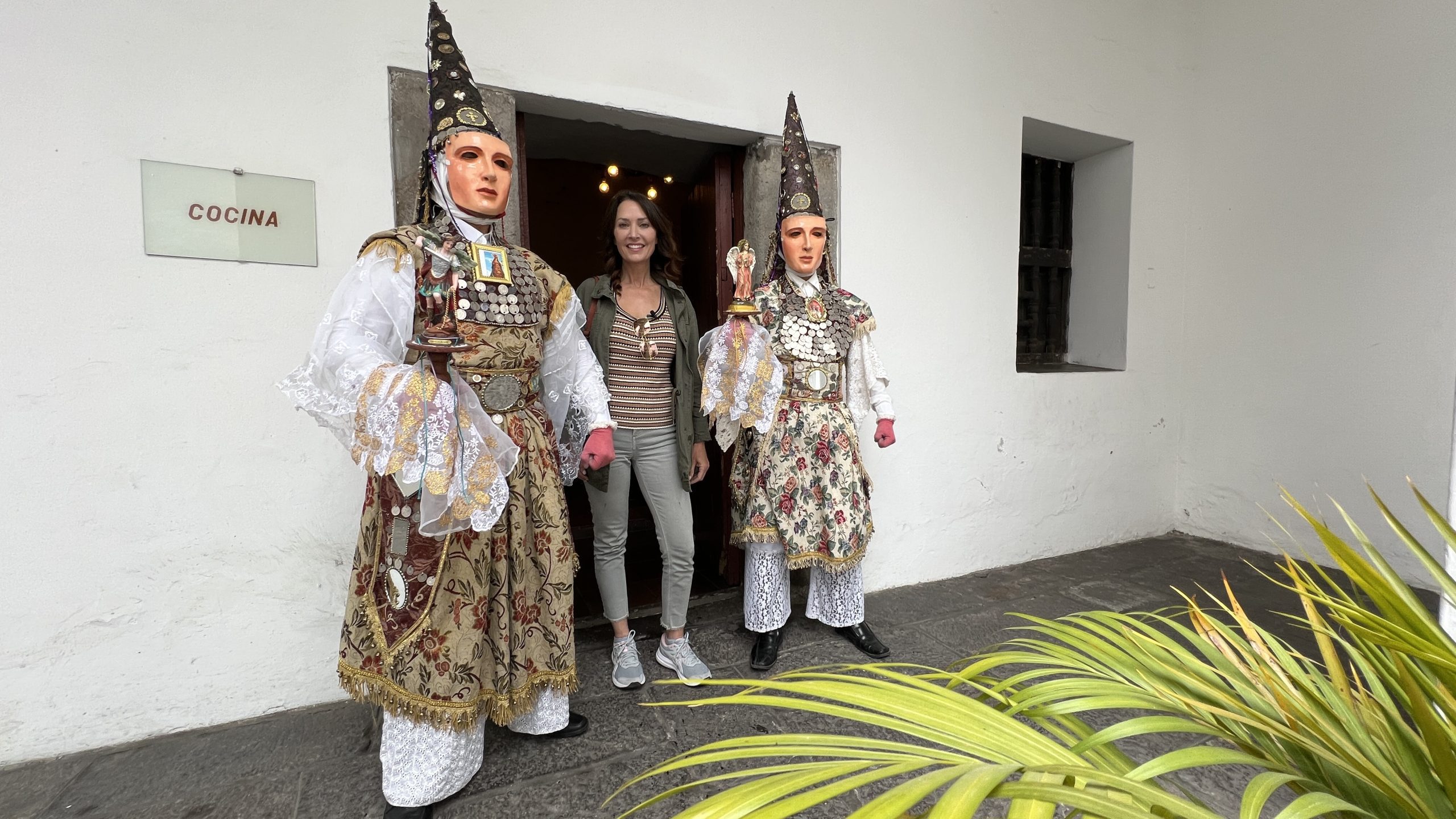
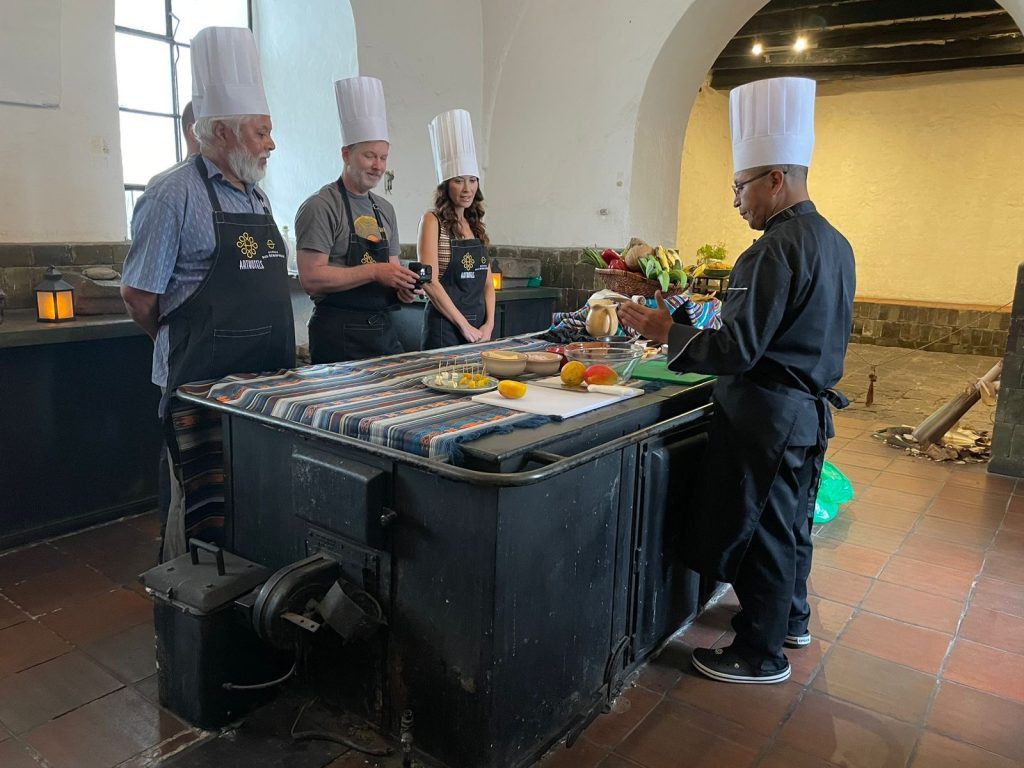
They danced and stomped, the coins jingling and the little mirrors catching the light. These are the Danzantes de Quito, performers of Indigenous dances laced with Christian symbolism. They beckoned, and I followed them straight into the convent kitchen.
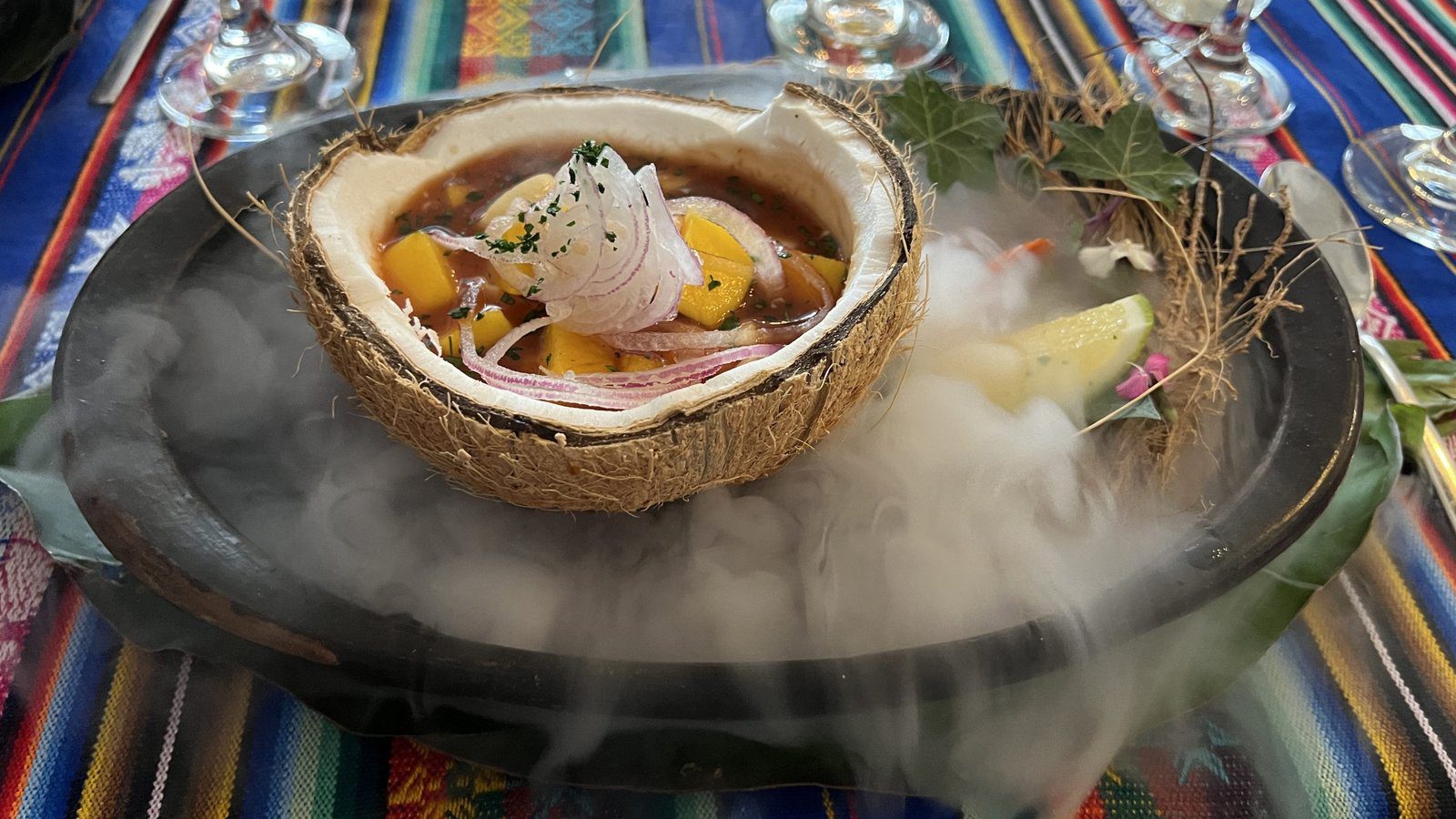
There, Chef Jaime from Hotel Mama Cuchara taught me to make ceviche, a coastal Ecuadorian dish built on tropical ingredients. Cooking is not my strong suit, and I felt completely out of my depth in my chef’s hat and apron. But stretching past your comfort zone is the entire idea of a Hero’s Journey, so I tried. Afterward, Doña Feli gave me a tour of the convent, another Franciscan space where Indigenous symbols and Christian doctrine blend in the now-familiar Quito School style.
Visiting the Middle of the World: The Equator Near Quito
No trip to Quito is complete without going to the actual middle of the world, so I drove a short distance out to the Intiñán Museum.
The museum claims to sit right on the equatorial line at zero degrees latitude. Worth a small honest note here: the exact spot has long been debated, since there was no GPS to verify the precise location when the center of the world was first identified. The museum’s guides say modern satellite measurement places the true line where they now mark it. Either way, it’s a fun stop, and it’s really a broader introduction to Ecuador’s four regions, from the Amazon to the Andes.
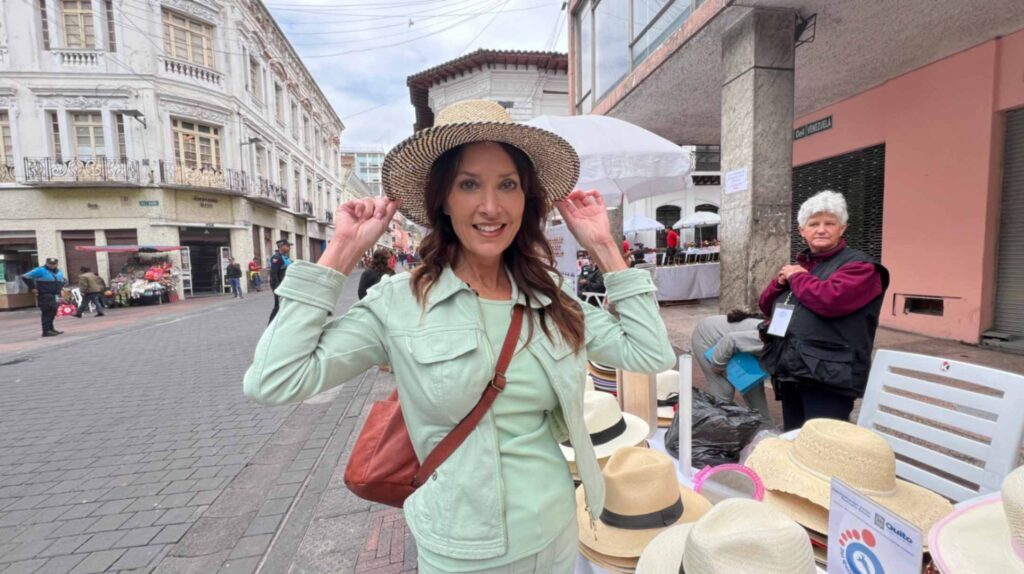
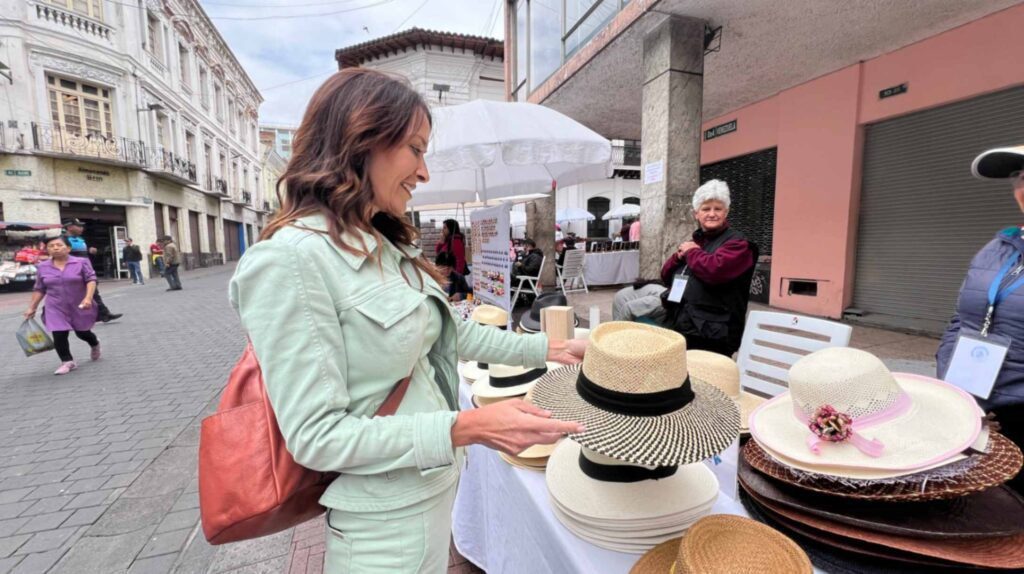
The highlight for me wasn’t the line itself. It was meeting Mama Rosa, a Kichwa weaver spinning sheep’s wool into hats and ponchos. Forget the famous Panama hat, which is also Ecuadorian. The Kichwa wear stiff, heavy wool hats sized deliberately narrow, so you have to find the right spot and hold it steady. The guide told me the snug fit actually trains better posture over time. He also joked that if a husband stays out too late and won’t help around the house, the hat makes a fine thing to throw. The whole room laughed.
Is Quito Safe for Tourists?
This is the reputation problem I mentioned earlier, so let me answer it head-on. Yes, I never once felt unsafe in Quito, though I stayed alert the way I would in any city.
I noticed my guide shaking hands with two police officers and later learned they were tourist police, quietly keeping an eye on visitors as a courtesy. They followed at a distance. Petty crime exists in any tourist area, so I used common sense and kept my wits about me. But I moved through the city aware, not afraid, and that distinction is the whole point. The headlines that keep people away didn’t match the city I actually walked through.
What It Was Like Visiting Quito During the Drought
I can’t tell this story honestly without the backdrop. When I visited, Ecuador was in the eighth month of a record-shattering drought. Wildfires were burning in the mountains around the city, and because the country relies on hydropower, the lack of water meant rationed electricity, which is why that mask maker’s workshop sat dark.
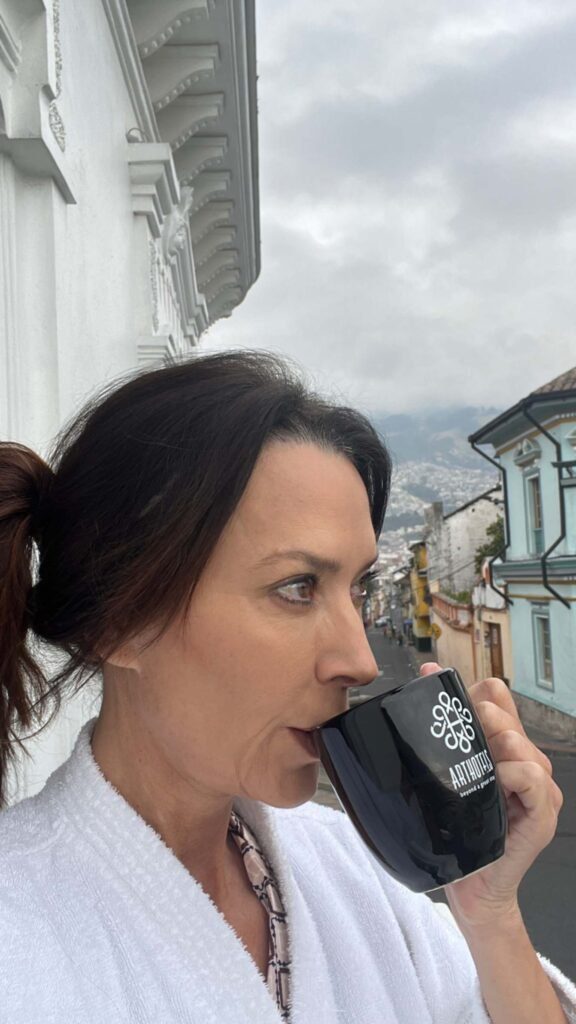
And then, near the end of my trip, it rained. The heaviest rain in 75 days. The whole country seemed to exhale at once. Standing in it felt like a fitting close to a journey that had been about presence and release the whole way through.
Is Quito Worth Visiting? My Honest Take
Yes, and the gap between Quito’s reputation and its reality is the whole reason I’d push you to go.
The reputation says layover. The reality is a UNESCO-listed historic center where Inca sacred sites sit beneath Baroque cathedrals, where an entire school of art was born, where a plaza has hosted a market for more than 12,000 years, and where a chocolate lesson or a mask-making session can crack something open in you. None of it is hidden. It’s just overshadowed by islands roughly 600 miles off the coast.
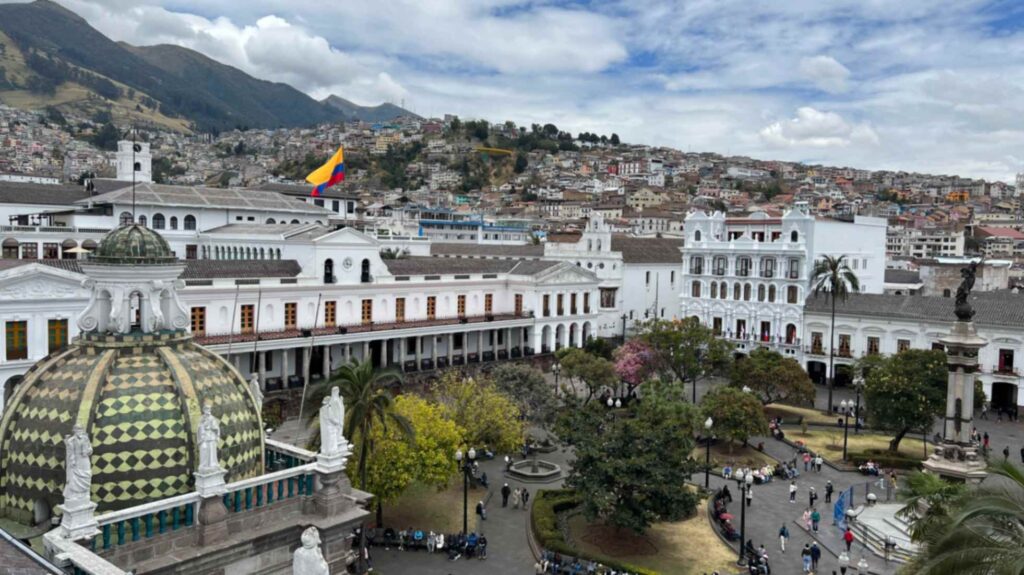
I came to Ecuador thinking the Galápagos were the main event. I left knowing the capital had quietly become the part I’ll never forget. That’s what underrated really means. Not that a place isn’t good, but that almost nobody expects it to be this good.
Planning Your Own Trip to Quito: Quick FAQ
A few practical things worth knowing before you go. These are general planning notes rather than part of the trip above.
Is Quito just a stopover for the Galápagos?
No, and treating it that way is the most common mistake travelers make. Quito has one of the best-preserved historic centers in the Americas and enough art, food, and history to fill several days on its own, well before you ever reach the islands.
How many days do you need in Quito?
Two to three days is enough to see the Historic Center properly and take a half-day trip out to the equator. Lean toward three if you want to slow down for cultural experiences like a chocolate or mask-making workshop rather than just ticking off churches.
What is Quito known for?
Quito is best known for having one of the largest and best-preserved historic centers in the Americas, a UNESCO World Heritage Site. It’s also the birthplace of the Quito School of Art, sits almost exactly on the equator, and is one of the highest capital cities in the world at 9,350 feet.
How high is Quito, and will the altitude affect me?
Quito sits at 9,350 feet (about 2,850 meters), high enough that some visitors feel short of breath or lightheaded on the first day. Take it easy when you arrive, drink plenty of water, and hold off on anything strenuous until you’ve adjusted.
If you go: Quito’s Historic Center is walkable and best explored on foot. Pace yourself for the 9,350-foot altitude on day one, use common-sense precautions in tourist areas, and consider a guided cultural experience if you want to meet the artisans rather than just photograph the churches.
Also Read:
Essential Egypt: Highlights of the Nile and Cairo
Marrakech to Sahara: Exploring Morocco’s Design and Culture
Meet Kichwa People: The Culture Bearers of Otavalo, Ecuador