



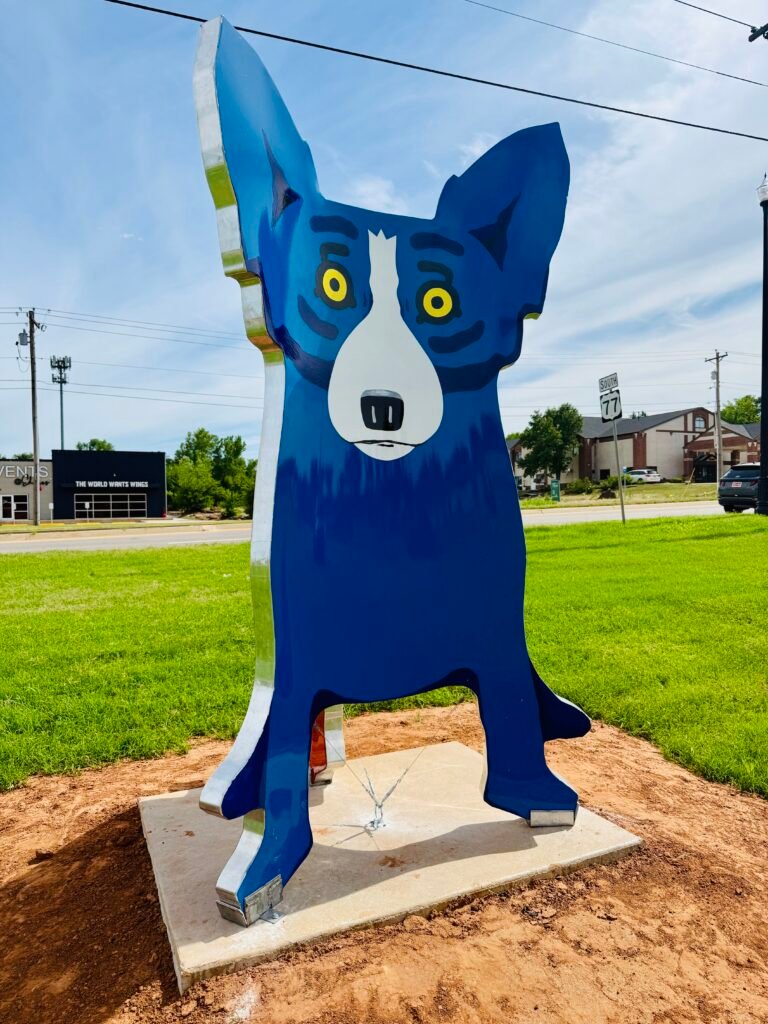
I have loved a great many dogs in my lifetime, but only one of them is eight feet tall, electric blue, and currently holding court along a stretch of Route 66 in Oklahoma like he was born to it. Then again, if you came up in South Louisiana the way I did, you learned a long time ago that the Blue Dog does not ask permission. He simply shows up — yellow eyes wide, ears at attention — wherever he pleases, and you are somehow always glad to see him.
This time, he has wandered about as far from the bayou as a Cajun werewolf can get. As part of the Route 66 Centennial Celebration, an 8-foot George Rodrigue Blue Dog sculpture now greets travelers on historic Route 66 near Oklahoma City. And I have to tell you — as a Louisiana girl who has been quietly saving up for a Blue Dog of my own for the better part of two decades — watching our most famous pup greet drivers on the Mother Road’s 100th birthday made me grin from ear to ear.
A full-circle journey on the Mother Road
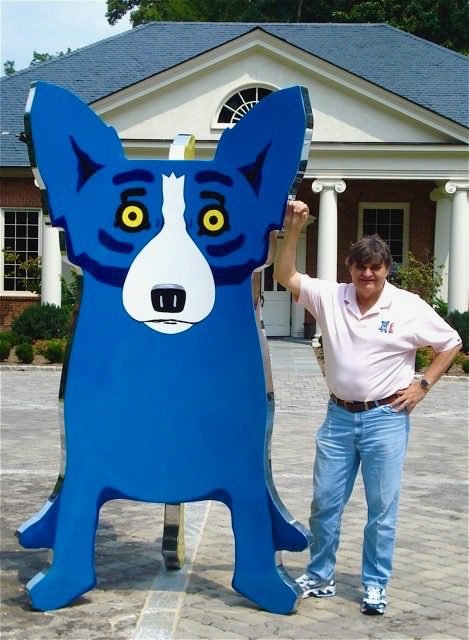
Long before the Blue Dog was an icon, George Rodrigue was just a young artist from New Iberia with big dreams and a 1962 Corvair. In that little car, he drove himself clear across the country to art school in Los Angeles, and much of that journey unspooled along Route 66.
Rodrigue talked for years about that drive, about how the sheer visual intensity of all that open American road got into his bones and shaped the way he painted light and landscape for the rest of his life. So when I say the Blue Dog has come home to Route 66, I mean it almost literally. The road that helped make the artist is now hosting the creature that made him famous.
Born under the live oaks: the Blue Dog’s Louisiana DNA
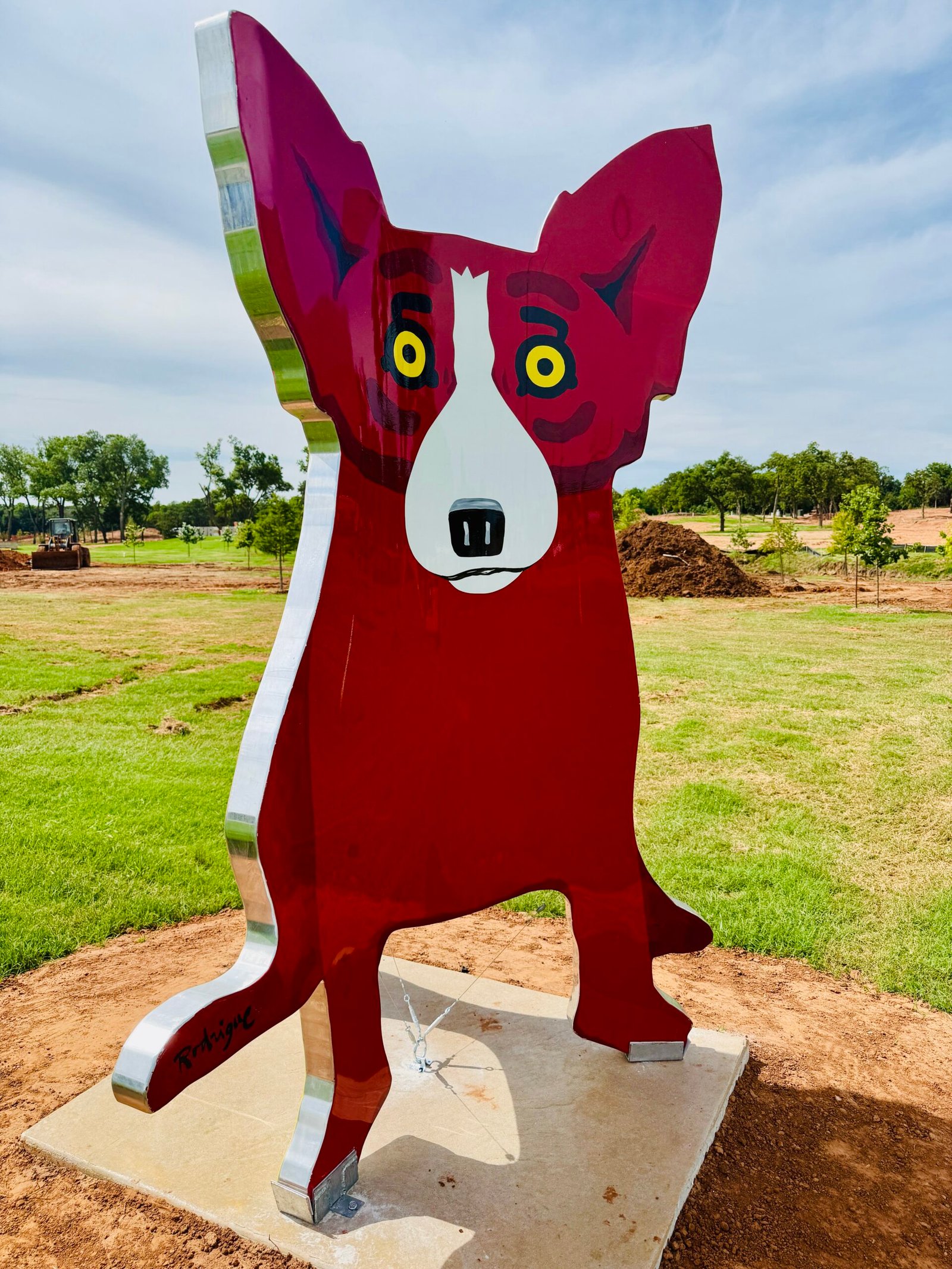
For the uninitiated, the Blue Dog is not a logo, a mascot, or (Rodrigue would want me to be very clear about this) a cartoon. He was downright adamant that the Blue Dog is a serious work of art, and he spent ten years figuring out how to translate that strong, flat, painted shape into three dimensions without losing one ounce of its soul. “Public art is sculpture,” he said, and he meant it as a standard, not a slogan.
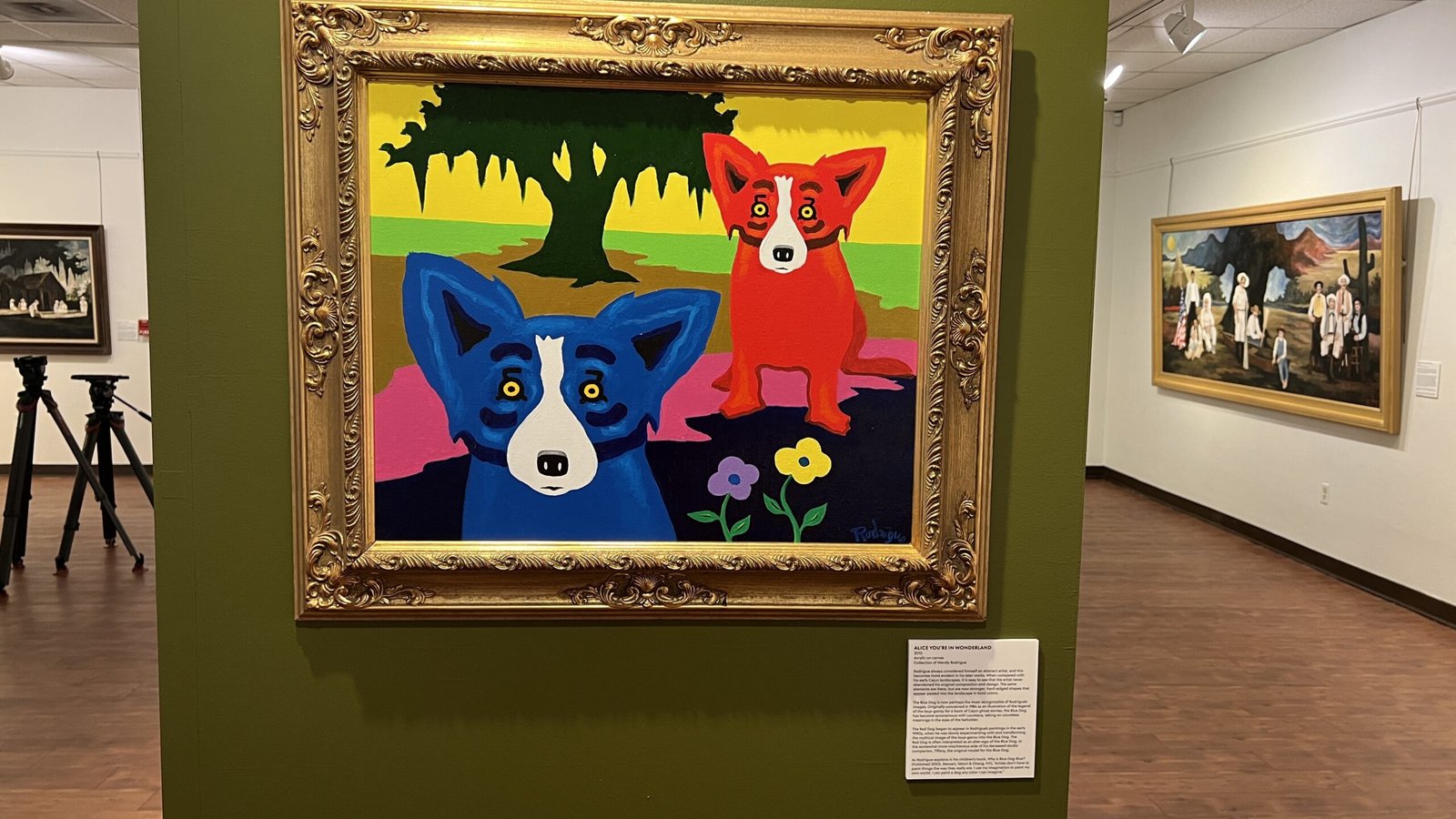
But the story of the Blue Dog? That is pure Louisiana folklife, and it is the reason I fell for him as a child. The dog began as the loup-garou — the Cajun werewolf our grandparents used to invoke to keep us from wandering too far into the dark. Rodrigue modeled him on Tiffany, his own beloved studio dog, then washed him in that haunting, hypnotic blue and set him loose beneath the live oaks of South Louisiana. Growing up, I watched the Blue Dog appear in painting after painting like a quiet witness to our heritage, our history, our particular way of being in the world. He felt less like a subject and more like a member of the family.
And the man who dreamed him up never forgot where he came from. Rodrigue famously credited his hometown for everything, once saying that if he hadn’t been from New Iberia, he probably would never have painted at all.
This particular pup once guarded a Lafayette café
Now here is a piece of trivia to whip out at your next crawfish boil. The very sculpture now charming the good people of Oklahoma is not some fresh-off-the-truck reproduction. This Blue Dog has history. He was originally installed by Rodrigue himself at the former Blue Dog Cafe in Lafayette, Louisiana, which means generations of us drove past him, photographed him, and let him preside over more than a few plates of étouffée before he ever set paw on Route 66.
Today, he belongs to the George Rodrigue Family Trust, and in recent years, he has traveled the country starring in Rodrigue museum exhibitions. In 2027, he will settle into a more permanent home at the Uncommon Ground Sculpture Park — a 62-acre public space devoted to “art, nature and play” rising along Route 66 in Edmond, and Oklahoma’s very first dedicated sculpture park. A Lafayette café dog with a national passport. I could not be prouder of him.
Carrying the legacy forward — and into the classroom
What I love most about this whole endeavor is that it is not just about parking a beautiful sculpture and calling it a day. The folks behind Uncommon Ground, along with a group of private donors, have invited Rodrigue’s widow, Wendy Rodrigue Magnus, to bring his art and his story directly to students across Oklahoma public schools this fall. Through her nonprofit, the Life & Legacy Foundation, Wendy will share original Rodrigue paintings from her own collection, with — fittingly — Route 66 woven right through the lessons.
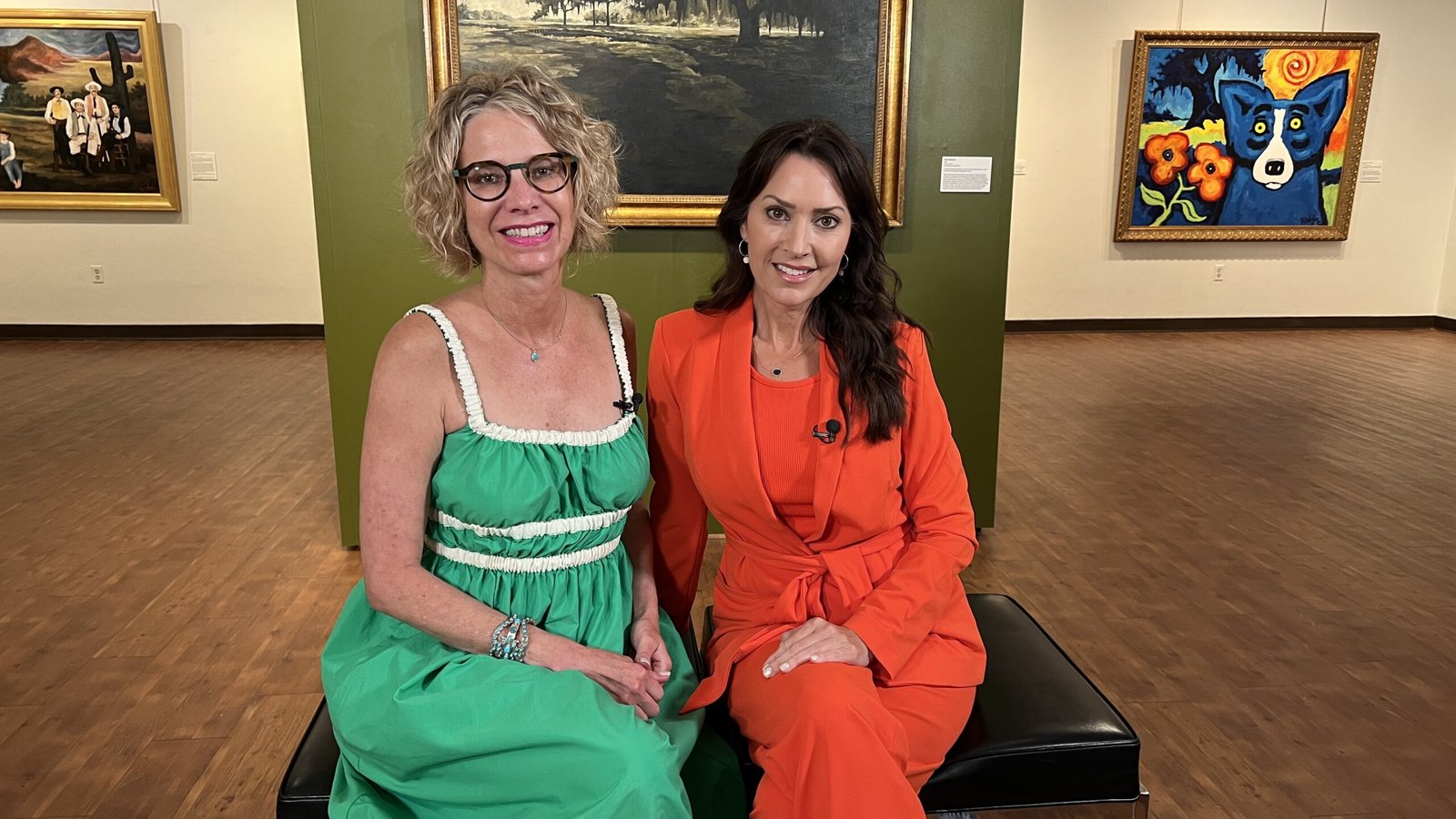
Wendy put it better than I could:
“George’s magnificent sculpture is where it belongs, in the public arena, where it delights and inspires. I’m thrilled for George over the nostalgia and Americana surrounding this longterm installation on the Mother Road!”
That is the part that makes my Louisiana heart swell. A Cajun kid who taught himself to paint while bedridden with polio, who hauled his ambitions west in a beat-up Corvair, has become an ambassador of American art, reaching schoolchildren a thousand miles from the live oaks he loved. The Blue Dog was always about belonging. Now he is teaching it.
Where to visit the Blue Dog (start at home, naturally)
If all this has you itching to stand toe-to-paw with a Blue Dog of your own, you are in luck, because Rodrigue’s sculptures, ranging from 6 to a whopping 18 feet, are scattered across the country like blue breadcrumbs. You will find them on Scenic Hwy 30A in Rosemary Beach, Florida, and at Santa Fe Community College in New Mexico.
But you know, I am going to send you to the source first. Right here in Louisiana, you can visit the Blue Dog at the Sculpture Garden at the New Orleans Museum of Art, along Veterans Memorial Blvd in Metairie, and at the George Rodrigue Park at the Bayou Teche Museum in New Iberia, the artist’s hometown. Standing in that park, in that town, looking up at that face, you understand exactly where the magic started. (And if you have ever wondered why he painted that dog blue in the first place, I went looking for the answer once — and it is quite a tale.)
So here is to the Blue Dog: a Cajun werewolf turned global art star, road-tripping across America’s most storied highway, reminding everyone he meets that the most extraordinary things often come from the most rooted, soulful, gloriously specific corners of the world.
George Rodrigue Blue Dog Sculpture on Route 66: FAQs
Where is the George Rodrigue Blue Dog sculpture on Route 66?
The 8-foot Blue Dog sculpture currently greets travelers on historic Route 66 near Oklahoma City. In 2027, it moves to its permanent home at the Uncommon Ground Sculpture Park, a 62-acre art park on Route 66 in Edmond, Oklahoma.
Who created the Blue Dog?
The Blue Dog was created by George Rodrigue (1944–2013), a Cajun artist from New Iberia, Louisiana. He made the image world-famous beginning in the 1980s and spent roughly ten years translating it into sculpture.
Why is the Blue Dog blue?
The Blue Dog began as the loup-garou — the Cajun werewolf of South Louisiana folklore — modeled on Rodrigue’s studio dog Tiffany and washed in an eerie, hypnotic blue. You can read the full story in Why Is the Blue Dog Blue?
Where can I see Blue Dog sculptures in Louisiana?
Louisiana hosts several, including the Sculpture Garden at the New Orleans Museum of Art, Veterans Memorial Blvd in Metairie, and the George Rodrigue Park at the Bayou Teche Museum in the artist’s hometown of New Iberia.
What is the Route 66 Centennial?
Route 66 — “the Mother Road” — was established in 1926, making 2026 its 100th anniversary. The Blue Dog installation is part of the year-long centennial celebration.
Karen LeBlanc is a Louisiana native and award-winning travel journalist who explores the culture, craft, and characters that make her home state — and the wider world — worth the trip. Learn more at TheDesignTourist.com.