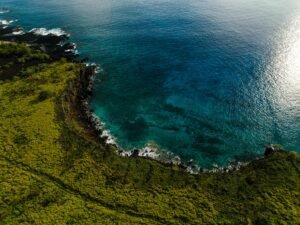




In downtown St. Petersburg, Florida, lies a futuristic glass and concrete structure that looms large over the waterfront dotted with docked sailboats. This architectural oddity is an attraction inspired by its the contents, the surrealist works of Salvador Dali.
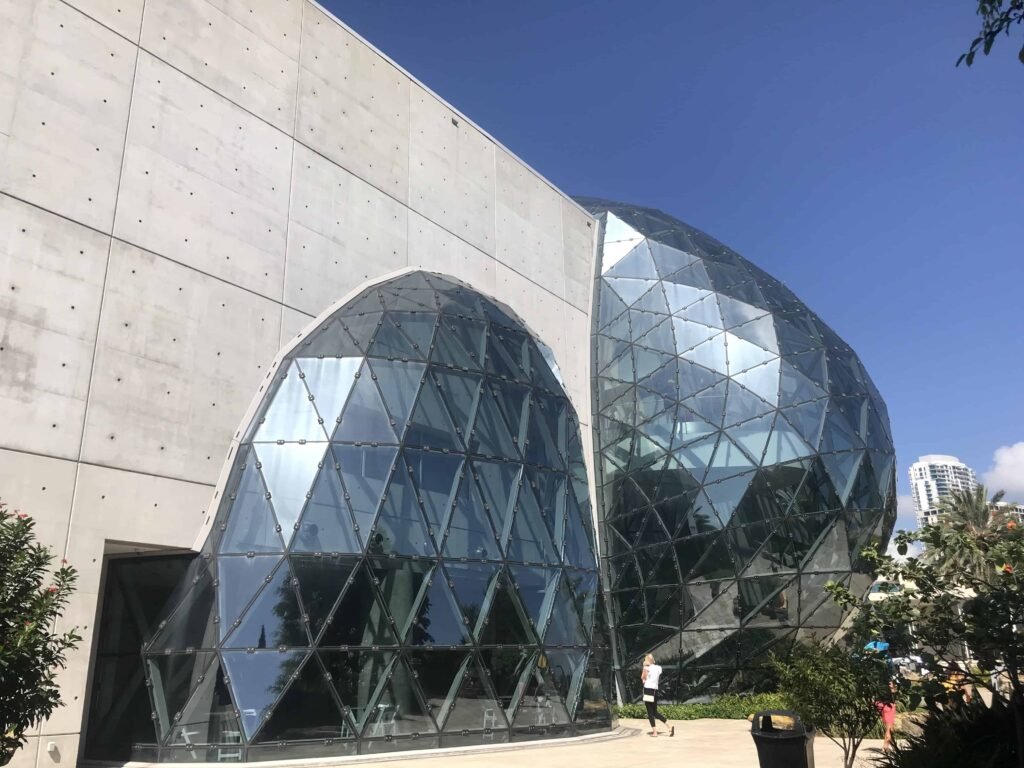
The Dali Museum’s Glass Bubble
The Dali museum is designed by architect Yann Weymouth of HOK, combining “the rational with the fantastical.” Oozing out of a hulking concrete box with 18-inch thick hurricane-proof walls is a large free-form geodesic glass bubble known as the “enigma”.
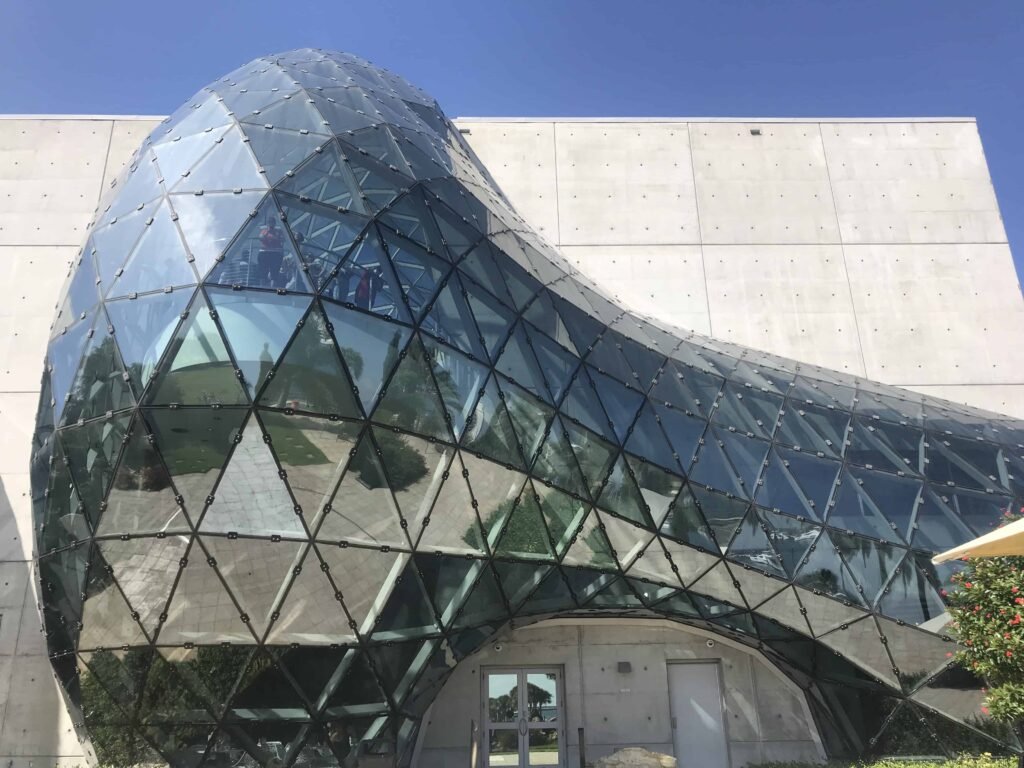
The Enigma is made up of 1,062 triangular pieces of glass, stands 75 feet at its tallest point, a twenty-first-century homage to the dome that adorns Dali’s museum in Spain.

I recently visited The Dali Museum and my advice to anyone wanting to enter Dali’s headspace is to begin at the winding helical staircase, a nod to Dali’s obsession with spirals and the double helical shape of the DNA molecule during his Nuclear Mysticism period of art, and gaze through the geodesic skylight.

It’s how I found myself teleported into the magical mind of Dali before I began to peruse the largest collection of his works outside of Dali’s native Spain.

Dali’s Spain – Clyde Butcher’s Photographic Exhibition
The Dali Museum permanent collection is home to art spanning Dali’s career from his student pieces through works of Anti-Art, Surrealism, Nuclear Mysticism. I came to see how his native landscapes inspired his most memorable works in a special exhibit, Clyde Butcher: Visions of Dali’s Spain on view through November 25, 2018.

Clyde Butcher is known as “the Ansel Adams of Florida” for his large format black and white photos capturing the beauty of the Everglades. The Dali museum commissioned Butcher to photograph Dali’s dreamlike world, “to bring to light the geological delirium that Dali embraces in his work.”
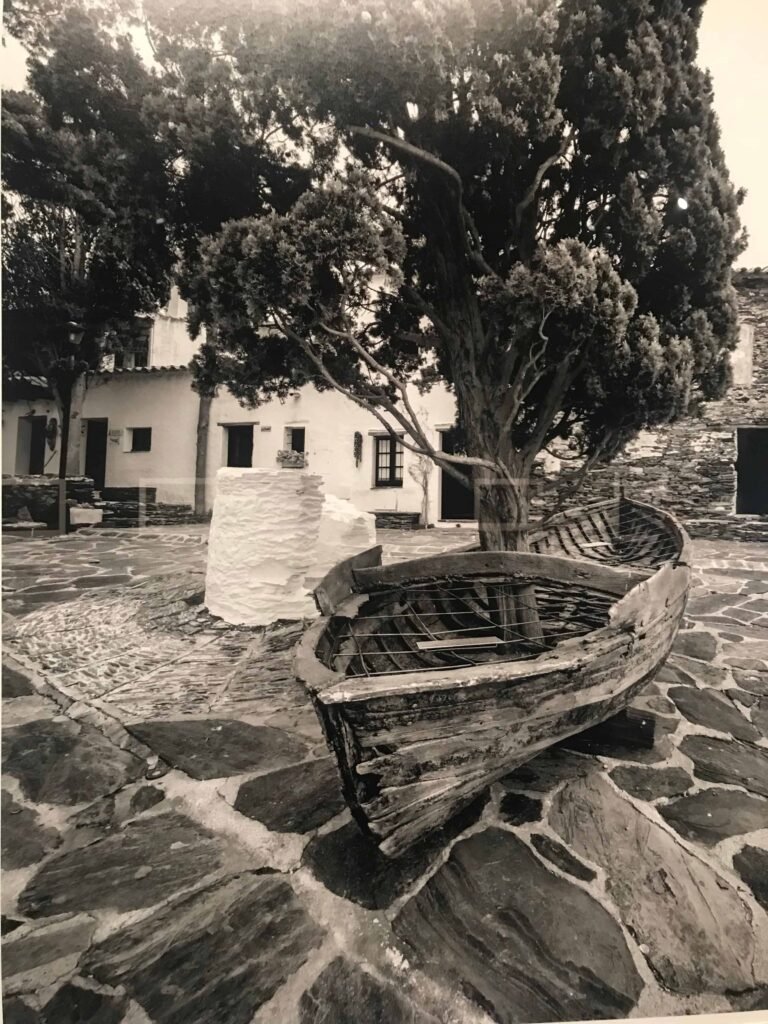
In 2016, Butcher traveled to Dali’s homeland, Catalonia’s Mediterranean region, in Spain to photograph the landscape including Cadaques where Dali spent summers growing up and Port Lligat and the region of Cap De Creus, all area featured in Dali’s work.

In Port Lligat, where Dali and his wife Gala lived in a grand surreal home that began as a simple fishing shack, Butcher captures the curiosities the filled the living spaces. Dali and Gala eventually purchased adjacent shacks to create a meandering structure of rooms that has now become a museum.

Butcher typically photographs with a large format camera but for The Dali Museum commission, he used a smaller format digital camera. “I shoot digital like I shoot film. I wait for the composition and light. Some days I only took two pictures. I don’t shotgun shoot,” Butcher says of his process.

Pairing Salvador Dali’s Paintings with Clyde Butcher’s Landscapes
The Clyde Butcher exhibit pairs the photographer’s photos of Dali’s native landscapes with Dali paintings that drew inspiration from them. It’s a unique window into Dali’s mind and soul where the physical landscapes in his life are reimagined in dreamlike renderings.

“When people see the exhibit I would like them to see what inspired his paintings,” Butcher says. In the exhibit, Dali’s paintings are paired with Butcher’s landscape photography to reveal the inspiration behind many of Dali’s surrealist paintings.

Dali said of his work that people discern only a tenth of what’s visible in his paintings and that the meanings and themes run much deeper.

Clyde Butcher’s photography gives us a new lens to interpret Dali’s work providing a context to many of his paintings.

Visual Experience at The Dali Museum
The Dali Museum holds the finest collection of his work outside of Spain chronicling Dali’s artistic evolution starting in the 1920s when Dali discovered surrealism after reading Sigmund Freud’s The Interpretation of Dreams while attending art school.

For the next 10 years, Dali’s work was the irrational subject matter with symbolic imagery and complex dreamlike stories. By the 1930s Surrealism grew from its literary origins to become a broad cultural movement encompassing art, design, film, animation and fashion. Dali became a central figure. The defining icon of the movement became Dali’s melting clock.

By 1940 Dali was no longer a surrealist. After he and Gala escaped from war-torn Europe living as refugees in America from 1940 to 1948. He branded himself as a classical artist reacting against modern art’s emphasis on abstraction.

In 1950 he created the term Nuclear Mysticism to describe this new phase of work. imaging moved from surrealism’s personal imaginings to the shared worlds of science and religion.

Dali also produced a series of monumental canvases known as Masterworks integrating epic history stories often relating to his Catalan homeland or containing intricate optical illusions.
Salvador Dali’s Unique Creation ‘The Lobster Telephone’

The museum features several of Dali’s quirkier works including this lobster phone. Dali says the idea came to him while dining on lobster as he saw someone toss a lobster shell landing on a telephone.

Visions of Dali’s Spain, a photography exhibit by Clyde Butcher at The Dail Museum runs through November 25, 2018. I highly recommend a visit to admire and experience sublime art, photography and architecture.
For more on what’s new and next in design, subscribe to The Design Tourist Channel and sign up for the blog email.[mc4wp_form id=”882″]
More Posts About Florida’s Architecture and Design:
A House Within a House, article in Florida Design Magazine
Florida Southern College Collection of Frank Lloyd Wright Architecture
100 Years of Bauhaus Endures in Florida Modernism