





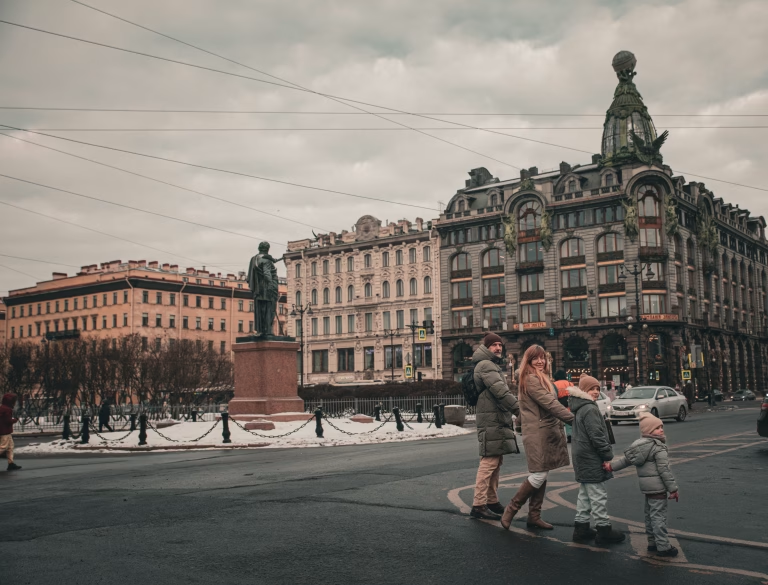
Family travel can make room for architectural landmarks, local craft traditions and gallery visits while still giving children the movement and play they need. The key is to treat energy levels as a real part of itinerary design. Adults may happily spend an hour studying a historic interior, but a six-year-old experiences that same hour very differently. To truly enjoy cultural sites with children, it’s essential to adjust expectations and embrace a slower pace, allowing for spontaneous discoveries and family travel adventures that cater to everyone’s interests.
A successful family trip creates a rhythm in which culture and active time support each other. When children have regular chances to run, climb, and make choices, they often arrive at cultural stops calmer and more curious.
The Challenge of Slow Travel with Energetic Kids
The idea of slow travel sounds especially appealing to design-minded travelers. You stay longer, visit fewer places, and pay closer attention to local life. For families, that might mean renting an apartment for a week, returning to the same bakery each morning and getting to know one neighborhood instead of rushing through five districts.
Children can benefit from that predictability, though a slower schedule still needs momentum. A leisurely museum morning followed by a long lunch and an architectural walking tour may feel balanced to an adult. To an energetic child, it can feel like several hours of listening, waiting, and being told not to touch anything.
Build the day around one meaningful cultural experience instead of trying to fill every hour. A 45-minute gallery visit can be a success, particularly if you preview three works you want to see. At a historic house, focus on unusual staircases, decorative tiles or hidden doors that children can search for.
Families interested in longer, slower trips can also schedule unscripted afternoons. Familiar playgrounds, neighborhood parks and open plazas help children settle into a destination. Those repeated spaces become part of the trip’s cultural memory too.
Slow travel works best when “slow” describes the number of transitions, not the child’s expected pace.
Designing Itineraries Around Physical Release
Place active time before any experience that requires quiet attention. A morning playground visit, hotel swim, or walk along a waterfront can make the next stop easier for everyone. Even 30 minutes of movement gives children an appropriate outlet before they enter a museum, workshop, or carefully furnished historic site.
Look at the physical shape of each day as you plan it. A practical family schedule might include outdoor play from 9 to 10 a.m., one cultural attraction from 10:30 a.m. to noon, and lunch near the accommodation. The afternoon can remain flexible, with a second outing only if everyone has the energy.
Longer stays may also create gaps when parents want to visit a specialist showroom, take a guided design tour, or handle work. Families with children ages 4 to 10 can consider holiday camps that offer active recreation, swimming, gymnastics, and other supervised activities during school breaks. These programs can give children opportunities to stay active and socialize while adding variety to a longer family stay.
Check opening hours, travel times, and age requirements before assigning anything to a particular day. Keep a park or open public space saved on your map near each main attraction. If a tour runs longer than expected, you’ll already know where children can reset afterward without another lengthy transfer.
The result feels less like a compromise and more like thoughtful pacing.
Enriching Options Like Active Holiday Camps
An active program can become a positive part of a longer family stay, especially when children are missing their usual classes, teammates, or school friends. Several hours spent swimming, practicing gymnastics or completing age-appropriate obstacle activities may provide the social and physical variety that sightseeing can’t always offer.
Start by checking the program’s age range, schedule, and supervision practices. Ask how staff handle drop-off, allergies, restroom breaks, and children who need extra time to settle in. You’ll also want to know which activities are planned for that date and what clothing or equipment a child should bring. Clear answers help you judge whether the setting matches your child’s comfort level.
Keep the first session manageable. A half day often works better than immediately booking several full days, particularly when a child is in an unfamiliar city. Avoid placing the session right after a late arrival or before another demanding activity. Children need recovery time even when they’re excited.
This option tends to suit families staying in one place for a week or more. It may be less practical during a short weekend when every handoff consumes valuable time. An intentional family travel plan leaves enough space to see how everyone responds.
Talk about the program as one of the child’s own trip experiences. Ask what activity they tried, who they met, and what they’d like to do again. Their stories deserve the same attention as an adult’s impressions of a gallery or design district.
Finding Harmony Between Culture and Play
Culture becomes more accessible when children can interact with it. Search for museums with family trails, open-air sculpture gardens, building workshops, and touchable materials. At a decorative arts museum, invite children to choose the chair they’d put in their bedroom. In a tiled courtyard, ask them to find repeated colors or sketch a favorite pattern.
Give each family member some control over the itinerary. One person might choose a museum, another might select lunch, and a child might pick the afternoon park. Shared decision-making prevents the trip from feeling like an adult schedule with play added whenever patience runs out.
It also helps to connect design culture with familiar activities. Browse a food market and compare package colors. Photograph doors in an old neighborhood, then vote on the most unusual one. Visit a public garden and look for how paths, benches, and shade influence where people gather. These small observations teach children that design exists beyond quiet exhibition rooms.
The advice in this guide to memorable family travel experiences can help you consider different interests before locking in reservations. Keep one flexible period each day so the family can return to a favorite place or rest without feeling that something has been missed.
Watch for signs that the balance needs adjusting. Complaints, constant touching, and sudden silliness often signal fatigue or a need for movement. Leaving an attraction after 35 good minutes is usually more rewarding than staying for 90 difficult ones.
Family travel and design culture can coexist because cities are designed environments, not collections of formal attractions. A playground beside a modern library, a shaded plaza outside a museum and a neighborhood pool can reveal as much about local priorities as a celebrated building. When children get to move through those spaces in their own way, they begin noticing how places work.
The best souvenir may be a child pointing out a patterned floor, an unusual window or a cleverly shaped bench days after the visit. That small observation shows that culture reached them without play ever having to disappear.