



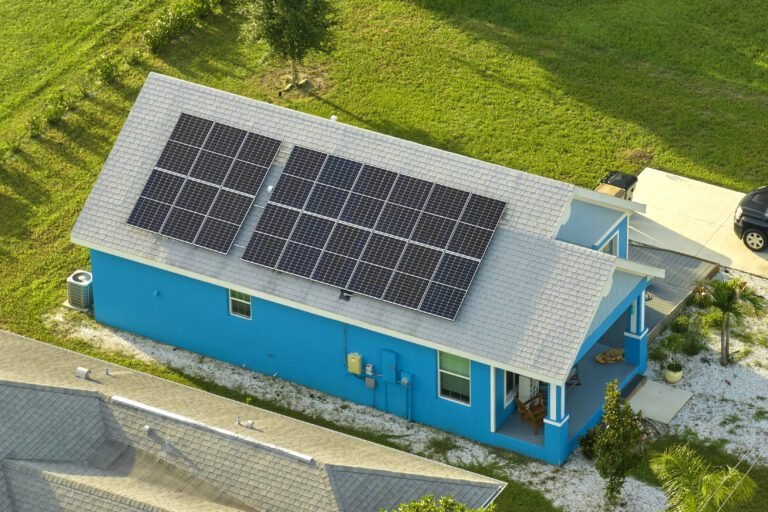
Self-sufficient living sounds like a lot of work and something that most people like the thought of, but don’t get around to. However, with some initial investment and minor home or land adaptations, it’s actually a lot easier than most people think. When you learn to provide for yourself with utilities like power and water, you reduce your dependence on the state and save money. From growing your own organic food to managing waste, here are some suggestions.
Generating Renewable Energy
One of the most relied upon utilities for almost everyone is energy. However, where you were once reliant on external providers for power, that is no longer the case. Today, you can give those poor little hamsters a rest and consider solar panels instead. You can takea comprehensive look at the state of solar for homeowners, and the results of surveys are hopeful. Today, whether you live on or off the grid, solar can reduce bills and carbon emissions.
Growing Organic Food
Most people enjoy growing some veggies and a few herbs, and these can help you make a great meal every now and then. But what about ditching the supermarket altogether and becoming a fully functional home farm? Sounds hard, and it is. However, it is well worth the time and investment once it is up and running. If you have the land, farming is the best course. However, you can even install vertical hydroponic growing systems if space is limited.
Self-Sufficient Living with Water Management
The average family home wastes around 9,400 gallons of water each year. While water tanks are essential in construction, you can also use home-based water tanks in conjunction with rainwater harvesters for free and clean utility water. Without needing a mains water connection, you will save a lot of money and reduce your dependence on polluting systems. This water can be used for showering and the toilet systems, and with filtration, can be good enough to drink.
Efficient Waste Management
Every household produces waste (the toilet notwithstanding) mostly from the kitchen. But rather than throw scraps away, you can use them to enrich your garden, which is especially useful if you grow your own vegetables. A compost heap breaks down organic matter into nutrients and gases like nitrogen for richer soil. This reduces your need for external services and cuts your carbon footprint significantly, as your food waste doesn’t need to be taken to a landfill.
Passive Efficiency and Sustainability
The best homes are the ones that don’t require much work. It is easy to craft a passive home that makes the most of natural sources. For example, you can install skylights to light and heat the home as long as the sun is shining. You can also reorient the roofing and solar panels to ensure they are making the most of available light, as this will maximize how much energy is available throughout the day. And of course, don’t forget about home insulation!
Summary
Generating your own power with solar panels is a great first step into self-sufficient living. You can also install water systems, such as tanks and harvesters, for free water. However, the home can also be a passive system for heat and energy with installations such as skylights.