




This post contains affiliate links. If you buy through them, I may earn a small commission at no extra cost to you. I only recommend gear I actually use and love. See my full disclosure here.
By Karen LeBlanc | The Design Tourist
Iceland is a country of extremes, and it rewards travelers who arrive prepared. On my winter trip, I hiked icy waterfall trails, explored a lava cave, walked inside a glacier, and waited up until 5 a.m. for the Northern Lights. Along the way, I made a few Iceland travel mistakes of my own and learned how to avoid many more from the locals who guided me.
Here are the 10 mistakes I’d help any first-time visitor avoid, along with what to do instead.
1. Hiking Icy Trails Without Shoe Spikes
At Barnafoss, the Children’s Waterfall in West Iceland, I wanted a better look at the blue glacial water rushing over the rocks. The path was coated in ice, and I made my way along it holding onto a rope, realizing I should have worn crampons.
My advice is simple: don’t do as I did. Wear your shoe spikes if you plan to hike to waterfalls in winter. Later in my trip, we put on crampons to walk through the ice tunnel inside Langjökull glacier and again for the hike to Canyon Baths.
Do this instead: Pack a pair of slip-on ice cleats or ask your tour company to provide crampons. They take up almost no room in a suitcase.
2. Turning Your Back on the Waves at Reynisfjara
Reynisfjara, the black sand beach near Vík, is one of the most beautiful places I visited in Iceland, and one of the most dangerous. The ocean along this stretch of coastline produces so-called sneaker waves that can surge far up the beach without warning and pull people into the sea. People have died on these shores.
My guide pointed out the beach’s warning lights. When the yellow light is on, you must not enter the yellow zone, and when the red light is on, you must not go beyond the light sign, according to the Icelandic Tourist Board. The lights are connected to an automatic wave forecasting system, and the beach itself never closes, so the responsibility is yours.
Do this instead: Check the light before you walk onto the sand, read the warning signs, stay well back from the water, and never turn your back to the waves, even for a photo.

3. Ignoring Volcano Updates
Living with volcanoes is a way of life in Iceland. I traveled during volcanic activity on the Reykjanes Peninsula, when the nearby town of Grindavík had been evacuated, yet tourists still crowded the Golden Circle’s main attractions. On the South Coast, I stopped at a café in a former farmhouse near Eyjafjallajökull, the volcano whose 2010 eruption stranded travelers worldwide and grounded more than 100,000 flights.
Iceland averages about one eruption every four to five years, but the Reykjanes Peninsula alone had 12 separate eruptions between March 2021 and August 2025, according to Guide to Iceland.
Do this instead: Before and during your trip, check Safetravel.is, run by Iceland’s search and rescue association, for alerts and travel conditions. For volcano status, the Icelandic Met Office publishes an aviation color code for each volcano, where red means an eruption with significant ash is imminent or underway.
4. Buying Bottled Water
This one surprised me. Icelandic water filters through lava rock and runs fresh and clean from glaciers, and I didn’t buy a single bottle of water during my trip. I drank straight from the faucet.
Standing beside a glacial stream on a hike in West Iceland, my guide Thorir, a native Icelander and one of the owners of Oak Travel, put it plainly.
“You can jump in here and drink the water if you like. It’s fresh, it’s good, it’s the best water you can have.”
Do this instead: Bring a reusable bottle and fill it from the tap. You’ll save money and plastic.

5. Underestimating Winter Daylight
Iceland’s daylight doesn’t follow a typical 24-hour schedule. In summer, the sun shines nearly around the clock. In winter, you get only a few hours. My overnight flight landed at 8 a.m., and I had to wait until 10 a.m. for sunrise. During my late-November visit, we averaged about five to six hours of sunlight a day.
That short window shapes everything, from how far you can drive to how many sights you can see before dark.
Do this instead: Plan one or two major stops per day in winter, start driving before sunrise, and save museums, shopping and geothermal pools for the dark hours. Our guide to the best time to visit Iceland breaks down what each season offers.
6. Mixing Up Iceland’s Two Airports
International flights land at Keflavík International Airport, not the smaller Reykjavík Airport, which handles domestic flights. Keflavík is about 31 miles (50 kilometers) from Reykjavík, roughly 45 minutes by car or bus, according to Guide to Iceland. It also notes that departure boards abroad sometimes label Keflavík as “Reykjavik,” so double-check your airport code, KEF, when you book.
Do this instead: Arrange your airport transfer or rental car pickup at KEF before you land. I met my private guide from Oak Travel at the airport, and he drove me straight into Reykjavík to begin my trip.

7. Seeing the South Coast Only From a Tour Bus
Many travelers explore the Golden Circle and the South Coast on big bus tours, and you’ll see the headline waterfalls that way. You’ll also miss places like Gljúfrabúi, a waterfall hidden inside a canyon. My Oak Travel driver parked at its gated entrance, and we slipped through a thin crack in the cliff wall to stand inside the chamber, where the roar of the water echoes off the rock.
He explained that private tours can stop at places like this, while big buses often don’t have time for special stops.
Do this instead: If your budget allows, book at least one day with a private guide. The access, flexibility and stories are worth it. I share the rest of that route in my South Iceland bucket list and my guide to the South Coast’s hidden wonders.
8. Visiting Only the Busiest Lagoons
Bathing in geothermal water is a beloved Icelandic pastime. In South Iceland, the Blue Lagoon and Sky Lagoon are the famous names, and they draw crowds to match. In West Iceland, I found a quieter alternative at Canyon Baths, geothermal pools built into a canyon and run by Hotel Húsafell. We hiked in wearing crampons, crossed an icy stream of glacial meltwater, and soaked in pools ranging from about 85 to 105 degrees, with views of the canyon, mountains and glaciers.

When I visited, the team kept groups small on purpose.
“It’s always maximum 16 guests who can attend, to never lose the intimacy of the whole experience,” they told me.
Do this instead: Look beyond the big-name lagoons. Many hotels have their own geothermal pools, and smaller baths like Canyon Baths offer a more intimate soak. I cover more of West Iceland’s quieter side in 16 Hidden Gems in West Iceland.

9. Forgetting Flip-Flops for Outdoor Baths
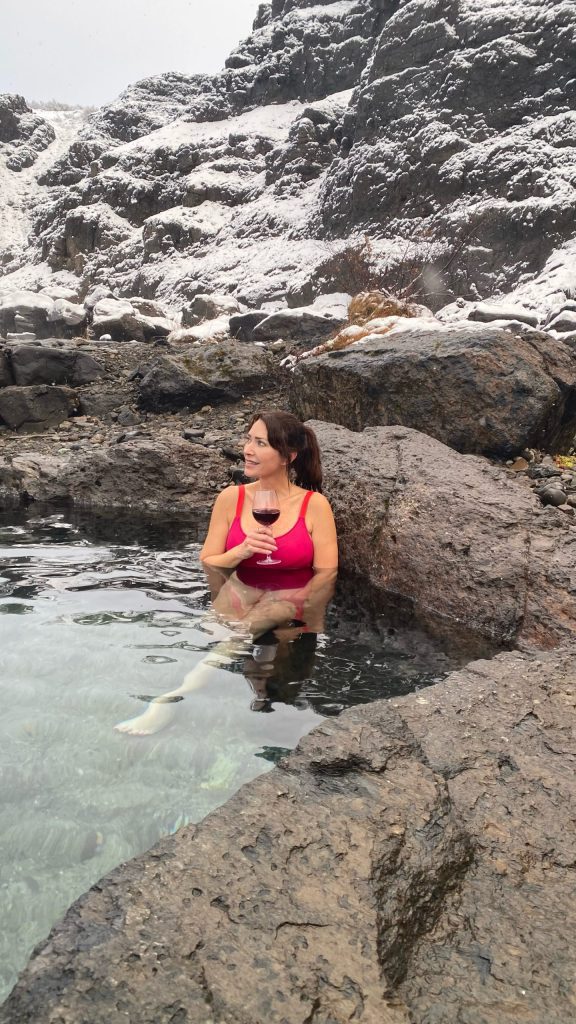
At Canyon Baths, I changed in a heated bathhouse made from salvaged local timber, then stepped outside in my swimsuit to walk to the pools. That’s when I realized I should have brought flip-flops. There’s nothing like walking barefoot in the snow.
Do this instead: Pack flip-flops or water shoes for every geothermal bath on your itinerary, along with a quick-dry towel.
10. Counting on the Northern Lights
Seeing the Northern Lights was what originally drew me to Iceland in winter, and it’s why I stayed at Hotel Húsafell, far from city light pollution. The hotel offers free wake-up calls when the aurora appears. At 2 a.m., my phone rang. I threw on my coat, grabbed my camera, and headed out into the dark.
I waited and watched until 5 a.m. and never saw the lights with my own eyes. Then, going through our footage, we found it: a faint green glow our cameras had captured that I couldn’t see. After five nights in the country, that was my proof.
Spotting the Northern Lights is about luck and timing. They’re visible from September through April on clear, dark nights, and no one can promise a show.
Do this instead: Stay outside the city, choose a hotel with an aurora wake-up service, keep your camera ready, and treat any sighting as a bonus rather than the whole point of the trip. I share more about chasing the Northern Lights in Iceland at Hotel Húsafell.

One More Tip Before You Shop
If you’re buying a traditional Icelandic wool sweater, look for the authenticity tag that tells you who knit it. I found mine at the Handknitting Association of Iceland in Reykjavík, and I share how to spot the real thing in my Iceland bucket list.
Iceland Rewards the Prepared Traveler
My trip to Iceland was worth every waking moment, including the 2 a.m. wake-up calls. Most of these mistakes come down to the same thing: Iceland’s nature is powerful, beautiful and unpredictable, and it asks you to respect it. Pack for ice, watch the waves, check conditions every day, and leave room in your plans for weather and luck.
And keep an open mind about the local lore. As Thorir told me, Icelanders still talk about trolls and hidden people, and road projects have been rerouted to avoid places believed to be their homes.


FAQs About Iceland Travel Mistakes
What is the biggest mistake tourists make in Iceland?
Underestimating nature. Sneaker waves at Reynisfjara, icy trails and fast-changing weather catch visitors off guard. Check conditions daily on Safetravel.is and follow posted warnings.
Is Reynisfjara black sand beach dangerous?
Yes, if you ignore the warnings. Sneaker waves can surge far up the beach without notice. Follow the beach’s yellow and red warning lights, stay back from the water, and never turn your back to the sea.
Can you drink tap water in Iceland?
Yes. I drank tap water throughout my trip and never bought bottled water.
How many hours of daylight does Iceland get in November?
During my late-November visit, we averaged about five to six hours of sunlight, with sunrise around 10 a.m.
Which airport do international flights use in Iceland?
Keflavík International Airport (KEF), about 31 miles from Reykjavík. Reykjavík Airport handles domestic flights.
More Iceland Travel Guides:
- 8 Unique Iceland Bucket List Destinations
- 16 Hidden Gems in West Iceland
- South Iceland Bucket List: 7 Unforgettable Destinations
- Discover Iceland’s South Coast Hidden Wonders
- Exploring the Northern Lights of Iceland
- Top 5 Under-the-Radar Things to Do in Reykjavík
- 15 Icelandic Foods You Must Try
- The Best Time to Visit Iceland