





- Start with fit and comfort, then choose the length, fabric, and details that match your plans.
- Maxi, midi, and mini dresses can all work beautifully, depending on your preferred coverage and styling.
- Define the waist in a way that feels comfortable, whether with a wrap shape, an empire seam, a belt, or a relaxed silhouette.
- Choose shoes, layers, and accessories based on the dress length and the formality of the event.
- A small selection of casual, going-out, and wedding guest dresses can cover many occasions.
A great dress should support your day, not distract from it. Whether you want a soft casual option for errands, a polished midi for dinner, or a statement-making look for a celebration, the right fit can help you move freely and feel more like yourself. Exploring plus size jeans for women can be useful for building everyday outfits, but dresses offer an equally versatile way to create comfortable, confidence-boosting looks.
For plus-size women, dress shopping is about more than choosing a trend or following a size label. Pay attention to where a dress sits at the bust and waist, how the fabric feels against your skin, whether you can sit and walk comfortably, and how easily it can be styled for the occasion. The most useful dress is one you will genuinely want to wear again.
Start With Fit, Not the Size Tag
Size numbers vary by brand and fabric, so the label should be a starting point rather than a verdict. Check the garment’s bust, waist, hip, and length measurements when available, especially while shopping online. A dress that fits your bust but pulls at the waist, or one that fits your hips but slips at the shoulders, may not feel good for long.
Focus on movement before making a decision. Raise your arms, take a few steps, sit down, and notice whether the neckline stays where you want it and whether the fabric feels restrictive. As a basic garment category, dresses can vary in silhouette, neckline, sleeves, fabric, and hemline, which is exactly why trying different shapes can be more productive than repeatedly ordering the same familiar style.
Maxi, Midi, and Mini Dress Lengths
Dress length changes both the feel of an outfit and the shoes that work best with it. There is no universally flattering hemline. The best option is the one that provides the coverage, ease, and visual balance you want.
Maxi Dresses
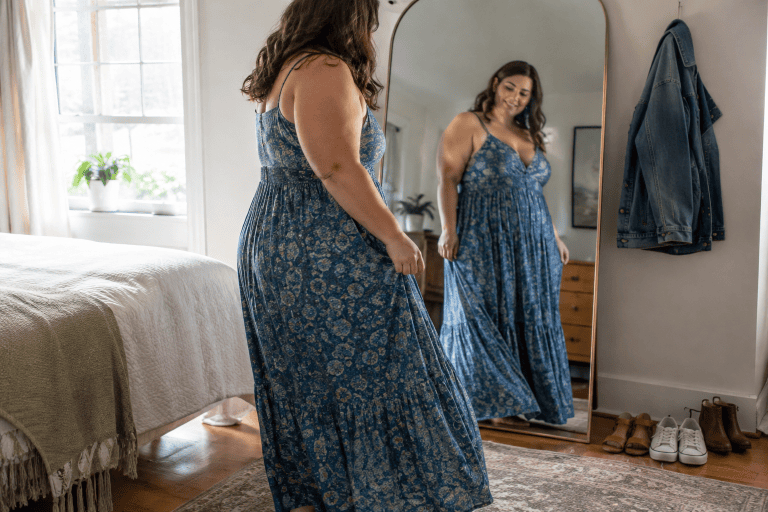
Maxi dresses are a natural choice when you want more leg coverage or a flowing look. Choose a hem that clears the ground when you wear your usual sandals, sneakers, flats, or heels. A defined waist, side slit, wrap front, or open neckline can add shape while preserving the relaxed feel of a longer dress.
Midi Dresses
Midi dresses are especially adaptable because they can move between casual and dressier settings with a change of shoes and accessories. A knit midi with sneakers feels easy for daytime, while a satin, crepe, or fitted midi can work for dinner or an event. If the hem lands at a spot you do not love, try a slightly shorter or longer midi rather than giving up on the length entirely.
Mini Dresses
Mini dresses can be playful, polished, or relaxed. Look for details that help you feel secure, such as a longer sleeve, a lined skirt, built-in shorts, a higher neckline, or a structured fabric. Pairing a mini with tall boots, opaque tights, loafers, or a longline layer can make the outfit feel more covered while keeping its energy.
Silhouettes That Offer Comfort and Style
Silhouette matters because it determines where the dress skims, stretches, or defines your shape. Rather than dressing to hide your body, choose a construction that helps you feel supported and comfortable.
- Wrap dresses: Adjustable waist placement and a shaped neckline make these useful for work, dinners, and events.
- Fit-and-flare dresses: A closer-fitting bodice with a fuller skirt offers definition and room through the hips and thighs.
- Empire-waist dresses: A raised waist seam creates a soft, flowing fit through the midsection.
- Shirt dresses: Buttons, collars, and optional belts make them easy to wear casually or style more sharply.
- Bodycon dresses: Stretch fabric hugs the body closely, and you can feel especially confident when it has enough weight and recovery.
- Tiered or swing dresses: These prioritize ease and movement, making them useful for warm days and casual plans.
Choosing Casual Dresses for Everyday Wear
For everyday dressing, prioritize breathable fabric, pockets if they matter to you, and a shape that works with your real routine. T-shirt dresses, relaxed shirt dresses, knit midis, and soft tiered styles are easy starting points. Add a denim jacket, cardigan, lightweight utility layer, or casual blazer for more coverage or structure.
Casual dresses do not have to look unfinished. A simple belt, clean sneakers, hoop earrings, or a crossbody bag can turn a comfortable dress into an intentional outfit. Keep your footwear practical for walking, standing, or commuting throughout your day.
Dresses for Dinner, Dates, and Going Out
For a going-out dress, consider fabric and finish as much as silhouette. Satin, mesh, lace, velvet, shimmer, and sleek ribbed knits can make even a simple shape feel more elevated. Choose one focal point, such as a bold neckline, a slit, dramatic sleeves, bright color, or statement jewelry, so the outfit feels intentional without becoming fussy.
A fitted midi with ankle boots, a wrap dress with heeled sandals, or a maxi with a leather jacket is a reliable formula. If you prefer more coverage, long sleeves and a higher neckline can still feel festive when paired with interesting texture, jewelry, or a standout bag.
How to Choose a Wedding Guest Dress
Start with the invitation’s dress code, venue, time of day, and season. Wedding guidance typically lists floor-length gowns as black-tie options, while cocktail and semi-formal events often allow elevated midi or shorter dresses. Reviewing the can help you decide how formal your fabric, hemline, shoes, and accessories should be.
For a daytime or garden wedding, try a printed midi, wrap dress, or flowy maxi with dressy flats, block heels, or sandals. For an evening event, deeper colors, refined fabrics, structured shapes, and polished accessories can feel appropriate. Bring a wrap, tailored jacket, or dressy cardigan if the ceremony or reception may be cool.
Easy Styling Formulas
- Casual maxi: Add sneakers, a cropped denim jacket, and a crossbody bag.
- Work-ready midi: Pair a wrap or shirt dress with loafers, a structured tote, and simple jewelry.
- Going-out bodycon: Add heeled boots or sandals, a small bag, and one statement accessory.
- Wedding guest dress: Choose refined shoes, a clutch, delicate jewelry, and a lightweight layer.
- Mini dress with coverage: Style with tall boots, tights, and a longer blazer or coat.
A Smart Dress Shopping Checklist
- Choose the occasion first, then decide how formal the dress needs to be.
- Check bust, waist, hip, and length measurements instead of relying only on the size label.
- Think about where the waist seam, straps, sleeves, and neckline will sit on your body.
- Consider the undergarments and shoes you are likely to wear with it.
- Make sure you can sit, walk, reach, and breathe comfortably.
- Choose a dress that can be styled at least two ways, so it earns a place in your wardrobe.
The best plus-size dress is one that fits your life as well as your body. When comfort, movement, and personal style come first, it becomes much easier to choose a maxi, midi, mini, casual dress, going-out look, or wedding guest outfit that feels genuinely confident.