



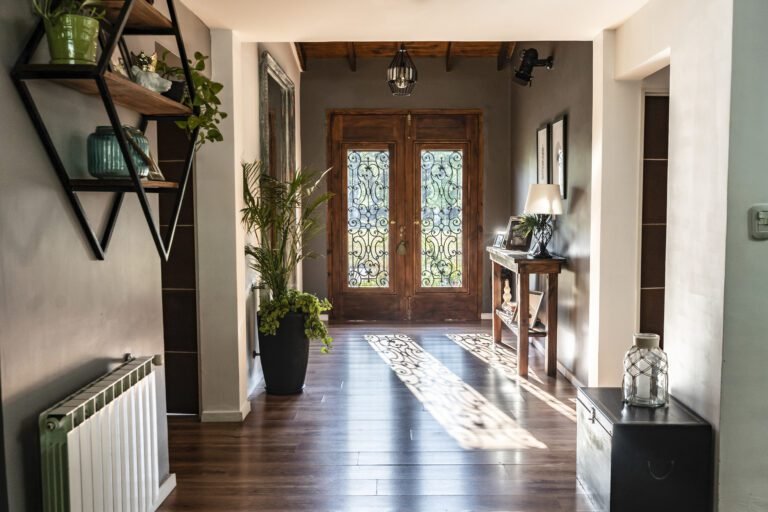
An entryway does more than greet guests. It quietly introduces the personality of the entire house. For years, this small space was treated like an afterthought, often reduced to a basic console table and a mirror. Recently, designers have begun treating the entryway as something far more expressive. Instead of leaving it minimal, homeowners are turning it into a curated moment that blends art, texture, and sculptural objects into a striking first impression.
The appeal is obvious once you see it done well. A thoughtfully styled entryway offers a glimpse into the aesthetic that unfolds throughout the home. It feels intentional but never stiff, like a preview that invites people further inside. The best examples combine practicality with beauty, balancing storage and functionality with art that reflects the homeowner’s personality.
Start With Architectural Framing
A great entryway design often begins by paying attention to the architecture that already exists. Whether the space includes a narrow hallway, a grand staircase, or a modest front door alcove, the surrounding lines naturally guide the eye. Designers use those lines to frame focal points rather than competing against them with clutter.
Console tables remain a staple, but they are rarely styled alone anymore. A large mirror, sculptural lamp, or oversized artwork often anchors the arrangement, giving the entryway a sense of scale that feels intentional. When homeowners begin thinking about home design, they quickly realize the entryway is one of the few areas that guests experience immediately and directly. Because of that, even small visual choices carry surprising weight.
Materials also matter here. A console in warm wood paired with a stone bowl or ceramic vase can instantly soften a stark hallway. A vintage brass lamp or textured wall panel adds visual depth without overwhelming the limited footprint of the space. The goal is not to fill every inch but to establish a strong visual starting point.
Let Art Take The Lead
The newest entryway designs revolve around artwork that sets a tone right away. Instead of tiny framed prints arranged timidly on the wall, designers are encouraging bolder choices. One large piece often creates more impact than a cluster of small ones, especially when the scale matches the height of the wall.
Abstract artwork works especially well in these areas because it introduces color and movement without feeling overly formal. In fact, many homeowners are discovering pieces through online galleries and independent artists offering original abstract paintings for sale online. The ability to browse distinctive artwork without stepping into a traditional gallery has opened the door for more adventurous selections.
Large art pieces also change how the rest of the entryway is styled. A vibrant painting might inspire the color of a rug, a ceramic vessel, or even the shade of a table lamp. Once that visual thread exists, the room starts to feel cohesive without relying on obvious matching.
Lighting plays an equally important role in highlighting artwork. A simple wall sconce or directional ceiling light can transform a painting from background decoration into a centerpiece that immediately draws the eye.
Balance Beauty With Everyday Function
Even the most art driven entryway still has to work in real life. Coats need somewhere to land, shoes need a place to go, and keys have a mysterious tendency to disappear unless a designated spot exists for them. The trick is weaving these everyday needs into the aesthetic without letting the area turn into a dumping ground.
Designers often incorporate subtle storage solutions such as woven baskets beneath console tables or slim cabinets tucked along one wall. Hooks made from brass or carved wood can double as sculptural elements while keeping coats organized. A beautiful tray placed on the console creates a home for keys and sunglasses, turning practical items into part of the display.
Rugs also serve a dual purpose. A textured runner protects flooring from dirt while introducing warmth underfoot. Choosing one with a subtle pattern helps disguise daily wear while still contributing to the layered look of the entryway.
Play With Scale And Unexpected Objects
Entryways are usually compact, which makes scale an especially powerful design tool. A large piece placed confidently in a small space can feel dramatic rather than overwhelming. Oversized vases, tall branches, or sculptural lighting fixtures bring vertical energy that keeps the eye moving upward.
Unexpected objects often become the most memorable elements. A vintage stool placed beside the console, a sculptural bowl collected during travel, or a small stack of art books can turn a simple surface into something worth studying for a moment. These pieces feel natural when they reflect the homeowner’s interests rather than following a strict decorating formula.
Color can also appear in smaller touches. A lacquered tray, a ceramic vessel in deep cobalt, or a patterned rug quietly energizes the palette without dominating the space. Because the entryway is transitional, even bold colors feel surprisingly manageable here.
Make The Space Feel Collected Over Time
The most compelling entryways rarely appear perfectly finished overnight. They evolve gradually as pieces are added, moved, or replaced. That sense of accumulation is exactly what gives the space personality.
Homeowners often begin with a foundational setup such as a console, a light fixture, and one strong artwork. Over time, additional elements join the composition. A new vase appears after a weekend market visit. A framed photograph from a trip finds a home beside the painting. A vintage mirror replaces a basic one and instantly adds character.
The result is an entryway that feels like it belongs specifically to the people who live there. Nothing feels forced, yet every detail contributes to the atmosphere.
A Small Space With A Lasting Impression
An entryway might occupy only a few square feet of a home, but it has an outsized influence on how the entire interior feels. When styled thoughtfully, it creates a welcoming moment that blends beauty with everyday function. Guests notice the art, the lighting, and the subtle textures long before they reach the living room.
By treating this overlooked space like a miniature gallery, homeowners are discovering that the first few steps into a house can carry as much style and personality as any other room. The effect is immediate, memorable, and unmistakably personal.