


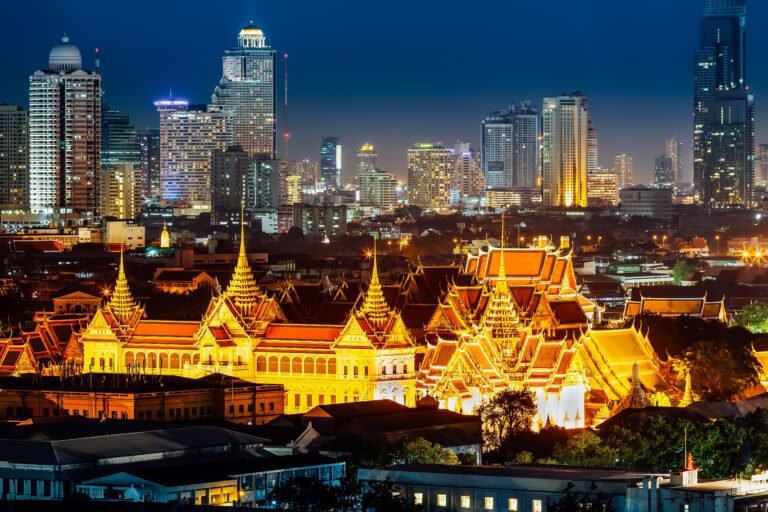
When you hear the name Bangkok, what do you think? Probably you imagine the bright lights of Sukhumvit, the golden shine of the Grand Palace, or the Michelin-starred restaurants. But have you ever attempted to locate a modern masterpiece concealed within a 19th-century teak mansion or behind the scent of incense at a riverside temple?
The 2026 Bangkok Art Biennale (BAB) is scheduled to make its comeback from October 29, 2026, to February 28, 2027, and it’s taking over the city with the theme Angels and Mara. This one is not just about art galleries; it’s about the hidden locations, such as those heritage sites and secret corners, where the art is a discovery and not an exhibition. If you want to get a feel for the City of Angels without going off the beaten track, then getting familiar with these hidden locations is the way to go.
Hunting for Art in the Venice of the East
The genius of the Biennale is that it forces you to take your time. While the Bangkok Art and Culture Centre (BACC) is the busy hub of activity, the magic happens at the River Route venues. It is here that you will find the spots that do not always make it into the typical 48-hour itinerary.
Take, for example, the East Asiatic Building. This is a beautiful, abandoned Venetian-style building that sits on the banks of the Chao Phraya River. It has long been one of the most popular Biennale venues. The experience of walking through its worn hallways to discover a cutting-edge video installation is like stepping into a time machine.
For those who are planning their trip, a few Southeast Asia travel tips will help make the transition between these riverfront secrets much easier. For example, avoid the road traffic and take the river ferries. It is not only faster, but it is also the best way to arrive at a venue such as Wat Prayoon (The Temple of the Iron Fence).
The Sacred Meets the Surreal
One of the most adventurous elements of BAB 2026 is its integration of contemporary art within functioning places of worship. This year’s theme, Angels and Mara, is all about the interplay between light and temptation, and what better place to witness this than in a Buddhist temple?
At Wat Pho, the Temple of the Reclining Buddha, you might discover sculptures hidden away in the rock gardens or tucked into the peaceful corners out of sight of the throngs of tourists.
In previous Biennales, legendary artists such as Louise Bourgeois have had their works installed here, engaging in a silent conversation between ancient faith and modern angst.
Then, of course, there is Wat Arun, or The Temple of Dawn. While thousands of tourists a day come here for the ultimate sunset selfie, it is the Biennale visitors who are actually searching for the hidden installations that have been tucked away at the base of the porcelain-festooned prangs. These pieces frequently engage with the Buddhist cosmology of the temple itself through natural light and shadow.
Why the Hidden Venues Matter
Why bother to look for a small gallery in a converted warehouse or a performance installation in a public park? Because these spaces provide a character that a shopping mall, although BAB also uses these, simply cannot provide.
The 2026 festival is also focusing greatly on performance art, which means that the city itself becomes the artwork. You could chance upon a pop-up performance in a local market or an audio installation on a bridge. These are not mere exhibitions; they are dialogues with the history of the city.
Spaces such as Museum Siam, located in a neoclassical structure that was previously a ministry, enable you to understand Thai identity while appreciating the artwork. It is this interplay between history, where one sees the struggles of the 21st century through the perspective of a building that is a century old, that makes the secret venues so delightful.
Navigating the 2026 Map
If you’re going to conquer the Biennale, don’t attempt to do it in one day. The humidity and the size of the city will get the better of you. Instead, use the Biennale venues as a springboard to explore the neighborhoods.
- The Heritage Loop: The Old City (Rattanakosin). Begin at the National Gallery, then meander towards the river for the temples.
- The Modern Pulse: Spend an afternoon in One Bangkok, the newest heart of the city, which will feature large-scale public sculptures as part of the Art Loop.
Final Words
The Bangkok Art Biennale of 2026 is a reminder that art need not be confined to a box. Art can be in the temples, in the old buildings, and in the streets that we walk on. So, when the festival kicks off in October, leave the main roads behind and follow the map to the riverside to look for the BAB banners in the most unlikely places, and let the city surprise you.
Are you ready to find what’s hidden in plain sight?