



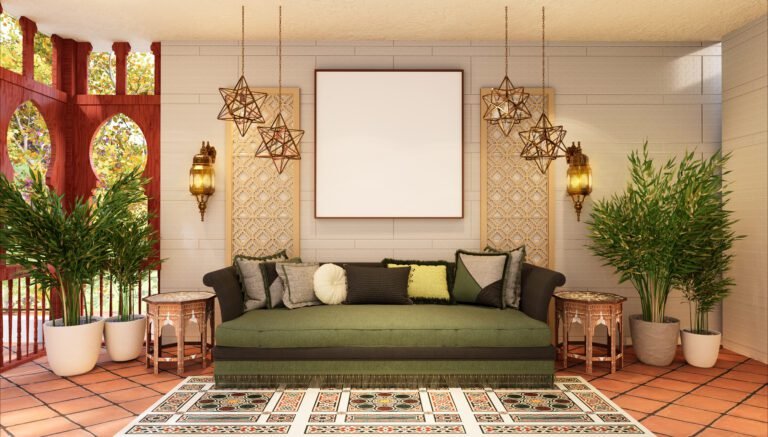
Moroccan interiors feel grounded, layered, and intimate because they are built from the structure outward. The look does not depend on scattered accessories or bright color alone. It relies on architectural form, textured materials, controlled color, low seating, warm light, and handcrafted detail. If you want your home to reflect Moroccan character, approach it as a renovation process rather than a decorating project. Start with the bones of the space, then refine surfaces, furniture, lighting, and textiles so each layer supports the next.
Rework the Architecture to Create Depth and Softness
Architecture sets the tone before any decorative piece enters the room. Moroccan homes rarely rely on flat walls and sharp corners. They favor arches, niches, carved frames, and visual transitions between spaces. If your home currently features standard rectangular openings and plain drywall, structural adjustments will deliver the strongest transformation.
Arched doorways immediately change proportion and rhythm. Replacing square frames with soft curves adds movement and reduces the rigid feel common in modern construction. The curve does not need to be exaggerated. A gentle rounded arch often integrates better into contemporary houses than a dramatic horseshoe form. In apartments where structural alteration is limited, lightweight framing and plaster can create visual arches without major demolition.
Wall niches introduce depth while serving a practical role. Recessed shelving built into living room or hallway walls allows ceramics, lanterns, or books to sit within the wall instead of on top of furniture. That subtle recess produces shadow and dimension. Leave space between displayed objects rather than filling every surface. Moroccan interiors feel rich because of layering, not because of crowding.
Ceiling treatment reinforces that sense of enclosure. Exposed wooden beams stained in walnut or deep brown anchor a bright room. If structural beams are not available, decorative wood elements can be added between ceiling sections. Keep finishes matte and warm. Glossy or pale wood disrupts the visual weight needed for this style.
Door upgrades also carry visual impact. Solid wood doors with carved detailing or iron hardware contribute authenticity. Even refinishing existing doors in a dark stain changes the room’s gravity. Replace chrome handles with aged brass or blackened iron to maintain consistency.
Open floor plans require careful adaptation. Moroccan homes often revolve around inward-facing courtyards, creating smaller zones rather than one expansive area. To mimic that feeling, define spaces with partial walls, shelving units, or framed openings instead of leaving the entire floor open. Rugs, ceiling beams, and lighting groupings can also help create intimate zones without heavy construction.
Use Textured Plaster and Natural Finishes on Walls
Wall treatment determines whether a Moroccan-inspired room feels authentic or superficial. Smooth, flat paint lacks the subtle movement that defines traditional interiors. Textured plaster, limewash, and natural finishes introduce softness and variation that standard paint cannot replicate.
Tadelakt remains one of the most recognizable Moroccan wall finishes. This lime-based plaster is polished to a gentle sheen and sealed with soap, creating a smooth yet organic surface. It works especially well in bathrooms and kitchens because it resists moisture. While full tadelakt installation requires skilled labor, modern limewash paints provide a similar effect at a lower cost. The goal is visible texture, not heavy pattern.
Color choice should lean toward warm neutrals. Cream, sand, pale clay, and muted beige create a calm base that allows other elements to stand out. Avoid cool gray or bright white. Those tones flatten the atmosphere and contradict the warmth that Moroccan design depends on.
Accent walls can introduce jewel tones, but use them selectively. Deep indigo behind a bed or rich emerald in a dining alcove adds contrast without overwhelming the room. Balance bold walls with lighter surroundings. Too much saturation removes the elegance from the space.
Fireplaces present another opportunity for structural emphasis. Reshape a standard fireplace surround into a smooth plaster form with rounded edges. Cover the surface in zellige tile or clay-toned plaster. A sculptural fireplace becomes a focal point without requiring excessive ornament.
Anchor the Space With Authentic Floors and Tile Work
Flooring carries more visual weight than many homeowners expect. Moroccan interiors rely heavily on tile and natural stone to establish character. Changing the floor can transform the entire room, even if walls remain neutral.
Terracotta tiles provide warmth and variation. Their natural imperfections add depth, especially when sealed with a matte finish. Install them in living rooms, kitchens, or hallways to ground the design. Cement tiles with geometric patterns suit entryways and bathrooms. Choose muted palettes in navy, olive, cream, or rust rather than high-contrast black and white unless aiming for a contemporary interpretation.
Zellige tile introduces handcrafted irregularity. Each tile differs slightly in tone and edge shape. That imperfection defines its appeal. Use zellige as a kitchen backsplash, shower wall, or stair riser rather than covering entire large surfaces. Concentrated application keeps it intentional.
If replacing floors is not feasible, layer rugs strategically. Moroccan rugs often combine thick wool textures with geometric lines or subtle pattern. Beni Ourain rugs in cream and black adapt well to modern homes. Layering a patterned rug over a larger neutral base creates depth without construction.
Natural stone, such as limestone or travertine, also works effectively. Select honed finishes rather than polished surfaces to maintain warmth. The goal is material presence, not shine.
Choose Low, Grounded Furniture and Balanced Color
Furniture selection determines how people interact within the space. Moroccan interiors prioritize low seating and communal arrangement. Replace tall, rigid furniture with deeper, more relaxed forms.
Select sofas with lower profiles and generous cushions. Arrange them around a central rug to create a defined conversation area. Add leather poufs or floor cushions to extend seating without cluttering the layout. Built-in benches along walls provide additional seating and echo traditional riad interiors. Thick cushions and layered pillows soften these built-ins and encourage gathering.
Coffee tables should feel substantial yet simple. Carved wood pieces or wide brass trays resting on low bases fit naturally into the design. Avoid thin glass or chrome tables, which feel visually disconnected.
Dining spaces benefit from solid wood tables in warm tones. Surround them with textured seating upholstered in earthy fabrics. Even standard restaurant chairs can integrate smoothly if finished in dark wood and paired with the right table and lighting. Material consistency matters more than the origin of the piece.
Color within furniture and textiles should follow a controlled strategy. Establish a neutral foundation through walls and floors, then layer jewel tones in cushions, throws, and accent chairs. Deep blue, emerald, saffron, and burgundy pair well when balanced by clay or cream backgrounds. Avoid distributing too many bright hues evenly across the room. Group color intentionally to create visual rhythm.
Metal accents in aged brass or copper reinforce warmth. Keep finishes slightly matte rather than polished to maintain cohesion with textured walls and floors.
Layer Warm Lighting for Shadow and Depth
Lighting shapes the mood more than decoration alone. Moroccan interiors rely on layered light sources rather than a single overhead fixture. The goal is warmth and patterned shadow.
Install pendant lanterns made from pierced metal. Their cut-out patterns cast subtle shapes onto walls and ceilings. Hang them at varied heights for depth. Pair pendants with wall sconces in aged brass or carved metal to create vertical interest.
Use warm-toned bulbs to preserve softness. Cool white lighting strips the room of warmth. Install dimmers to control intensity throughout the day. Evening light should feel subdued rather than bright.
Table lamps with ceramic or brass bases introduce additional layers. Position them near seating areas to reinforce intimacy. Candles remain an essential element. Place them in glass holders or lanterns on side tables and in wall niches. The flicker of flame complements textured plaster and tile.
Outdoor areas should continue the theme. Lanterns on balconies or patios extend the interior atmosphere into exterior space. Even a small terrace can feel connected through consistent lighting and tile choices.
Finish With Textiles, Handcrafted Objects, and Natural Elements
The final layer transforms renovation into atmosphere. Textiles soften hard materials and introduce pattern without structural change. Rugs anchor seating areas and define zones. Choose thick wool options or flatwoven kilims depending on the level of color desired. Layer smaller rugs over larger bases for added depth.
Curtains should feel substantial and reach the floor. Linen and cotton in warm neutral shades frame windows without overpowering them. Hang rods slightly higher than the window frame to elongate the wall visually.
Cushions carry geometric or embroidered detail. Mix patterned pieces with solid jewel tones to maintain balance. Throws in wool or cotton drape over benches and sofas to add texture.
Accessories must feel intentional rather than abundant. Display brass trays, hand-painted ceramics, carved mirrors, and clay vases in curated groups. Leave empty space around objects to prevent visual clutter. Large floor vessels filled with dried branches add scale without excess decoration.
Plants introduce life and contrast. Palms, olive trees, or snake plants in clay pots reinforce the natural palette. Avoid plastic containers. If possible, incorporate tiled planters or built-in seating around greenery to echo courtyard design.
Maintain cohesion by repeating materials across rooms. If brass appears in the living room, continue it in lighting or hardware elsewhere. If deep blue cushions anchor one area, reflect that tone subtly in another space. Edit regularly to remove pieces that disrupt the palette or material consistency.
Transforming your home into a Moroccan-inspired interior requires deliberate layering. Start with architectural softness through arches and niches. Apply textured plaster in warm tones. Anchor the design with natural floors and geometric tile. Choose grounded furniture arranged for gathering. Layer warm lighting to produce shadow and depth. Complete the space with textiles, handcrafted objects, and greenery. When each layer supports the next, the result feels cohesive, warm, and grounded rather than decorative.