



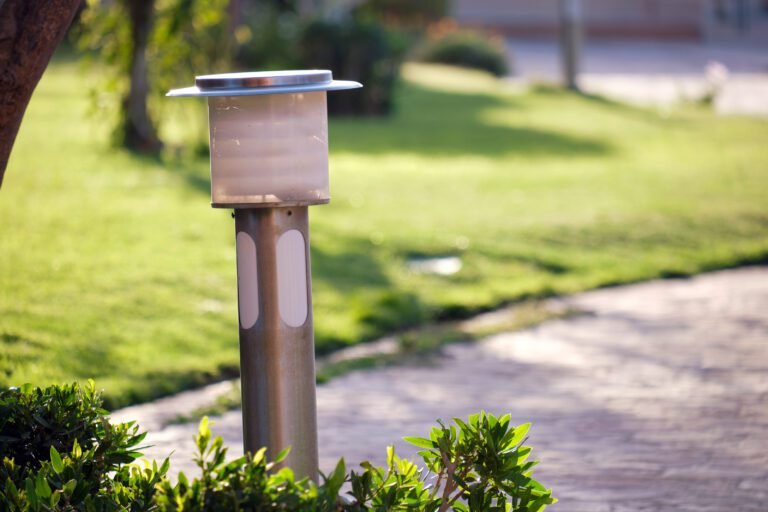
When homeowners think about outdoor lighting, they most often consider it from a security standpoint or aesthetic perspective when trying to enjoy their yard at night. But there’s a huge overlap where the lighting that protects the safety of a property is essentially the same lighting that increases property value, and no, we’re not talking about floodlights that make your backyard look like a commercial parking lot. We’re talking about pathway and accent lighting, which can be carefully selected and installed to serve its purpose and increase value.
Liability is an element of outdoor lighting that most never consider until someone tumbles down the front stairs after a Thanksgiving dinner. Suddenly it’s clear why those dark walkways with no difference and those edges where one surface meets another but isn’t properly marked become breeding grounds for disaster. Increased property value? That’s the icing on the cake that most discover later, especially when their outdoor space feels (and photographs) so much nicer with lighting in place.
The Hidden Hazards in Your Yard That Put You at Risk
The reality is this happens more often than you might think: guests come over after dark, they’re unfamiliar with the space, and those decorative pavers or slight change in elevation becomes a tripping hazard. It’s true, homeowners are liable for slip-and-fall accidents on private property due to negligence. Even if one’s insurance pays for such accidents, it hinges on someone else getting hurt on your property first.
Steps/stairs are the most obvious places of concern. But transitions between surfaces catch people by surprise as well. Where the driveway meets the walkway and where the patio goes to the yard, where there’s a decorative rock border edges the path, these are places where people misjudge their footing because they can’t see where the surface ends or begins due to lack of illumination.
Not to mention the fact that our eyes take time to adjust from one area to a darker one.
That’s why pathway lighting matters, it’s not merely illumination of ground conditions but also provides clarity on directional purpose and what’s ahead. When Tampa homeowners seek outdoor lighting in Tampa, it’s often for pathways and steps first because of safety nuance, but they stay for aesthetic appeal as well.
Tree roots, uneven pavers, edges of the garden, water features, all become tripping hazards as soon as the sun goes down. You may know your yard so well you could traverse it with a blindfold, but your guests do not have that luxury. Neither do delivery people, contractors and others who may come to your home after dark.
How Accent Lighting Provides Multiple Levels of Protection
Accent lighting adds an additional dimension that pathways cannot do alone; accent lighting frames defined spaces and illuminated features that could become lost in darkness. Uplighting a tree does not just show off its upper branches and foliage; it also defines where one should walk around it.
The same is true for walls, columns and other architectural features as well as larger landscape elements. Uplighting a retaining wall does not only show off the masonry but also says “this is where elevation starts.” Grazing light along a textured surface adds dimension that helps people conceptualize areas even if they’ve never been there before.
To this end, ambient light prevents stark contrasts between illuminated and darkness; our eyes do not like to constantly adjust from bright spaces to pitch black. However, creating layers of different levels and heights and intensities makes it easier for people to perceive all elements without squinting or glaring into the abyss.
The Property Value Assessment Nobody Talks About
Most people understand that curb appeal matters during buying/selling seasons, but nighttime curb appeal? That’s where it gets interesting. How many times have buyers driven past homes when it’s dark after working hours or specifically to assess how the neighborhood looks after sunset? A nicely lit home stands out on more occasions than just looking good, professional real estate photographers are increasingly adding twilight shots into their arsenal because homes look incredible during that blue hour when exterior lights finally shine; those images drum up interest that leads to showings and offers down the line.
According to the National Association of Home Builders, outdoor lighting is one of the most sought-after features by buyers, especially in climates where year round outdoor living is favorable.
But it’s not just what buyers think they want for aesthetic purposes; it’s what they find most valuable for functional residential living purposes. Well-lit outdoor spaces offer easy access, safe navigation and improved livability. Interior square footage is compounded by well-functioning features outside that are properly navigable after dark; thus, a beautiful property gets increased use, and value, while someone lives there despite potential only in buying/selling times.
Where People Get It Wrong
The biggest mistake people make is assuming more light is better; it’s not. Too much light creates glaring circumstances that washes out features, ironically, decreasing visibility due to contrast extremes. The goal isn’t to emulate daylight; instead, creating intentional pockets and layers of light is best for movement support and emphasis of important elements.
Inconsistent color temperature is another hot-button issue. When warm white, cool white and everything in-between exists all around one property, it makes the theme appear gaudy and chaotic instead of natural and well-constructed. Using consistent color temperatures (typically warm for residential properties) creates a more cohesive appearance that’s intentional instead of erratic.
Placement of fixtures makes more sense than some give credit, for example, lights that point directly into one’s eyeline are blinding and create annoying hot spots that frustrate owners and yield liability issues; good placement keeps the source hidden but purposeful for use on surfaces and tree canopies.
The Long-Term Benefits Add Up
Energy-efficient fixtures reduce outdoor lighting dollar-and-cents considerations; what once cost homeowners an arm and a leg per month hardly even registers with energy-efficient LED lights, on top of high-quality LEDs lasting years between bulb replacement (unlike previous iterations) means little maintenance hassle that steals time from other aspects before with other technologies.
Moreover, there’s something to be said for the intangible mental shift acquired from being able to navigate your property after dark, you only notice it when you’re without it after all. No one fumbles with their phone flashlight trying to get up the front steps, or when you’re trying to carry groceries in after dark without assistance.
Ultimately, liability benefits provide illumination for outdoor lighting without any added compensation, but when you factor increased property value alongside improved livability, utility and enjoyment, it’s clear why pathway and accent lighting are one of the best-returning enhancements any homeowner can implement, and why they’re one of the few enhancements that actually pay for themselves (in multiple ways) while benefitting everyday life in the interim.