





This post contains affiliate links. If you buy through them, I may earn a small commission at no extra cost to you. I only recommend gear I actually use and love. See my full disclosure here.
For years, travelers heading to Spain’s Mediterranean coast defaulted to Barcelona, and Valencia sat quietly in its shadow. That is beginning to change. In a single recent month, Valencia drew more than 23 million Google searches as more visitors went looking for a city break beyond the usual crowds and prices. I understand the pull, because Valencia is exactly the kind of place I travel to find. It is a city where craft and culture run deep, and where you can still feel like you have discovered something for yourself.
Valencia has many claims to fame. It is the birthplace of paella, the home of Valencia oranges, a cradle of ceramics production, a World Design Capital, and the 2024 European Green Capital. It is also, for now, one of the best-value city breaks in Spain. My search for experiences beyond the mainstream attractions of Madrid and Barcelona led me here, to Spain’s third-largest city, where the futuristic architecture of Santiago Calatrava shares the same map as Roman ruins and Gothic cathedrals, and where progressive ideas harmonize with a reverence for cultural roots.
If you have been considering Barcelona for your next trip, here is why Valencia deserves a place at the top of your list, and how to fold the journey between the two cities into the experience.
Why Valencia Is Drawing Travelers Away From Barcelona

Valencia has long been overlooked in favor of Barcelona, but that reputation no longer holds. In one Mediterranean seaside city you get beaches, more than a thousand years of layered history, world-class contemporary architecture, and a serious food scene, and you generally pay less for all of it than you would two and a half hours up the coast. The crowds are thinner, too, which changes the whole feel of a visit.
The city’s credentials run deep. Valencia holds 12 UNESCO World Heritage designations that span places, events, and living traditions. It was named a World Design Capital for treating design as a tool for civic life, and the European Commission recognized it as the 2024 European Green Capital for reducing its environmental impact and improving quality of life for residents. Founded by the Romans in 130 BC, it is also one of Spain’s oldest settlements, so the depth of culture here rivals anywhere in the country.
What I appreciated most was the pace. Valencia delivers Spanish culture, cuisine, and history without the tourist frenzy of Madrid or Barcelona and without the all-night party reputation of Ibiza. It gives you room to slow down and actually be present.
How to Get from Barcelona to Valencia by Train
One of the things travelers get wrong about Valencia is assuming it is difficult to reach. It is not. The city sits on Spain’s Mediterranean coast, connected to Barcelona by a rail line that runs close to the sea. According to data from the global travel booking platform Omio, you can make the trip from around £33 (roughly $42), with no extra domestic flight required.
The route links four Mediterranean cities, which means you can treat the journey as more than a transfer. Get off the train for seafood in Tarragona and affordable regional cooking in Castellón de la Plana before you arrive in Valencia for paella. Here is how the journey breaks down, according to Omio’s rail data.
| From | To | Duration | Cost from | Mode |
|---|---|---|---|---|
| Barcelona Sants | Camp de Tarragona | 32 mins | £9 | Train |
| Camp de Tarragona | Castellón de la Plana | 2h | £17 | Train |
| Castellón de la Plana | Valencia | 1h 05m | £6 | Train |
Route and fares identified using Omio’s rail data (recorded 27.05.26). Prices vary by date and how far ahead you book. Direct high-speed trains between Barcelona and Valencia also run if you would rather go straight through.
The trip itself has become part of Valencia’s appeal. Much of the route hugs the coast, with sea views between stops and a different regional cuisine waiting at each one. For anyone who wants to see more of Spain without the cost and hassle of extra internal flights, it is an easy and increasingly popular way to travel.
Tarragona: Roman History and Fresh Seafood
Less than an hour south of Barcelona, Tarragona pairs Roman history with an exceptional seafood scene. Around the marina you will find restaurants serving fresh fish and Mediterranean dishes, and the city’s Roman amphitheater overlooking the sea is the highlight. Meals average around €16 per person, with spots like Marqués Coimbra and Tarragona Bar standing out in TripAdvisor ratings.
Castellón de la Plana: An Underrated Food Stop
Plenty of travelers pass straight through Castellón on the way to Valencia, and I think that is worth reconsidering. In Omio’s analysis it had the lowest average meal price on the entire route, around €13 per person, while still scoring well for quality. The local cooking leans on grilled seafood, rice-based dishes, and seasonal produce, which makes it one of the best-value coastal stops in this part of Spain. Castellón is also the heart of the region’s ceramics industry, which I will come back to later.
Is Valencia Cheaper Than Barcelona?
This is the question I hear most often, so let me be specific. Barcelona is the priciest stop on the route, with meals averaging around €16 per person. That is still reasonable by big-European-city standards, but it is the most expensive of the bunch. Valencia averages around €15 per person for a meal, even as its popularity grows.
The real difference is what you get for the price. In Omio’s analysis, Valencia stood out with 36 five-star Tripadvisor-rated restaurants, more than any other stop on the route. Affordable favorites like Bocaddella Tapas keep costs honest, and neighborhoods such as Ruzafa are where I would send anyone who wants to eat beyond the main tourist streets and find some of the city’s best-rated food. You get comparable dining, smaller crowds, lower prices, and an easy train ride, which is a strong case for choosing Valencia.
A City of the River and the Sea
I started my trip not at the obvious choice, Valencia’s iconic City of Arts and Sciences, but at El Cabanyal, the city’s old fishermen’s quarter, a short walk from the Mediterranean shoreline and Malvarrosa beach. A stroll through its maze of gentrified streets reveals a mix of crumbling ceramic-clad facades and freshly polished mosaic curb appeal. “Valencia is a city of the river and the sea,” says Adrian Torres Astaburuaga, an architect, urban planner, and my guide for the visit.
The former fishing huts now flourish in bright ceramic mosaics, murals, and decoupaged pieces that have breathed new cultural and economic life into this once humble neighborhood. The artistic energy here reaches back more than a century, to when Valencia’s world-famous painter Joaquín Sorolla roamed these same streets looking for inspiration. A monument, Valencia A Sorolla, stands at the neighborhood’s entrance as a public homage to an artist whose luminous images of the city remain part of its identity a century after his death in 1923. Fronting the district is the Valencia Mar marina, which hosts world championship sailing. During my visit in late February, the international Optimist-class regattas were taking place.
Valencia’s UNESCO World Heritage Historic Center

Valencia’s UNESCO sites cluster around the historic center, anchored by Plaza de la Virgen and announced by the medieval Serrano Towers, remnants of the old city wall. A pedestrian bridge leads to the towers across the Turia Gardens, and that park deserves a little explanation, because it is the city’s proudest civic project.
“Some say that the fight for democracy was won over the fight to turn the Turia riverbed into a public park,” Adrian told me. After a devastating flood in the 1950s, the dictatorship diverted the river into a canal and left the old bed dry. Valencians fought to turn that empty riverbed into green space rather than a highway. Today the Turia Gardens stretch over 250 acres, which makes them Spain’s largest urban park and a major reason the city earned its 2024 European Green Capital title. Adrian is one of the architects working on the park’s final phase.
Plaza de la Virgen is ringed by landmarks, including the Valencia Cathedral, the Basilica of Our Lady of the Forsaken, and the Fountain of Turia. The 13th-century limestone cathedral rises on a site once occupied by a mosque and, before that, a Roman temple, and it blends Romanesque, Gothic, and Baroque styles across its irregular footprint. According to legend, it houses the famous Holy Grail, the chalice used by Jesus at the Last Supper. For a bird’s-eye view of the city, buy a ticket to climb El Miguelete, the cathedral’s bell tower, built in the 14th and 15th centuries and standing 167 feet tall. The 207 steps are a workout, but the panorama at the top is the reward.
If you can, time your visit for Thursday at noon, when the Tribunal de las Aguas, or Tribunal of Waters, meets at the cathedral’s Apostles’ Door. This thousand-year-old tradition sits on UNESCO’s Intangible Cultural Heritage list. Eight farmers, democratically elected by their peers, settle irrigation disputes from a circle of 17th-century wood-and-leather chairs, and then pose for photos with the crowd.
A short walk away, the Silk Exchange, or La Lonja de la Seda, recalls Valencia’s Golden Age, when the city was a major stop on the Silk Road and a center of silk production. What struck me about this UNESCO-protected building is the cathedral-like grandeur lavished on what was, at heart, a marketplace for ordinary merchants.
I went deeper into this history for my video Valencia, Spain: Where the Silk Road Leads to a World Design Capital, which walks through how a Golden Age trading city became a modern design capital.
Las Fallas: Valencia’s Most Spectacular Festival
If your dates are flexible, I suggest planning your trip around Las Fallas, another UNESCO Intangible Cultural Heritage tradition and one of the most extraordinary celebrations in Europe. I arrived in late February, just days before it began, and the streets were already aglow with string lights.
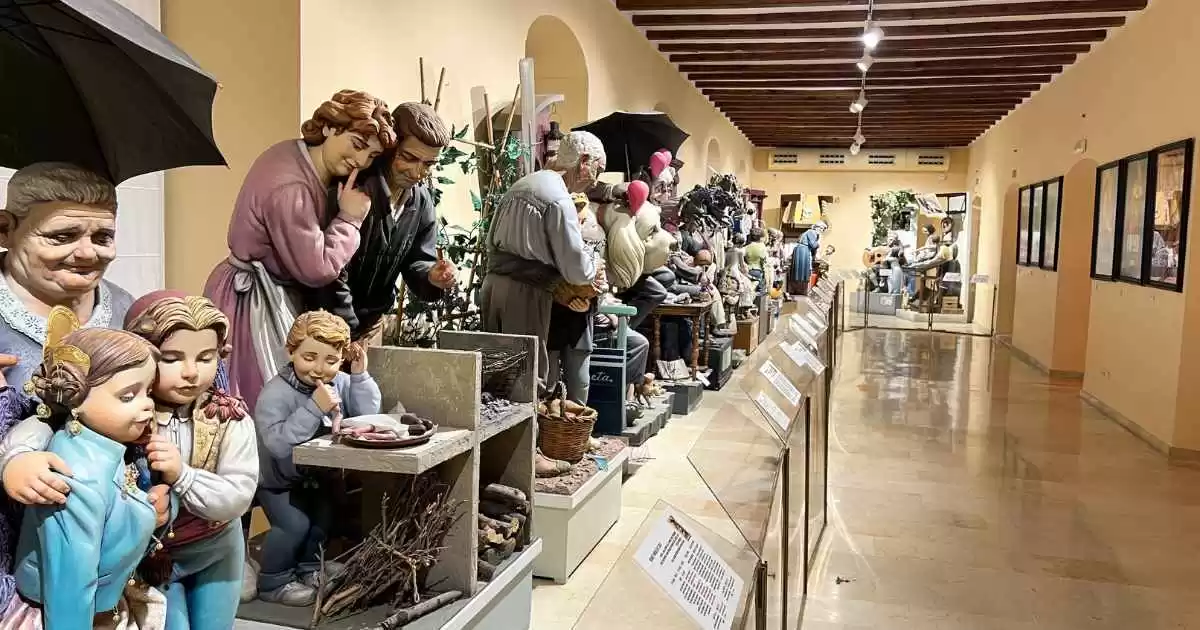
The festivities begin on March 1st with daily fireworks at 2 p.m. in the Plaza del Ayuntamiento. Overnight on March 15th, workers install more than 700 towering figures across the city’s streets and squares. The following morning, Valencians wake to find these enormous satirical sculptures, called ninots, poking fun at politics, pop culture, and current events. Artisans spend months building them, only for nearly all of them to be set on fire on the 19th and 20th in a spectacle of light, music, and fireworks. Each year the public votes to spare just two ninots, which then find a permanent home in the Fallas Museum.
If you miss the festival, I highly recommend visiting the Fallas Museum anyway. It displays hundreds of pardoned ninots alongside festival posters, costumes, and portraits of past Fallas queens.
Where to Eat in Valencia: Paella, Horchata, and the Markets
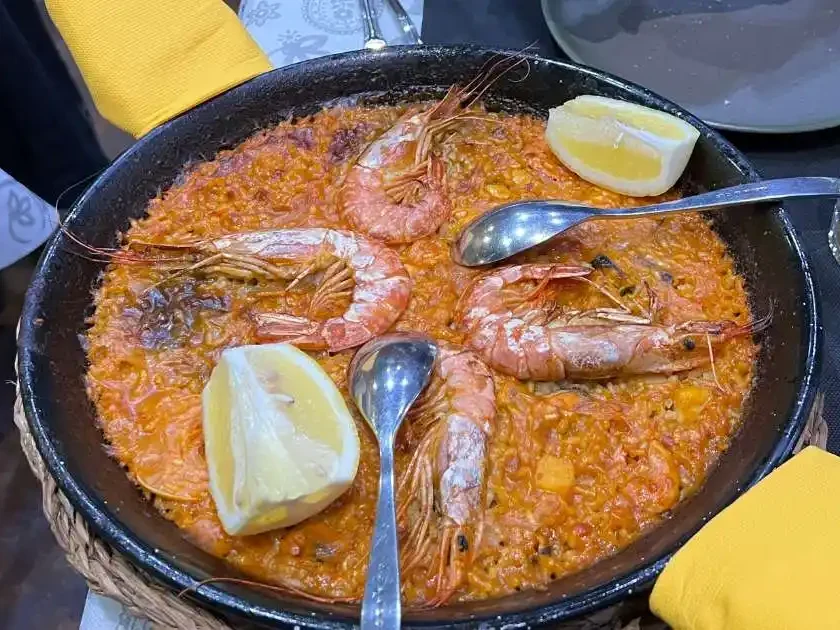
For foodies, Valencia is a culinary playground of regional tastes and treats. This is the birthplace of paella, Spain’s saffron rice dish, traditionally made with fresh seafood from the Mediterranean. To connect with local culture and flavors, I suggest shopping the city’s best-known markets. The Central Market is a modernist structure of iron columns and a stained-glass dome that shelters more than 1,200 stalls, and the nearby Mercado Colón is just as beautiful. Both markets double as architectural attractions and are lined with tapas bars serving regional dishes.
Do not leave without trying horchata de chufa, the sweet, milky local drink made from locally grown tiger nuts. I suggest sipping it at the 200-year-old Horchatería de Santa Catalina, where you can admire the cafe’s ceramic-clad walls and murals while you savor it. When you are ready to eat your way through the modern city, head to Ruzafa, the lively neighborhood where locals and in-the-know visitors find some of Valencia’s best-value, best-rated food.
Valencia for Design and Architecture Lovers
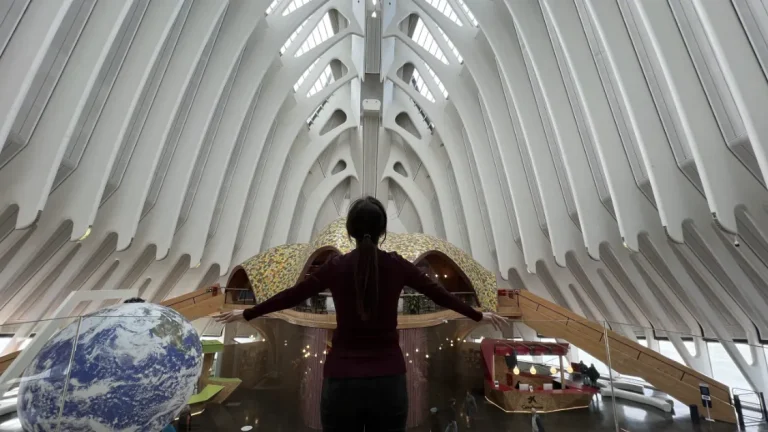
This is the part of Valencia that keeps me coming back as a design tourist. The city’s defining landmark is the City of Arts and Sciences, the futuristic cultural complex designed by native son Santiago Calatrava. “Santiago Calatrava is Valencia’s most international architect, and the city bet on him,” Adrian says. “He designed the City of Arts and Sciences and built four city bridges. Calatrava is our ambassador, attracting tourists worldwide who come to see his works and then discover all the historical and cultural attractions the city offers.” Calatrava’s sculptural white and blue ceramic surfaces call to mind fellow Spaniard Antoni Gaudí’s mosaic tradition, reimagined in a cooler, monochrome palette.
The complex includes the Hemisfèric, a 3D digital cinema with a vast concave screen, the Science Museum, and the Oceanogràfic, Europe’s largest aquarium, with seven marine environments. Alongside it sits an oceanographic structure by the Mexican-Spanish architect Félix Candela, and the multipurpose CaixaForum cultural space. “As Valencia was emerging from the dark days of dictatorship in the 1980s, this idea of the Guggenheim effect took hold and transformed industrial and blighted areas of the city,” Adrian explains.
Art lovers should not miss the Centro de Arte Hortensia Herrero, set inside a restored 17th-century palace in the heart of the city. More than 100 contemporary works are on view, including site-specific pieces created for the museum, drawn from the private collection of patron Hortensia Herrero.

The Ceramics Capital Next Door
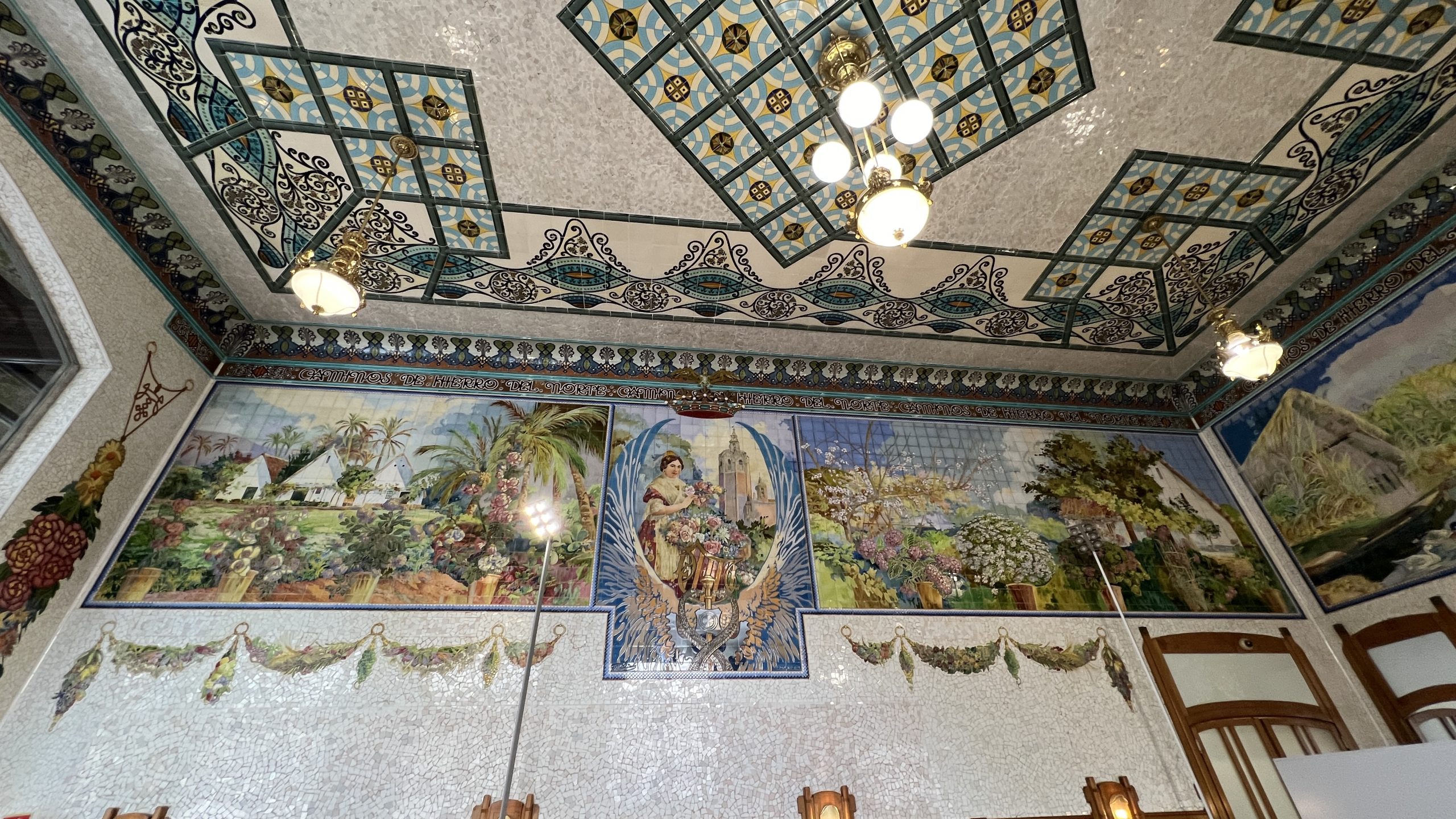
Valencia’s prized natural clay made it a leading European ceramics producer, and that heritage is still alive just outside the city in Castellón, the same affordable food stop on the train route. “Castellón exports almost 90 percent of the world’s ceramic tile and employs around 14 thousand people,” says Raoul Carnicer, CEO of Cevica, a maker of handmade ceramic and porcelain tiles. “Our handmade tiles undergo a long manual process filled with passion.” The region takes centuries-old artisanal techniques and translates them into modern production. “Initially in Castellón, people were handmaking porcelain items like vases and plates, which evolved into making floor tile,” says Fernando Ferrer Hernández, owner of Grespania.
Every February, Valencia hosts Cevisama, one of the world’s largest tile shows. “Spain’s tile industry is a master of glazed wall tile, and Valencia producers make most of the glaze for the tile industry worldwide,” says Ryan Fasan, an expert with Tile of Spain. For a deeper look at the region’s ceramics legacy, visit the National Ceramics Museum inside the Palacio del Marqués de Dos Aguas. Its showstopper is a recreated Valencian kitchen clad entirely in decorative tile.
I explored this legacy firsthand in my video Inside Valencia’s Ceramic Soul: From Silk Road to Modern Artistry, filmed with the artisans and factories carrying the tradition forward today.
By night, Valencia glows with artfully illuminated public buildings, including the post and telegraph building downtown. Finished in 1922 by architect Miguel Ángel Navarro Pérez, this four-story landmark blends French eclecticism and Valencian modernism, with allegorical figures set across its facade.
Is Valencia Worth Visiting Instead of Barcelona?

If you are after Spanish culture, cuisine, and history without the crowds, and at a friendlier price, Valencia delivers on every count. It offers authentic encounters at a slower pace, the kind that let you be fully present. You can see a Roman cathedral and a space-age aquarium in the same afternoon, sit in on a thousand-year-old water court, wander a contemporary art palace, and finish the day with paella and a glass of tiger-nut horchata you have probably never tried.
Barcelona will always have its pull. But for travelers ready to look a little farther down the coast, Valencia is the more affordable and increasingly obvious choice. To go deeper, watch the episodes of The Design Tourist that feature my exploration of Valencia.
Valencia Travel FAQs
How do I get from Barcelona to Valencia?
By train. According to Omio’s rail data, fares start from around £33, and the scenic coastal route lets you stop in Tarragona and Castellón de la Plana along the way. Direct high-speed trains also run if you prefer to go straight through.
What is Valencia known for?
Valencia is the birthplace of paella, home to a UNESCO-rich historic center, the futuristic City of Arts and Sciences by architect Santiago Calatrava, the Las Fallas festival, and a major European ceramics industry. It is also a World Design Capital and the 2024 European Green Capital.
When is the best time to visit Valencia?
For the full spectacle, plan your trip around Las Fallas in March, when the festivities run from March 1st to the 19th and 20th. Late February is quieter but already buzzing with pre-festival energy, and the Mediterranean climate makes spring and early fall especially pleasant.
How many days do you need in Valencia?
You can cover the highlights, the historic center, the City of Arts and Sciences, and the food markets, in two to three days. Give yourself more time if you want to slow down for the beaches at El Cabanyal, follow the ceramics trail out to Castellón, or time your visit to Las Fallas in March.
Read More:
Top 5 Travel Destinations for Culture and Design Lovers
Travel Guide to Valencia: Top Attractions and Advice
Germany’s Top 10 Cities for Design Enthusiasts