








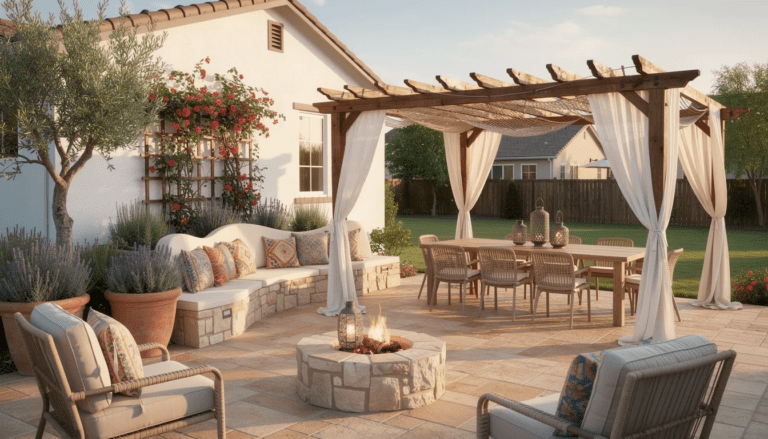
Travel-inspired design is reshaping American outdoor living. Homeowners come back from trips remembering a Tuscan terrace or a Balinese pavilion where coffee felt slow and intentional, and they want that same feeling at home. Instead of booking another flight, they are rethinking decks, patios, and porches so daily life carries a trace of vacation. Builders who specialize in all-season construction, like Deck Guardian in New Jersey and Pennsylvania, are seeing this shift firsthand. Clients arrive with photo galleries from cities they have visited, not Pinterest boards.
In Montclair, New Jersey, a couple recently sat down with their contractor and laid out vacation photos. Tuscany. Ubud. Santorini. Then they said, “We want that feeling in our 40-foot backyard.” That request is no longer unusual. Across the Northeast, backyards are becoming personal translations of places their owners once visited and never quite left behind. Here is how global design traditions are shaping local outdoor spaces, and how to turn that inspiration into practical, buildable results.
The Destinations Behind the Trend
Three architectural traditions keep surfacing in client conversations. Each one acts like design DNA that adapts well to Mid-Atlantic yards.
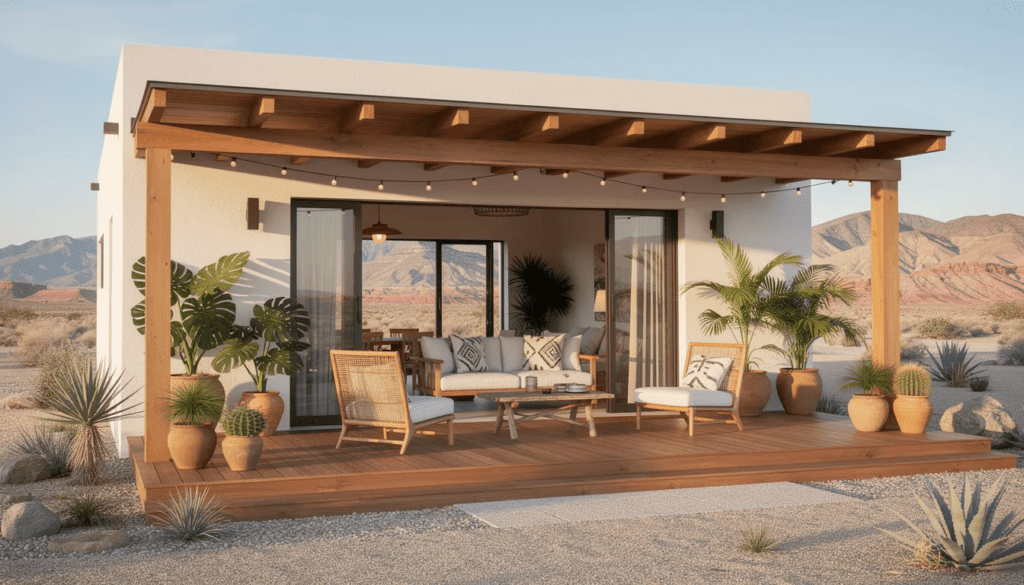
In Bali, pavilions often have no walls. Carved posts, deep overhangs, and layered greenery blur the line between indoors and out. Clients bring photos of open-air roofs and shaded daybeds and ask for ceiling fans over low composite platforms instead of traditional rail-heavy decks. The appeal is not just visual. It is the memory of sitting under a thatched roof while rain fell two feet away.
Mediterranean spaces rely on stone terraces, whitewashed walls, terracotta, and simple arches. Seating centers on long tables and built-in benches, not oversized grill stations. Travertine, limestone, olive trees in large planters, and a few Turkish kilim pillows now bring that warmth into New Jersey and Pennsylvania patios. The layout puts conversation first and cooking second, which reverses the typical American deck formula.
Japan’s engawa, the slim platform between house and garden, uses low decking, simple water features, and careful proportions to create calm. This minimalist approach adapts easily to compact suburban plots where every square foot counts.
Why It Works Better Than You’d Expect
These borrowed ideas often outperform conventional builder-grade solutions, and the reasons are more practical than aesthetic.
Open pavilions work better in humid New Jersey summers than enclosed screened porches. Pavilions with high, vented roofs catch cross-breezes off the yard while screened structures trap heat. Details like 10- to 12-foot ceilings and proper fan placement help the space breathe, while the underlying pressure-treated framing hides beneath cleaner finishes.
Natural stone and quality porcelain pavers handle Northeast freeze-thaw cycles better than budget decking. Cheap composites develop hairline cracks, warps, and fading after a few winters in Morris County or Bucks County. Dense stone and stucco-clad seating walls tolerate January without complaint. Homeowners who choose these materials for their look end up keeping them for their durability.
Japanese-inspired proportions make small yards feel bigger. Narrow decks, stepping platforms, and gravel borders create depth without adding square footage. Aligned pavers and staggered steps stretch sightlines, making a compact yard feel longer and calmer than a single massive rectangle. A well-designed patio layout uses these proportional ideas to keep circulation smooth, whether the inspiration comes from Kyoto, Corfu, or Canggu.
Making It Personal, Not Pinterest-Generic
Travel-inspired design works best when you borrow principles, not decorations. The goal is to distill why a place stayed with you and express that through structure, proportion, and material choices.
Consider the difference between design DNA and costume. Instead of fake Greek columns, borrow the Cycladic ratio of open terrace to shaded pergola. Keep the color palette to white, sand, and one accent blue. Adjust pergola slat spacing to mimic Greek island shade while still meeting local snow-load codes. The architecture does the work, not the props on top of it.
Materials carry more weight than accessories. Limestone coping, cedar slats, and linen cushions channel the Peloponnese more convincingly than a crate of lanterns from a big-box store. A simple rectangular reflecting pool and charred wood cladding evoke Japan better than a cluttered display. When the materials are right, the space needs very little decoration to feel complete.

Local climate is the final filter. Ubud’s open bathrooms do not translate to a backyard in Flemington in February. Swap that idea for a semi-sheltered hot tub deck, infrared heaters, and weather-resistant fabrics that still echo a spa-like calm. The best results start with a single vivid memory from a trip, then filter it through local building codes, seasonal weather, and practical maintenance realities.
The Best Trip Starts at Your Back Door
The most successful travel-inspired spaces spark a simple question from guests: “Where did you see this?” When the answer is a country and not a retailer, you know the design landed.
Travel-inspired design is less about souvenirs and more about the small rituals those trips taught us. Lingering over coffee. Watching dusk from a bench facing west. The faint sound of water in a stone basin. For homeowners across New Jersey and Pennsylvania, the backyard now carries quiet hints of Bali, the Cyclades, or Kyoto without ever pretending to be anything but home. A cool August night. Crickets. And nowhere else you would rather be.