


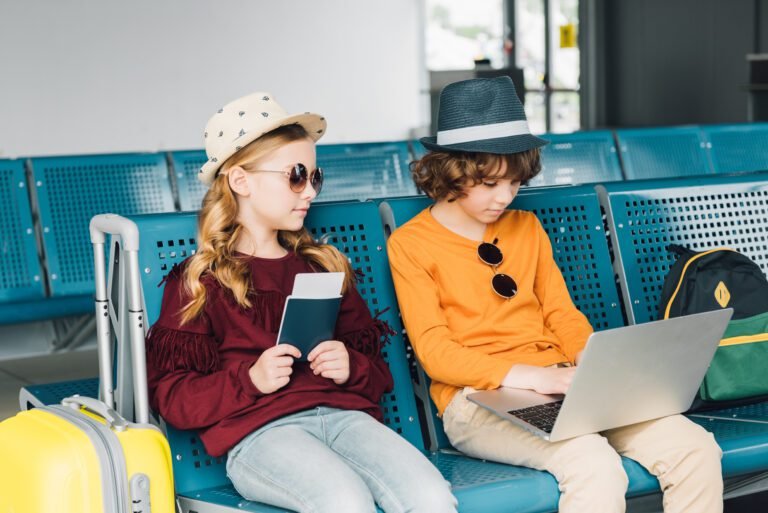
Traveling as a family offers an exciting opportunity to explore new places, bond, and create lasting memories. However, for homeschooling families, it can also present a challenge: how to maintain educational routines and keep kids engaged in learning while on the move. Fortunately, homeschooling while traveling doesn’t have to be difficult. With the right resources and strategies, you can turn long road trips, train journeys, or even flights into enriching learning experiences.
In this article, we’ll cover the best travel-friendly activities for homeschooling on-the-go, including practical tips for keeping kids focused, entertained, and learning during your adventures. These ideas will not only help your children stay on track with their education, but they’ll also encourage them to see the world through an educational lens.
1. Portable Learning Kits
When it comes to homeschooling on-the-go, packing smart is key. A portable learning kit can be an excellent way to ensure that your children have everything they need to stay engaged while traveling. A learning kit might include a variety of educational tools like workbooks, notebooks, flashcards, pens, and even small educational games. The idea is to have everything organized in a way that’s easy to grab and go.
For younger children, consider packing activity books that align with what they’re learning at home. Books that include coloring activities, puzzles, and simple reading exercises can be perfect for a road trip or waiting at an airport.
For older children, you might pack more in-depth resources such as math worksheets, writing prompts, or history timelines. Adding these educational activities to your travel bag ensures that your children have something constructive to do during downtime, whether that’s in a hotel room, on a plane, or while waiting for a meal.
2. Audiobooks and Podcasts
Travel time is the perfect opportunity to introduce your kids to audiobooks and educational podcasts. Audiobooks are a great way to keep your children’s minds active during long car rides or flights. Whether it’s a classic novel, a biography, or an educational series, audiobooks make it easy for kids to engage in storytelling without being tethered to a screen.
There are many options for homeschool parents looking to keep kids learning during travel. Consider exploring books that align with the subjects they’re studying, such as stories about famous historical figures, science explorations, or even economic concepts. The Tuttle Twins series, for example, offers engaging books that teach children about important concepts like individual liberty, economics, and personal responsibility.
For podcasts, look for kid-friendly educational shows that cover topics your child might be interested in. There are podcasts on almost every subject, from geography and history to science and language arts. The best part is that they’re often free and can be easily streamed on your phone or tablet while traveling.
3. Travel Journals
A travel journal is a wonderful tool for keeping kids engaged in the learning process while also helping them document their travel experiences. Encourage your children to write or draw about what they see, hear, and experience as you travel. This activity fosters creativity and reflection, which is a crucial part of the learning process. Additionally, it gives children a chance to process and retain new information they encounter during your travels.
In your travel journal, you can include prompts to guide your children’s writing. For example, ask them to reflect on a place they visited that made an impact on them, or to describe a new person they met during the trip. You can also integrate geography lessons by including maps of places you’ve visited and asking them to track your journey.
Travel journals are not only educational, but they also provide your children with a tangible memory of the trip, one that they can look back on in the future.
4. Field Trips and Real-World Learning
One of the greatest advantages of traveling is the opportunity for real-world learning. When homeschooling on-the-go, take advantage of the places you visit by turning them into lessons. Historical landmarks, museums, national parks, and even local markets can become your child’s classroom.
Before your trip, research the destinations you’ll be visiting and identify how they can tie into your child’s curriculum. For example, if you’re heading to a historical site, you can read up on the events that took place there, discuss the historical context, and have your child write a report or create a presentation based on what they’ve learned.
The Tuttle Twins books are an excellent resource for this type of travel-based learning. Many of the books cover economic principles, historical events, and the lives of famous figures—topics that can be explored through field trips to relevant locations. For example, if you visit a city with rich historical significance, you can pair the trip with Tuttle Twins books that teach your child about history or government.
5. Interactive Learning Apps
Technology can be a lifesaver when it comes to keeping kids engaged during travel. With the right learning apps, your child can have a variety of educational activities at their fingertips. Many apps are designed to make learning fun, and they cover a range of subjects from math and science to reading and art.
When choosing apps for your homeschool on-the-go, try to pick ones that align with your child’s current curriculum or interests. There are many free and paid options available for both younger and older students. Many of these apps allow you to track your child’s progress, making it easier to assess their learning while traveling.
Apps that teach coding, math skills, reading comprehension, and even foreign languages are especially useful for keeping children engaged during long travel days. Just make sure that screen time is balanced with offline activities, like the ones we’ve already discussed.
6. Games with an Educational Twist
Traditional board games or card games can be a fun and engaging way to continue learning while traveling. Games that incorporate reading, math, or critical thinking skills are excellent for maintaining a productive travel routine.
For example, games like Scrabble, chess, or math flashcard games can stimulate your child’s mind in a fun, interactive way. Other games, such as geography trivia or historical quizzes, can be perfect for integrating subject-specific knowledge. These games can be especially helpful during downtime in a hotel room or during long waits at airports.
For young children, look for games that teach basic concepts like numbers, shapes, and letter recognition. Games that are compact and easy to pack are ideal for homeschooling on-the-go.
7. Integrating Tuttle Twins Resources
If you’re looking for educational resources that combine fun and learning, the Tuttle Twins books are a great choice. Designed to teach children about essential life concepts like freedom, economics, and personal responsibility, these books are perfect for on-the-go learning. Whether you’re traveling by car, plane, or train, the compact and engaging nature of Tuttle Twins books makes them easy to pack and use during your homeschool journey.
Incorporating Tuttle Twins books into your travel routine can spark meaningful conversations with your children about the topics they’re learning, allowing them to connect real-world experiences with the principles covered in the books.Shop The Tuttle Twins for a wide range of titles that will keep your children engaged in educational content while traveling.
Conclusion
Homeschooling on-the-go doesn’t have to be a challenge. With a little preparation and the right tools, you can ensure that your children continue to learn while enjoying the excitement of travel.
From portable learning kits and educational apps to real-world field trips and interactive games, there are endless possibilities for turning travel time into valuable learning experiences. So pack your bags, grab your resources, and hit the road knowing that your child’s education can continue—no matter where your adventures take you.