



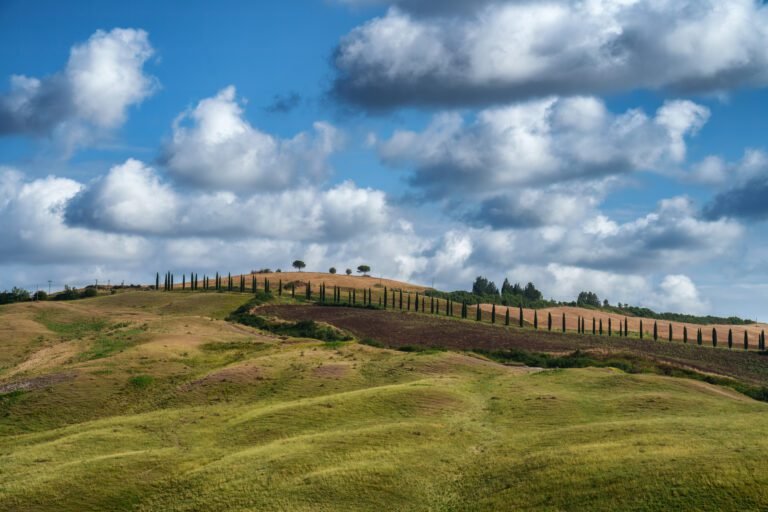
There are few places where beauty and tradition are so effortlessly entwined as they are in Tuscany. The region unfolds like a painting — rows of vines tracing sun-warmed hills, olive groves catching the evening light, and stone villages that seem frozen in another age.
For travelers, Tuscany is not just a destination but a feeling — a slowing of time, a deeper breath, a rediscovery of pleasure in the simplest things: good wine, good food, and the company of those who know how to enjoy them.
The Landscape That Defined an Era
From the hills of Chianti to the medieval towers of San Gimignano and the open valleys of Montalcino, Tuscany captures the pastoral perfection that once inspired Renaissance masters. Its undulating terrain, framed by cypress trees and dotted with old farmhouses, looks purpose-built for both painting and winemaking.
The climate helps too. Warm, sun-filled days and cool nights create the ideal balance for slow, even ripening. Add in centuries of careful cultivation and an unwavering respect for tradition, and it’s easy to see why this region produces some of Italy’s most admired wines.
The Spirit of Sangiovese
The heartbeat of Tuscany’s vineyards is Sangiovese, a grape as complex and expressive as the land itself. Known for its bright cherry tones, subtle spice, and earthy depth, Sangiovese adapts gracefully to each of Tuscany’s microclimates.
In Chianti Classico, it’s vivid and aromatic. In Montalcino, it becomes the noble Brunello, deep and contemplative. In Montepulciano, it takes on a rounder, softer tone — more velvet than muscle.
To taste these wines is to trace the region’s geography through your glass: altitude, soil, and sunlight revealed in each sip.
Life Among the Vines
Visiting Tuscany’s wine country isn’t just about the tasting rooms — it’s about the rhythm of daily life that unfolds around them. Many estates are small and family-run, where the same people who harvest the grapes might also cook your lunch or pour your glass.
Hospitality here feels personal. You’re not a customer but a guest. Conversations flow easily; tastings stretch into shared meals of local pecorino cheese, olive oil, and handmade pasta. And as you sit beneath the vines watching the light fade, you understand that Tuscany’s greatest luxury is time itself.
The Great Tuscan Wine Villages
Chianti Classico
Between Florence and Siena lies Chianti Classico, the heart of Tuscany’s winemaking heritage. The black-rooster seal on its bottles is a centuries-old mark of quality.
The region’s roads wind through forests and vineyards to small towns like Castellina, Greve, and Radda — each with its own rhythm and charm. Here, the wines are lively, food-friendly, and unmistakably Tuscan, often enjoyed with bistecca alla Fiorentina or a plate of pappardelle al cinghiale (wild boar).
Montalcino
Perched high above the Val d’Orcia, Montalcino feels suspended between sky and soil. Its famed Brunello di Montalcino is a wine of patience — aged for years before release, gaining layers of dark cherry, cedar, and truffle.
A visit here might include a quiet morning stroll through ancient streets, a tasting at a small estate overlooking golden hills, and an afternoon wandering the nearby Abbey of Sant’Antimo, where monks once made wine themselves.
Montepulciano
Elegant and slightly lesser-known, Montepulciano produces Vino Nobile di Montepulciano, a wine prized for its structure and grace. The town’s Renaissance palaces and open squares offer a slower rhythm still, where each glass feels like a conversation between history and craft.
Traveling the Wine Roads
The pleasure of exploring Tuscany lies in its meandering pace. Roads curve gently through valleys, often lined with cypress trees and punctuated by small villages that seem made for chance discoveries.
Most travelers combine winery visits with cultural or culinary stops — a morning tour of a vineyard followed by a picnic among olive trees, an afternoon in Siena’s art-filled streets, or a sunset walk overlooking the Val d’Orcia.
For travelers who prefer a more tailored experience rather than navigating the wine roads alone, there are custom wine tour planning services in Tuscany that connect visitors with small producers, private tastings, and boutique accommodations. Services like this one specialize in arranging itineraries that align with travelers’ interests—whether that means a few relaxed days among family-run vineyards or a deeper dive into the region’s most historic estates.
Beyond the Vineyards
Wine is only one chapter in Tuscany’s story. The region overflows with art, architecture, and daily rituals that define Italian life.
In Florence, the Renaissance still glows from every fresco and marble façade. In Siena, centuries of civic pride play out each summer in the Palio horse race. In Lucca, locals cycle along Renaissance walls that now serve as leafy promenades.
The cuisine is just as compelling — earthy and honest, meant to showcase the land. Expect rustic soups like ribollita, grilled meats, truffles, and fresh pasta paired with local olive oil and a generous pour of wine. Meals aren’t events here — they’re celebrations of belonging.
Where to Stay
Part of Tuscany’s charm is the chance to stay within the vineyards themselves. Many wineries now offer agriturismi — family-run farm stays where guests enjoy both comfort and connection. Picture mornings with the scent of rosemary and espresso, afternoons spent by the pool overlooking olive groves, and dinners cooked from ingredients grown steps away.
For something more refined, Tuscany also boasts elegant boutique hotels and restored villas, many housed in centuries-old estates. Whether rustic or luxurious, these accommodations share one essential trait: they make you feel part of the landscape rather than apart from it.
Seasons of Wine
Each season brings a different expression of Tuscany’s spirit:
- Spring is fresh and floral, with new vintages released and countryside trails perfect for cycling or walking.
- Summer hums with festivals and long golden evenings — best enjoyed with chilled rosé or Vernaccia di San Gimignano.
- Autumn is harvest time, when vineyards glow amber and red, and the air smells faintly of fermenting grapes.
- Winter is quiet and intimate, ideal for cellar tastings and hearty meals by the fire.
Whenever you go, the key is to match your pace to the region’s: slow, deliberate, and open to serendipity.
The Art of Connection
What makes Tuscany unforgettable isn’t its fame but its intimacy. Even in well-traveled places, there’s a sense of discovery — a view that feels newly yours, a conversation that lingers, a wine that captures a fleeting moment in time.
You don’t just taste the wines here; you taste the rhythm of a culture that values patience, artistry, and joy in the everyday.
As one winemaker said, watching sunset over his vines: “Our wines are not made to impress, but to express.”
That, perhaps, is Tuscany’s quiet secret — that beauty doesn’t need to be sought. It’s simply there, waiting, in every hillside, every meal, every glass.